I have just re-purposed my Tumblr blog with a focus on Danish writers and artists, and started translating little pieces of prose and poetry for that. This work pleases me a good deal, and who knows what collections it might lead to...
The work involves finding cool Danish, or - in a pinch - Scandinavian birthdays, and every now and then I stumble over a name that is vaguely familiar, but which I can't quite place. This happened yesterday when I was researching the March 15 birthdays. "Anna Castberg? Who was she, again?"
Well, as it turns out, Anna Castberg is mainly remembered in Denmark for a moment of infamy when she was caught lying on her resumé for the job as Museum Director at the recently built Arken museum - a lovely edifice on the coast just outside Copenhagen, which specializes in Contemporary art.
Ms Castberg was pre-eminently qualified for the job as Director with her PhD in Art History and extensive museum experience, and she was hired in 1993 to build up the collection and launch the new museum in 1996.
Soon, however, the Danish newspapers took a keen interest in the budgets for the new museum which seemed rather out of control, and a bit of digging soon revealed that Castberg didn't really have a degree of any sorts and didn't actually attend any of the universities she claimed to have gone to. She also hadn't really worked for the institutions she had listed on her resumé as prior experience. This was not a new pattern, in fact. When looking for work in Britain, she claimed to have a Danish degree, and vice versa...
She did manage to stick around to launch the museum, which soon became an attractive destination for culture tourism and started putting itself on the map in art circles. However, a few months after the opening she was let go, and promptly vanished from the public view... She seems to have moved back to Britain, and is currently listed as a practicing psychotherapist. I'm not sure she has any formal degree or training as such in that field, either - but hey, that has never stopped her before...
At least two Danish novels and one play have been inspired by the Anna
Castberg affair. I haven't read or seen any of them, but you can easily
find them if you can read Danish. Look for Leif Davidsen's Lime's Billede, or Ole Hyltoft's Mordet på Museet...
So, why am I blogging about Anna Castberg, you might ask... Well, apart from her bold behavior, which I can't help but admire, having worked myself in a business where fraud is rampant but rarely this flamboyant, she did have one true item on her CV that I am particularly interested in.
Cue Leslie-Ann Beldamme, the little-known English folk-singer who at the age of 17 got a contract with Decca and recorded a lovely 7" single with the songs "The One I Love" (R.E.M. were not that original...) as the B-side and "The Rose of Loneliness" as the A-side. Leslie-Ann was of course none other than Holbæk-born Anna Castberg.
At this point in time only the B-side - which according to the label was penned by Leslie-Ann herself, but who knows? - is available on YouTube. I have not heard the A-side which is credited to Mikis Theodorakis, and
titled in parenthesis "Sirtaki song", which would indicate it used the
melody from the film, Zorba the Greek that was a huge hit in 1964. The other
writing credit on that track is for "Jeffery" - maybe an English lyricist? This track also has an arranger credit to Reg Guest (known for his work with The Walker Brothers, Dusty Springfield, and others).
I advise you to listen to "The One I Love" - it is really lovely and very much of its time what with Judy Collins and Joni Mitchell beginning to make a mark for themselves. The vocals are pure, somewhat vibrato-laden, and the melody is simple but catchy in its arrangement for acoustic guitar, bass, a touch of vibraphone and tastefully wire-brushed drums...
I suppose Decca thought - with some justification - they might have
found a true English rose to rival the Americans in this fledgling
market for folky, female singer-songwriters...
However, the single flopped pretty badly, selling only 9.000 copies, and Leslie-Ann never seems to have recorded again - at least not under that name. There is something very endearing about the whole construction of this young girl - the obvious, but clumsy allegorical last name (riffing on the French "Belle Dame" - 'beautiful lady' and her step-father's real name, Beldam), and the both demure and sexy picture of the brunette on the sleeve.
Image engineering was not as blatant in the 1960s as it later became in the music industry and commercial realms - but it certainly did exist. Also, one cannot help but think what would have happened, had Leslie-Ann become the next singing sensation for Decca. Would she still have ended up a fraud, infamous in an entire nation? Or would she have ended up as revered as the late, great Sandy Denny, born one year before Ms Castberg??
The Decca single is available on Discogs and other re-sell sites for a pretty hefty price - 50 GBP on eBay, or €150 on Discogs.
In late 1954, Russian-Jewish-American composer Alex North was putting the finishing touches to his score for a prison drama - a distinct type of B-movie fodder - titled Unchained. If you’ve seen the film, it’s probably because you’re either an insomniac addicted to the TCM channel, or because you’re a die-hard Dexter Gordon fan who has to have heard every performance he ever laid down. Gordon was, purely by co-incidence, serving a sentence for drug possession when the movie was shot on location in the California Institution for Men, a correctional facility in Chino, and he makes an uncredited cameo appearance as a saxophone player in the prison band.
This 1955 movie is one of those weird instances where a Hollywood script is based on a non-fiction book that tries to offer a corrective to the way mainstream America perceives a social problem - in this case the issue of incarceration and re-socialization of criminal offenders. Hall Bartlett, who started out as a documentary film maker, wrote the screenplay (spending six months living with inmates in a prison while writing it), and was both director and producer as well. He was clearly a man with a conscience and a message. He went on to direct better-known films such as Jonathan Livingston Seagull.
Bartlett was happy enough with North’s score to the movie, but reminded him that there needed to be a song in there as well. After all he had cast African-American operatic baritone Todd Duncan (the original Porgy in Gershwin’s opera Porgy and Bess) in the flick, and he had to have a song to sing. North had a melody in mind, and called up his Tin Pan Alley lyricist Hy Zaret to get him to pen some lyrics. Zaret was pissed off, because he had made plans to paint his house that day and couldn’t be bothered to churn out another set of trifling lyrics. North cajoled him into it after all, and the result was a song without a title, that we all now know as “Unchained Melody”. Heard outside the context of the prison setting that it was performed in in the film, it in fact sounds like any other love song
from the dominant middle-class culture of the 1950s. The lyrics seem unconnected to the theme of the film, and the word “unchained” does not appear in the lyrics anywhere.
Bartlett was a bit miffed that Zaret’s lyrics didn’t spell out the social message, but the way Todd Duncan sang the song by turning it into a Lead Belly style blues/worksong manages to convey the right feeling of longing for freedom that brought the song in alignment with the sentiment of the film: “Long all you want, but don’t break out of jail before you’ve served your time!” In Duncan’s version we suddenly hear the word “time” in a different sense - that of doing hard time in prison, when he sings the lines “Time goes by so slowly, and time can do so much”… The effect is deepened by the blue, dropping glissando Duncan adds to the word “slowly”. In contrast he refrains from glissando on the word “love”, thus shifting the whole dynamics of the lyrics. Remarkably Duncan does not perform the song’s minor key bridge, which in all subsequent versions is a striking feature, enhancing the eerie mood of the song.
Duncan’s abbreviated version, accompanied only by acoustic guitar, lasts little more than a minute on screen, but still the song got an Academy Award nomination and almost won an Oscar. Harry Belafonte recorded a folky version of the song, retaining the simple guitar accompaniment, and also performed it live at the Awards show in 1956, but in the end it was pipped for the Oscar by Love Is a Many-Splendored Thing - incidentally another product created by a Jewish-American Tin Pan Alley song-writer. However, the vision of a black man longing for freedom from shackles and chains resonated in a much deeper way with black performers than even the Unchained film-maker had envisioned, and before the year of release of the film was over two very distinct black vocalists had hits with their versions of the song: Roy Hamilton and Al Hibbler. Both these performers have interesting trajectories in show business and in Hibbler’s case also in civil rights activism, as does a third performer who 5 years later recorded a version of Unchained Melody - Sam Cooke, whose posthumously released 1964 song “A Change Gonna Come” is one of the Civil Rights Era’s classic anthems and comprises the same theme of longing for escape and redemption.
Belafonte's folk version above; Sam Cooke's soul version below...
Each of these four black artists’ version of Unchained Melody added a particular subtext to the otherwise banal love song lyrics, but let's look more in depth at Hibbler's and Hamilton's. Al Hibbler’s version on Decca was officially recorded to tie in with the release of the film, and it owed quite a bit to Duncan’s version in spirit. Hibbler had had a long career as vocalist for Duke Ellington’s big band in the 1940s, and had been struggling to make the transition into solo success as a pop artist in the early 1950s. With Unchained Melody he struck gold. Hibbler was quite the character, often ridiculed for his over the top vocal quirks and idiosyncrasies. He was also a Civil Rights activist as early as the late 1950s which of course made him a problematic commodity as a pop star for record companies. It took the unlikely intervention of Frank Sinatra to ensure that Hibbler could keep recording via a contract with Reprise Records. Hibbler's later career highs include a spirited LP of primarily Ellington material recorded with free jazz horn player Rahsaan Roland Kirk in 1965, but not released till 1972. Perhaps these two, on the surface of things, unlikely collaborators were kindred spirits in more ways than one. Both artists were blind - Hibbler from birth, Kirk from the age of two…
Hibbler’s Unchained Melody is straight-forwardly delivered, with only slight quirks in his dwelling on the word “God” and adding a clear melisma on “to” in the fervently expressed wish in the lyrics “God speed your love to me”. The minor key bridge is rushed in nearly recitativo style, and there are bluesy inflections in phrases such as “Are you still mine?” and on the word “love” - and a vast vibrato effect on the final repetition of the word “me”.
Roy Hamilton recorded his version of Unchained Melody hot on the heels of Hibbler’s and it cashed in almost as well as Hibbler’s ‘official’ release did. Hamilton was a seasoned Gospel artist and he took Unchained Melody to church in ways that Sam Cooke may have listened to and emulated to an extent - not that Cooke hadn’t perfected the transition from gospel to secular music in his own career already. Hamilton recorded for Columbia Records' ‘pop label’, Epic, one of Decca’s main competitors in the multiple genres Unchained Melody participated in - easy listening, gospel, pop, r&b and country. Hamilton’s ace in the hole, vocally, was that he had a voice that could tackle the operatic scale of songs such as Unchained Melody, as well as the earthier qualities vocalists such as Duncan and Hibbler mastered really well. Hamilton’s golden period had started with his hit recording of You’ll Never Walk Alone, and in his eager search for follow-up material, he had stumbled over Unchained Melody. After a brief career in the spotlight, Hamilton ran into health issues (possibly TB) that led to retirement from performances. After several half-successful attempts at comebacks, he died in 1969 from a sudden aneurism in the brain and has lapsed into relative obscurity among music fans.
Hamilton’s nasalised baritone is fuller than Hibbler’s, and Hamilton’s lyrics inflections are on words such as “need” and “touch”, rather than “time”. His use of melisma on “slowly” and vibrato on “love” pull the version out of jail, as it were. This aspect of the song was later exploited more fully when The Righteous Brothers’ Bobby Hatfield recorded what most people consider the definitive version of Unchained Melody in 1965. Hamilton’s musical arrangement at first follows Hibbler’s closely in the use of bugles, but later deviates considerably by adding mysterious string effects to the arrangement of the bridge, where the strings emulate the pull of the waters mentioned in the lyrics. At the end a grand piano emerges from the arrangement and lends a clear gospel tinge to the closing.
The point of this small account of the under-documented early African-American history of “Unchained Melody” is to highlight the versatile Americanness of this song. It throws light on binaries that run through American cultural and identity history, but are often denied or directly debunked. Tin Pan Alley’s greatest song-writers were Jewish-Americans, their songs were often best interpreted by African-American performers who added their own meanings to songs about longings and hardships - and yet the relations between Jewish- and African-Americans were often fraught with racism and stereotypes on both sides. In this particular case, we have a song that was reclaimed by black performers as a text speaking to their shared experience of chains and confinement - despite the fact that the song was not written by an African-American its lyrics and melancholia spoke directly to that part of black identity. However, no sooner was the song reclaimed for black identity, than it was re-appropriated for the white teen market and thoroughly whitewashed by mainstream performers.
Most of the material of the “Great American Songbook” was created by first or second generation immigrants, who worked hard to fit in and realize their American Dream - a Dream that black Americans were debarred from for several decades longer than most other minority groups. Much of the musical material that was recorded and made popular by African-American performers was also quickly re-recorded by white artists, often with more commercial success than the originals. This is obviously also the case with Unchained Melody. Contemporary with Hibbler and Hamilton’s versions, several whitewashed version circulated with great success, including a largely instrumental one by Liberace, a full orchestral and choral arrangement by Les Baxter’s Orchestra, and a strange bolero-tempo version by June Valli which reverses the gender dynamics of the song.
No success with Unchained Melody, however, has been greater than the one scored by Bobby Hatfield in 1965. His arrangement of the song scrubs it completely of its origins as a black man’s prison lament. It’s a white-bread love song by then. The musical changes to the arrangement and the unusual original structure of the song made in The Righteous Brothers’ version contribute to mainstreaming the song into a jukebox hit about teenage love. Hatfield uses excessive melisma on almost every word from the first line of the song, and adds vocal contortions and vibrato to the chorus and to the minor key bridge. He even puts a glissando from the word “me” over into an added “yeah” at the end of the bridge. The pathos of the song is underscored by the march tempo used by the orchestra, and the swelling effect of adding more and more instruments and a choral accompaniment after the bridge.
For the nostalgia market, this version of the song was used in one of the ultimate 1990s love stories, the Patrick Swayze/Demi Moore movie about unattainable love after death, Ghost, sealing the Hatfield version’s evergreen status. The duo also re-recorded the song and for a few weeks bizarrely had two versions of the same song in the US charts. Coincidentally, another use of Unchained Melody in a movie soundtrack occurred the same year when the 1963 novelty/ white doo-wop version by Vito & the Salutations was featured in the gangster movie, Goodfellas… These recontextualizations of Unchained Melody removed the song from its original meaning, and made its cultural expression more universal, but also much less specific - and completed its whitewashing.
Elvis Presley, who had whitewashed a fair bit of black material in his younger days, was a late-comer to Unchained Melody, but managed to record it immediately before his death. His version paradoxically brought back some of the gospel elements Hatfield had taken out, which is especially audible in Elvis’ live TV-version of the song from Cleveland Auditorium in 1977. The footage is strangely ghostly, as an overweight and obviously ill Presley huffs and puffs his way to the piano, only to belt his soul out when the song starts. Once again Unchained Melody becomes associated with impending death in the listener’s mind. Presley brings in much the same orchestral arrangement as The Righteous Brothers’ used, but his use of grand piano takes us right back to Roy Hamilton’s gospel elements, and Elvis’ hiccup at the end of the word “God” (on two separate occasions, so clearly by design) is very reminiscent of Hibbler’s vocal tic at the same point in the lyrics. By odd coincidence, Elvis had met Hamilton shortly before Hamilton’s death in 1969, while they were both recording in the same Memphis studio, both being produced by Chips Moman. Elvis was a long-time fan of Hamilton, particularly his gospel recordings. When Elvis finally tackled Unchained Melody 8 years later he, in a manner of speaking, synthesized the versions that had come before and fused black and white vocal influences together in an all-American version of the song.
However, Unchained Melody never could become reclaimed as black again, despite Elvis, and despite the 100s of versions recorded later. This story is in no way atypical of how music was disseminated and consumed in the US in the 1950s, 60s and 70s where radio play, sales distribution and audiences were still to a large extent racially divided. It’s still remarkable that the early black recordings of Unchained Melody all had cross-over appeal and were enjoyed also by white audiences, and still the song ended up so whitewashed that few now know the African-American portion of its history.
All day I have been preoccupied with translation, and I have very much had Nick Drake's Pink Moon album on my mind. As many will undoubtedly know, the public fame of that album and its title song grew exponentially when VW decided to use it in one of their commercials, targeted specifically at an anti-commercial-watching segment of potential VW-buyers...
A long chapter of the 33 1/3-series volume on Pink Moon by Amanda Petrusich is given over to a very full description of the creative and commercial process behind the making of this particular ad, so one can go there for additonal info.
This, not very successful book carries a very pretentious blurb, part of which goes like this:
Like nearly all prematurely buried cult figures, Nick Drake is reinvented each time he is rediscovered. In 2000, the sheepish, astral musings of "Pink Moon" became synonymous with backing a Volkswagen Cabrio convertible away from a raucous house party, as VW boldly sold American drivers on the notion of eschewing red plastic cups and bro-hugs for moonbeams and tree trunks (and a cute German car - sort of). The Cabrio ad inadvertently sparked an unlikely boost in record sales, propelling the album towards platinum status nearly 28 years after its release. But with each well-intentioned revival of interest, Nick Drake slips further and further out of reach, martyred and codified, superceded and consumed by his own tragic context. Since his controversial death in 1974, Nick Drake has become: the 26-year-old prophet, the diffident enigma, the tortured precursor to Kurt Cobain, the fallen hero, the folksinger-as-folksymbol, the self-sacrificing patron saint of lonely, disaffected teenagers - the One who died for our sins.
For now, just watch:
Note how the commercial contrasts nature and a quiet communion with it (river, darkness, fireflies - and, of course - moon) with youth culture of the noisy, imbecilic kind (loutish, drunken and disorderly behaviour). This is a tricky sell: one community has to be valorized (we are not interested in lonely drivers here); the other must be connoted negatively. A strategy that helps accomplish this is to associate the essential features of the car with the desired community and its harmony with nature. The car's stream-lined design details and its almost noiseless swoosh as it glides through the land all become natural features: the tail lights are at one with other light sources: fireflies, moon glow; the in-car stereo produces harmonious sounds that only enhance nature's singing (crickets), and do not drown them out. The price for this is that the commercial has to conjure up a fantasy world: after all one cannot really listen to acoustic folk music in most cars, least of all with the top down!
The actual lyrics to Drake's song are, of course, not really very suited for the purpose of selling a cabriolet car - or any product for that matter, with the possible exception of Prozac. They are in fact quite scary and haunting, promising us that forces of nature will catch up with 'you', the addressee of the song, i.e. us all, and do away with us:
I saw it written and I saw it say
Pink moon is on its way
And none of you stand so tall
Pink moon gonna get you all
It's a pink moon
It's a pink, pink, pink, pink, pink moon.
The threat, revenge fantasy or prophesy spoken by these lyrics makes a lot of sense in connection with Nick Drake's own life, but clashes violently with the easy life and quest for peace and quiet of the young people riding the VW. The only way this can work is if our four friends in the cabrio can somehow be associated with the pink moon and its revenge on an other, unidentified party. This is accomplished through the film's timing of image and music, with the most aggressive part of the lyrics being sung just as the car pulls up in front of the house where the obnoxious party guests are already at it with their offensive, loutish behaviour. The VW drivers thus become allies with the pink moon in the future eradication of the louts... but for now they'll just drive on through the night, swooshing along to Nick Drake's whispered lyrics.
This use or abuse of a song that is basically a cry for help in order to sell cars has indeed offended many who were already fans of Nick Drake's music. On the flip side of that concern is the unquestionable fact that thousands of people who had never heard this music before began seeking it out because of the commercial. One testimony on YouTube captures the sentiment of several young people encountering Drake's music through the commercial:
I listened to all of Nick's songs, especially this one, when I drove from Atlanta to LA alone in my Alfa spider, the top down much of the way, most beautifully in New Mexico. For me, the commercial makes me yearn for those perfect youthful summers I never quite had, fresh aired freedom with lovely groovy girls and true blue friends and all of life's delicious possibilities rolled out before them. And who cares if it's a commercial. Copywriters and directors can be as soulful as anyone.
In a cultural studies vocabulary, this is the typical process of commodification and incorporation into the mainstream of a hitherto underground, or subcultural artefact or cultural phenomenon. The incorporation always comes at a price, but also opens up a potential space for usage of the product in new narratives, which themselves can still be subversive or un-incorporated...
Jeroen Berkvens' 1999 documentary A Skin Too Fewtakes its title from a remark Gabrielle Drake has often made about her brother Nick, trying to describe why he found it so hard to cope with the world. This film is everything other Nick Drake documentaries are not - a raw heart-tugging document of a young man's terrible trouble adjusting to the pressures of growing up, being uncommonly talented and unreasonably sensitive at the same time. The film shows testimony from family and close friends and associates, illustrating Drake's slow turn away from the world into his own mind where demons of depression lurked and eventually overpowered him.
Unlike Nick Drake Under Reviewthis film does not rely so much on assessments from other musicians or journalists/biographers. In fact the only other musician we hear from is Paul Weller whom we see in the opening scene in a recording studio w. John Wood and Robert Kirby, two of Drake's very close collaborators. Weller never knew Drake, nor does he have much to say about him, so I wonder why he has to appear at all, but never mind...
Rather, we should be very grateful for what we get from this film instead: a very moving portrait of a man and an artist who was very deeply rooted in a loving, supportive environment, both in terms of family and friends and his fellow professionals in the music world. We follow Drake's life chronologically, virtually from cradle to grave, and the main narrator of this story is his older sister Gabrielle, supplemented by the taped voices of both Rodney and Molly, their parents, telling us of events that Gabrielle did not herself witness.
It is quite interesting to get the whole story of the Drakes' time in Burma and to hear Gabrielle speak of Nick's birth and the easy life of a colonial well-to-do family in the late 1940s - illustrated by home movies of a happy family. Her assessment of Molly as a troubled soul, buoyed up by the love of her husband who made life livable for Molly without strangling her creativity is very poignant. The footage then takes us to Tanworth-in-Arden and inside the magically named childhood home of Nick, Far Leys, where we follow the camera into Nick's room, see his wonderful round window, while the soundtrack plays a home recording of "Hazey Jane I" (in a much more rocking version than the Bryter Layter version - a very cool performance by Nick), the camera then panning to a view of a fruit tree out of the window. The images thus already prefigure the theme of home, longing, escape, failure, return, sadness which structures the whole narrative of the film.
Gabrielle then plays one of Molly's songs, again emphasizing the very strong relation between Molly and her son, both in terms of the similarities of their temper and talent, and in terms of her maternal love. Over the sound of Molly's song we hear the train clickety-clacking, signalling Nick's departure to Cambridge which is the next period to be narrated by the film. The use of the train in image and sound is another unifying feature of the film, recurring throughout...
Brian Wells, a Cambridge friend of Nick Drake's, narrates the next portion, a story of dope smoking, guitar playing - in effect a 3 year holiday for the young men. In contrast, Gabrielle reads from a letter from Nick to his parents on liking Cambridge more than before, claiming to have "thrown off one or two rather useless and restrictive complexes that I'd picked up before coming here". One of course wonders where and when...? Gabrielle's stock of letters from Nick would certainly be superlative material for a sincere biographer to have access to. "River Man" is played over footage of Cambridge streets - people coming and going as the lyrics also detail. On tape Rodney speaks of Nick's Cambridge nostalgia, and of his desire that Nick should have a degree as a safety net, whereas Nick insisted that that was the one thing he would rather not have...
The scene shifts to London as Gabrielle remembers Nick one day coming home to their flat, tossing copies of Five Leaves Left on the bed - to her amazement, since she never realized that he was recording a whole LP. This portion continues with musical testimonials from producer Joe Boyd talking about Nick's skills and reliability as a player, Robert Kirby speaking of his arrangements ('lonely and bleak') complementing the perfect guitar line, which John Wood, the engineer, illustrates on the mixing board (playing the raw tracks of "Chime of a City Clock"). As the song plays on the soundtrack in its fully finished version, the images illustrate the song with night footage of rainy London street, segueing into the well known stills of Drake standing motionless against a wall as other pedestrians rush by.
Next, Boyd talks about Nick quitting touring in frustration over audiences being indifferent or hostile. Wells tells an anecdote about Nick slipping into isolation and depression. One of his most upbeat songs, "When Day Is Done", illustrates Nick's next move "back where you've begun," as the lyrics read. Wells remembers Nick returning home to Tanworth, and his being ashamed at having failed to live and cope in London. Drake was hospitalized, and diagnosed as clinically depressed, whereas Wells sees Nick's condition more as an existential crisis, brought on by the coldness and futility of life as such.
We next hear a recording of Molly, quoting Nick: "I don't like it at home, but I can't bear it anywhere else..." Molly concludes that Nick had "given up on the world", and she recalls her utter inability to help him overcome his sense of acute failure at everything he had ever tried to do. Gabrielle explains it like this: "I never did see a change - it crept up on us..." "He saw more, and he became more silent as he saw more." "That is expressed in his songs and almost nowhere else..." This sequence of the film is very dark, also in terms of images of the night, storms, even featuring Gabrielle dressed in black - all quite effective emotionally, as one understands the tragedy of his family not being equipped to help Drake at all. Love was not enough.
Boyd talks about trying to get Drake to seek help from a psychiatrist, but Nick being ashamed of such a course of action. Later Boyd details Nick's outburst against his lack of success, making an analogy between Nick's anger directed towards Boyd, and the lyrics to the song "Hanging on a Star" ("Why leave me hanging on a star when you deem me so high?") As Nick sings the desolate lyrics to "Know": "Know that I love you, Know I don't care, Know that I see you, Know I'm not there" we pan to the supernatural beauty of the English woodlands in misty, early morning shots, another technique Berkvens uses to great effect, showing the incongruousness between Nick's surroundings and his self-image.
Keith Morris, photographer for the Drake albums, remembers the Pink Moon sessions, especially Nick's almost total silence which contrasts dramatically with earlier occasions where they had worked together. The images taken during that session are shown with no musical accompaniment. The film shifts to Gabrielle reciting Molly Drake's poem "The Shell," describing how both Molly and her son had problems sensing the world directly without the feeling of being imprisoned in a shell - this is accompanied by images of Gabrielle placed in the woods as a stylized, tragic figure herself - obviously practising her actor's craft here...
We are next treated to English woodland and village scenes - evincing the same stylized beauty, as Drake finally sings "Hanging on a Star". The camera takes us again to Nick's room, and a montage of both parents' voices narrates the last night of Nick's life (we see Nick's round window increasingly freeze over during this narration). Molly remembers the final night and next morning - the agony of never having known how dangerous the Triptozol pills were, the inevitability of finding him dead that morning. Gabrielle remembers being in a comedy play in Bristol at the time, and how her parents drove down to tell her of Nick's death. As she tells us this, we see the room scene again, and Berkvens uses the out of the window motif, as Nick sings of the "endless summer nights" (from Pink Moon's "From the Morning"), escaping his shell for good.
Gabrielle's theory of Nick's death is that it was a spontaneous act - whether suicide or cry for help she could never determine... (We see the interior of the Tanworth-in-Arden church as a service ends.) Gabrielle muses on the blessings of having had such a family and the tragedy of losing them. Kirby relates his feeling of being shocked at the news of Drake's death, whereas Wood felt terribly sad, but not surprised...
The closing scene begins with Nick's voice on tape, apologetic that his voice is failing - but he promises to do one more song. Over images of Tanworth "Northern Sky" plays, and suddenly the music is lowered so we hear Nick's naked voice, as we see his headstone in the church yard. The sequence ends with an impossibly beautiful shot of the church in the distance.
Gabrielle closes the film by talking of Nick's recent fame, and the helping quality of Nick's music for so many young people of later generations ("had he only known..."). As "Northern Sky" closes, we end with the Drake family home movies - filled by images of Nick's happy childhood. The soundtrack ends with sounds of waves and moving trains.
I find the film very well made, especially as it allows itself to have a narrative that veers from the straight documentary aesthetics and into techniques borrowed from fiction: the use of leit motifs, colouring, sound effects etc. This enhances the film's emotional impact greatly and it is hard to not be very moved by its otherwise familiar story. I am very impressed by Gabrielle Drake's role in the film which she virtually carries single-handedly - both as a trustworthy narrator and as a great actress using her craft to play on our emotions. The 48 minutes spent with the Drake family are very enriching and enlightening.
A few weeks ago my friend Gorm was visiting and spotted a couple of Nick Drake documentary DVDs on my shelf. I had been saving them for special occasions because I knew they would be emotionally challenging to watch and I would want to write about them (as this review bears witness to), and at the same time I hadn't really wanted to watch them for fear of disappointment - the usual syndrome that can hit the ardent fan when someone else dares to provide opinions on and analyses of the sacred object: On the one hand you want there to be as many Nick Drake documentaries as possible, but on the other hand you don't want to watch them because you know they'll be full of nonsense... Anyway, Gorm asked if my wife and I had watched the films, and when I said no, he concluded: Oh, you're not that big a fan, then! Thus challenged, I figured it was high time to actually get started and to deliver the review I rashly promised when I first started this blog named after a line in a Drake song...
The 90 minute Under Review film came out on DVD in 2007 (Chrome Dreams - Director and writer apparently both wish to remain nameless...). It is not sanctioned by the Nick Drake estate, Bryter Music; nor by Drake's record company, Island. Therefore, we are only treated to short snippets of Drake's recordings - I suppose to keep the copyright issues minimized by sticking to the standard fair use clauses. As a result the film contains longer clips by Bob Dylan and Davey Graham than it does by Drake. Of course there is also the matter of Drake never having been filmed live, so we don't get any performance footage either, but then that is a given in any Drake film.
What we do get is a bunch of interviews with people whose lives have in several ways brushed up against Nick Drake's, either because they knew him, or because his music somehow has captivated them. The film is chronological in that it follows Drake's life from childhood to his premature death at 26. It goes into great detail about some aspects of his life, primarily of course the creation of his three completed albums, but also to some extent his personal life. The interviewees thus function as narrators taking us through a mixture of basic information (although a voice-over narrator also provides that type of continuity, esp. in the first third of the film) and personal assessments. The chief narrators of that kind are the two main biographers of Nick Drake, Patrick Humphries and Trevor Dann, plus the only contemporary music journalist who took Drake seriously, Jerry Gilbert (Gilbert conducted the only interview Drake ever gave to a music journalist). Analysis is also provided by Caitlin Moran - columnist and journalist w. The Times, and her husband Pete Paphides - also a music journalist. They represent the younger voices, sanely assessing Drake's significance to our current time and its musical and cultural climate.
The second type of narrators consists of musicians, and again we get two different generational viewpoints: Drake's contemporaries and our contemporaries. Of the first kind are Fairport Convention musicians such as Ashley Hutchings (who 'discovered' Drake) and Dave Mattacks (who played on the Bryter Layter recordings w. Drake), as well as Ralph McTell - who headlined the last gig Drake ever played at. These three provide insightful analysis of why Drake failed as a live performer, but succeeded as a songwriter and musician in the studio. Other older members of the 60s folk scene in the UK are interviewed as well, but good people such as John Renbourn (who teaches us the difference between the blues style vs. the finger picking style on the acoustic guitar) and Robin Williamson of The Incredible String Band didn't really know Drake personally and have little to say about him. Here one sorely misses Linda and Richard Thompson, John Martyn and other, closer, musician friends of Drake.
The younger generation of musicians is represented by one of the relatively few women in the film, Kathryn Williams, who also performs fragments of Drake's songs. Keith James, a singer / songwriter in his own right, also performs covers of Nick Drake songs (some of which he has recorded on CD) and talks about Drake's tuning and playing techniques. A few comparisons are made with another English guitar innovator, Davey Graham, who has been rather more unkindly treated by time. Renbourn and Bert Jansch are of course also mentioned as influences on Drake's playing style, but other than that most of the film's interviewees emphasize strongly how Drake's music really transcends the narrow bounds of the 'folk' label, esp. because of his knowledge of other types of music, classical as well as jazz. As for the analysis of the music of Nick Drake the film is severely hampered by the lack of involvement from the people who really worked with Drake: Joe Boyd, John Wood, Robert Kirby - producer, engineer, arranger of scores, respectively, are all missing as voices...
The final type of interviewees consists of friends and acquaintances, and here we only really get snippets from an elderly couple who knew Drake's parents (but have nothing of interest to say) and a substantial contribution from Jeremy Mason - Drake's old friend (he wrote "Three Hours (to Sundown)" about Jeremy). Mason provides a number of rarely seen photos and lets us see some of his own drawings of Nick - great material, much of which stems from a stay the two of them had in Aix-en-Provence, France. Again, though, one misses more testimonials from (other) friends (where are the women who knew Nick?) and family - but Drake's parents are both dead and his sister Gabrielle is reluctant to talk to most journalists and biographers...
This leads me to my main bone of contention with the film - the role of Trevor Dann. I intensely dislike his bio of Drake, Darker Than the Deepest Sea, which spuriously suggests that Drake's problems all stem from childhood abuse of some unspecified sort (all based on so-called textual analysis of Drake's lyrics). While Dann doesn't voice any such views in this film, he still comes across as a very unsympathetic and snide character who routinely ventures into territory he has little knowledge of. His casual references to Drake's allegedly excessive drug use are left unchallenged by the film makers, whereas many of Drake's friends are willing to testify that these stories are vastly overstated. Further, it quickly becomes clear that Dann is in deep waters himself when one hears him waffle about the role of modal jazz as an influence on Drake, or - even worse - his muddy explanations of the so-called Blake and Tennyson influences in Drake's lyrics (Dann refers to the authority of so-called "lit crit guys", of which he himself admittedly is not one, to back this claim up, but he doesn't provide one specific example). Dann also claims an influence on Drake by James Lovelock's ecological ideas, despite the fact that Lovelock's book Gaia - A New Look on Life on Earth was not published until 1979, 5 years after Drake's death...
Patrick Humphreys comes off as a much less conceited biographer and wisely sticks to contributions of a musical and cultural nature, but as sources go, it is really Jerry Gilbert who is the most interesting narrator and analyst. The film is therefore, on the whole, informative and sober, and it may function well as an introduction to Drake's work and parts of the late 60s, early 70s folk scene in Britain. For the hardcore fan of Drake there is less of interest in the film, and little that one hasn't heard already. The aesthetics of the film can get quite annoying, particularly in the choice of images to accompany the short musical interludes. This footage is invariably bucolic in the early 1960s instances and then gets increasingly political and social as we enter the 1970s - but what is worse is the plodding literalism of the images: when Drake mentions food in his lyrics, we see food; when he mentions a fruit tree, we see rotting fruit; when he mentions the sky - you've guessed it...
Overall, I would recommend that even fans watch the film, but the experience is not really very deep, either emotionally or intellectually. One doesn't get under the skin of Nick Drake - and perhaps that is all for the best...
PS: As a "lit crit guy" I cannot resist mentioning that when Drake's first band (while he was still in school) took the name The Perfumed Gardeners, they were referencing an Arabic erotic classic: The Perfumed Garden, translated by Richard Burton (Sheikh Nefzaoui was the original author). Not much has been made of this curious fact, and I suppose Nick Drake's role in choosing the name is not quite clear. One wonders, though, what the reading of such a book (basically an erotic manual) might have done to a young boy's imagination... Drake's life of the mind certainly still remains largely uncharted, despite much biographical writing and documentary film making.
PPS: Make sure not to miss the extras features, in particular Robin Williamson's tarot reading of Drake's "Character - inner and outer". It is wonderfully 60s, whacked-out hippydom, yet strangely sane and a bona-fide analysis of Drake as a person, bound in a specific time and milieu...
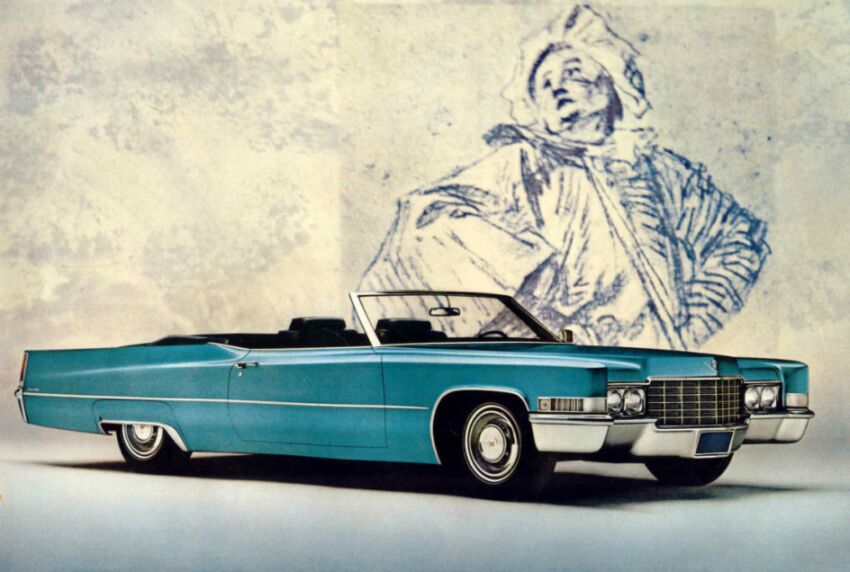
Next week will be a busy academic whirlwind tour of two Nordic capitals for me: Helsinki and Oslo. The two main American Studies events of the year are crammed together as consecutive conferences: The Renvall Institute's Helsinki do, The Maple Leaf and Eagle Conference, has reached instalment no. 12 in its fine run (it will be my third time around as a participant). The theme is always broad and this year is no exception: North America - Relations and relationships. My contribution is about the cultural importance of one specific, iconic brand of car: The Cadillac...
I approach this broad topic from a cultural text studies point of view, investigating how the cars are represented as markers of specific identity positions within specific difference hierarchies:
The Cadillac car has long featured in the American imagination as a signifier of cool masculinity, mastery of the road, financial surplus and a predilection for luxury and comfort (cf. the lyrics to ‘Cadillac Man’, quoted below). I propose to analyze a number of cultural texts that construct, establish and eventually subvert these connotations. I am particularly interested in constructions of race and sexual orientation utilizing the vehicle of the Cadillac. Texts to be analyzed include Jack Kerouac’s “fag Cadillac” in On the Road, rock singer and performer Mink DeVille, the persona of James ‘Thunder’ Early (played by Eddie Murphy) in the 2006 movie Dreamgirls, and various rock ‘n’ roll lyrics featuring comparisons of Fords and Caddies…
Well I’m the king of the road Ain’t got no place to go, no place I call home Seen the world from behind this old wheel Driving away from those feelings I feel
- Cadillac Man
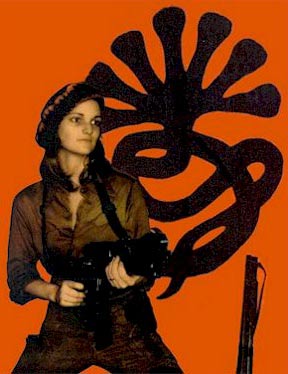
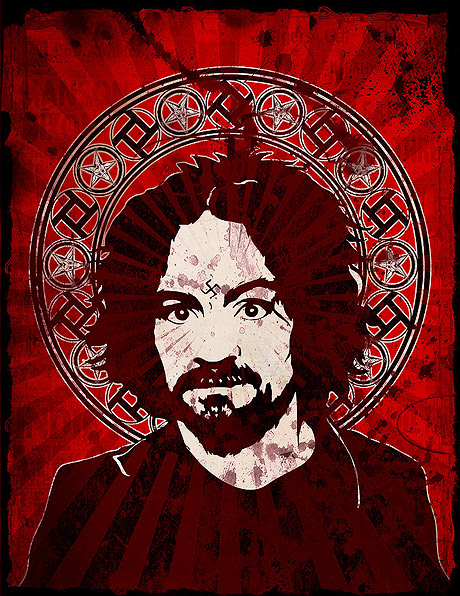
After a few days in Finland we'll relocate to Norway for the big European American Studies event under the auspices of the EAAS. Here my presentation is in connection with my on-going project on American Icons, more specifically some icons of transgression, associated with the 1960s. I'll give a paper on two celeb-criminals, two very different cultural texts, Patty Hearst and Charles Manson:
All iconic representations of actual persons (living or dead) are caught in a dichotomy between elements of normality/familiarity and elements of transgression. Manipulation of representations of celebrities or famous persons into hero- or other-images can either constitute adversarial or collaborative icon work. In adherence with the conference theme of “E Pluribus Unum or E Pluribus Plura” it would be interesting to examine iconic images that are meant to be particularly transgressive of normality and challenge stereotypical images of American wholesomeness. I propose to look at specific collaborative, yet provocative representations of two 1960s icons of transgression: Charles Manson and Patty Hearst, and to analyze how these particular images simultaneously stylize and sacralize these counterculture (anti)heroes, turning the viewer of the icons from passive consumers into ardent worshippers, consumers or cultural agnostics, all according to our ideas regarding the subjects and symbols in question. The images are reproduced below:
On the off chance that someone would get the strange idea from my previous post that I have something against male singers with high pitched voices and a penchant for odd hand movements, I offer this counter-evidence:
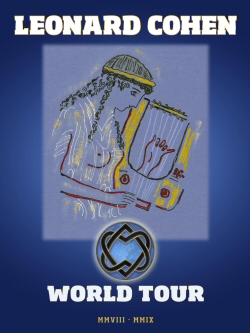
Here is the sublime androgyny of Antony Hegarty interpreting Leonard Cohen's "If It Be Your Will". Leonard's song is a celebration and embodiment of the total submission to the will of the Other which a man may have to embrace once in a life time. Antony is in some ways that embodiment of the Other which we rarely have a chance to encounter in real life. We are all enriched by the art of both these individuals who give new meaning to the postmodern sublime in their rags of light...
If it be your will That I speak no more And my voice be still As it was before I will speak no more I shall abide until I am spoken for If it be your will
I have a lasting fascination with American music from the 1960s. Many of the marquee songs of the era have become short scriptures for a generation of young folks who wanted change (hey Obama, you think you're so original?) and new values to believe in... Next semester I'll be teaching a short elective where I'll use a great book by Philip Beidler as the textbook - and he uses that phrase "Scriptures for a Generation" as his title, indicating that texts function ritualistically and communally in an orally transmitted culture...
Many such songs are 'auditory icons' in the sense that they are associated with specific filmic images through their use in film soundtracks. Think The Graduate, and hear Simon & Garfunkle's "Mrs. Robinson". Think Harold & Maude, and hear Cat Stevens' "If You Want to Sing Out". Think Midnight Cowboy, and hear Nilsson sing "Everybody's Talkin'"...
But wait a minute. Most Danes who hear "Everybody's Talkin'" these days will be thinking SAS, as in Scandinavian Airlines, because the corporate geeks in advertising have pinned their hopes on lifting the dwindling fortunes of the venerable inter-Scandinavian aviation conglomerate on the charms of this little ditty. The commercials give me vertigo (never a desired effect for an airline) and an acute sense of dislocation (not good either when destinations matter). The malady I am suffering from is space-time compression, a side effect of globalization: any text can nowadays be lifted from its original context and re-injected in a new sphere, worlds and decades from the origin. Mild disorientation usually ensues in individuals who know the history behind the original usage...
The lyrics of the song which make nice sense in the context of the film Midnight Cowboy, detailing the futile dreams of escape of two misfits trying to get out of New York City to soak up some rays in Florida, make somewhat less sense in the commercial, which follows a suited businessman as he wafts through check-in, security, arrival and apparently steps straight off the plane and into a sidewalk eatery in Southern climes... Listen:
Everybody's talking at me. I don't hear a word they're saying, Only the echoes of my mind.
People stopping staring, I can't see their faces, Only the shadows of their eyes.
I'm going where the sun keeps shining Thru' the pouring rain, Going where the weather suits my clothes, Backing off of the North East wind, Sailing on summer breeze And skipping over the ocean like a stone.
Read into a contemporary airport/travel environment the first stanza describes a certain recipe for disaster for the business traveller: acute disorientation, borderline catatonia - you'll never make it to the gate on time... Second stanza: uh-oh, trouble at security, the sunglassed guards have obviously sussed that you feature on every no-flight list known to man... Bridge 1: not exactly the hassle free dream destination depicted in the film, where our business traveller hasn't even packed a cotton-coat, let alone any rain gear... Bridge 2: forgettaboutit - you'll never reach your destination at all - the plane is crash landing on water, Mayday, Mayday...
OK, so the advertising company didn't really pay attention to the lyrics they picked - what they wanted were the feel-good vocals and the sing-along tune. Never mind the queer undertones of the original film, never mind the frustrations and alienation captured in the song's mini-portrait of its dishevelled urban cowboy persona... In the SAS fantasy world we are all wealthy, male professionals jetting across our little uniform globe in safe, sanitized aeroplanes that never have their wheels falling off on landing...
Back to the 60s. Nilsson's versions of the song are in themselves a little strange. Here is the original opening sequence of the film, where soon to be male prostitute, Joe Buck (played by Jon Voight), prepares to get out of Hicksville:
Note the bizarre nasal drone and Roy Orbison falsetto imitation at ca. 2:00 till coda... Now compare with Nilsson's slightly longer hit single version, here recorded for a Beatsploitation Hit-Parade TV-show called Beat Club:
Note the distinctly queer moves Nilsson puts on, attempting a bit of snazzy finger-snapping and hip gyration at ca. 1:00. The foghorn-like moaning comes in the vocal effort already at 1:15 and is redoubled at the coda, where the circular wrist motion also gets a bit out of control... By this time Nilsson was enjoying a mega-hit with the single which had almost transcended the three-Oscar success of the film. Both these versions are cool mementos of an age where music and films like these could enjoy block-buster success.
Nevertheless, there is an even cooler person behind the song "Everybody's Talkin'": the original songwriter, Fred Neil... Compare the Talkin'-light tones with string arrangements of Nilsson's versions to Neil's own stark folk instrumentation, cool guitar solo and deep vocal delivery:
That is a scripture for a generation, folks... Neil was a songwriters' songwriter, having even a master in his own right, Tim Buckley, cover another classic signature song of his ("Dolphins"). For a while in the mid-60s Neil was a powerful presence in the East Coast folk scene, much admired by diverse figures such as David Crosby and John Sebastian of Lovin' Spoonful fame.
Sadly, Neil never made it big as a performer and, after a spell of living in Woodstock, eventually elected to make his own getaway to Florida, quit the music business and slip into obscurity. His life and times are meticulously chronicled at this website. As usual Richie Unterberger has done some of the best musico-cultural archeology on Fred Neil, which can be read in part in this excerpt...
Here is Richie's take on "Everybody's Talkin'":
Fred Neil [the album] is best remembered, however, for the original version of "Everybody's Talkin'." Much slower and more simply arranged than the famous cover by Nilsson, it clearly laid out his wishes to escape the madness of contemporary life -- the city, perhaps, or the music business? -- into a hermetic paradise. (That destination is most likely Southern Florida, where Neil would spend much of his post-1970 life, given the line about going to a place where the sun always shines through rain.)
In 2001 Fred Neil passed away at age 65, after a long battle with skin cancer...
Here is how "Everybody's Talkin'" ends, long after the SAS commercial is over:
Sparked off by some of my recent posts on spirituality and quests for insight in relation to the work of Van Morrison and of the Beats, I have started thinking about some of the conundrums Western artists find themselves in when they become fascinated with Eastern belief systems.
Both Jack Kerouac and Van Morrison have frequently referenced Buddhism in their works (novels, poems, songs) In fact, Kerouac read widely in Buddhist texts over a period of several years, and eventually started composing his own sutras, or contemporary versions of sacred texts. Morrison has, of course, dropped references to both Kerouac's novels and to well-known Western popularizers of Buddhism in several of his songs... One key figure in this gamut is Alan Watts, who was English but lived the better part of his active life as a Buddhist popularizer in the USA (he died in 1973). The author of more than 25 books and avid lecturer and broadcaster, Watts' ideas are still being disseminated in today's media, via posthumous book publications, on discs, DVDs and on the Web... At some point Kerouac met and became friends with Watts, and he appears as a character in two of Kerouac's novel, Desolation Angels (as Alex Aums) and Big Sur (as Arthur Wayne). Morrison primarily glosses Watts' work in a song aptly named "Alan Watts Blues" (on Poetic Champions Compose) where the chorus is a rendition of the title of a Watts book: Cloud-hidden Whereabouts Unknown. The bridge lyrics go like this:
Sittin' up on the mountain-top in my solitude Where the morning fog comes rollin' in Just might do me some good.
Such sentiments echo very well with a Beat writer such as Gary Snyder, whose translations of Han Shan's Cold Mountain poems, for instance, sound very similar:
I settled at Cold Mountain long ago, Already it seems like years and years. Freely drifting, I prowl the woods and streams And linger watching things themselves. Men don't get this far into the mountains, White clouds gather and billow. Thin grass does for a mattress, The blue sky makes a good quilt. Happy with a stone under head Let heaven and earth go about their changes.
Clambering up the Cold Mountain path, The Cold Mountain trail goes on and on: The long gorge choked with scree and boulders, The wide creek, the mist blurred grass. The moss is slippery, though there's been no rain The pine sings, but there's no wind. Who can leap the word's ties And sit with me among the white clouds?
As a result of Watts' acquaintance with the Beats (he first knew Snyder, who was a serious Zen acolyte and also known to D.T. Suzuki, the first scholar to disseminate a knowledge of Buddhism in English) he wrote a fairly well-known essay titled "Beat Zen, Square Zen, and Zen", originally published as a pamphlet by City Lights Books in 1959, then collected and re-published in the Random House essay collection This Is It in 1962. Here are his definitions of the different mind sets to approaching Zen:
Square Zen is a quest for the right spiritual experience, for a satori which will receive the stamp (inka) of approval and established authority. There will even be certificates to hang on the wall. [Whereas f]or beat Zen there must be no effort, no discipline, no artificial striving to attain satori or to be anything but what one is. [He describes its self-defensive underside] But for square Zen there can be no true satori without years of meditation-practice under the stern supervision of a qualified master.
Not only did Watts identify the typical Western approaches to Zen as Beat or Square, respectively - pinpointing these approaches' short-comings (one is not serious enough and seeks instant gratification, the other is more philosophical than spiritual and caters to the intellect rather than the soul...), but in The Joyous Cosmology (1957) he had already offered a more history of ideas founded account of the difficulties of reception of Eastern religion for a Western mind-set:
The practical difficulty is that Taoism and Zen are so involved with the forms of Far Eastern culture that it is a major problem to adapt them to Western needs. For example, Eastern teachers work on the esoteric and aristocratic principle that the student must learn the hard way and find out almost everything for himself. Aside from occasional hints, the teacher merely accepts or rejects the student's attainments. But Western teachers work on the exoteric and democratic principle that everything possible must be done to inform and assist the student so as to make his mastery of the subject as easy as possible. Does the latter approach, as purists insist, merely vulgarize the discipline? The answer is that it depends upon the type of discipline. If everyone learns enough mathematics to master quadratic equations, the attainment will seem small in comparison with the much rarer comprehension of the theory of numbers. But the transformation of consciousness undertaken in Taoism and Zen is more like the correction of faulty perception or the curing of a disease. It is not an acquisitive process of learning more and more facts or greater and greater skills, but rather an unlearning of wrong habits and opinions. As Lao-tzu said, "The scholar gains every day, but the Taoist loses every day."
The practice of Taoism or Zen in the Far East is therefore an undertaking in which the Westerner will find himself confronted with many barriers erected quite deliberately to discourage idle curiosity or to nullify wrong views by inciting the student to proceed systematically and consistently upon false assumptions to the reductio ad absurdum. My own main interest in the study of comparative mysticism has been to cut through these tangles and to identify the essential psychological processes underlying those alterations of perception which enable us to see ourselves and the world in their basic unity. I have perhaps had some small measure of success in trying, Western fashion, to make this type of experience more accessible.
To illustrate this difficulty I propose to briefly return to the work of first Kerouac, and then Morrison. A poem sequence such as the spontaneously composed Mexico City Blues by Kerouac illustrates the limitations. In this book Kerouac on several occasions riffs on key notions in Buddhist faith, such as Maya (the notion that all, including human suffering, is an illusion - a veil, hiding the true nature of things - namely that no thing exists). He also plays with the idea of Nirvana, a state of grace where the believer has understood that nothing is real, and that Nirvana is the cessation of existence in the world of illusion. In a previous paper I made reference to how a specific sequence of poems approaches Nirvana:
The most discussed and anthologised thematic chorus sequence in Mexico City Blues is the one eulogising Charlie Parker, which rolls from poem 239 through 242 of the collection, and thus forms the coda to the whole book. There are, however, numerous other such chains of choruses with identifiable thematic connections creating coherence across individual pages. A good example of such a chain are choruses 196 through 201, which arise out of a longer, more vaguely interconnected thematic meditation on Buddhist tenets to riff specifically on the notion of Nirvana, and the application of Nirvana as a shade of lipstick, called “Nirvana No”, to barroom girls disturbing or tempting the Buddhist sage in his meditations. Most of the Blues poems are self-contained units, ending as a page gets filled up with text. Poems can however run on, onto the next sheet(s) as illustrated by the identification of chains of choruses discussed above. On the other hand there are many examples of apparently prepared run-on lines ending one chorus, but not being picked up in the next. One good example is the last line in the Nirvana sequence which reads “And they claim”, but we never learn what it is they claim, as the next chorus seems a self-contained meta-poem starting: “A white poem, a white pure/spotless poem” (202). On the whole Mexico City Blues can be said to thematise the quest for purity of mind and belief in a world full of temptations of the flesh, a world where the speaking and writing subject suffers but seeks help and illumination from selected culture heroes, (Buddhist sages as well as Charlie Parker) and as such the collection takes its place naturally among Kerouac’s other confessional works.
One could of course argue that writing the ''white poem" is a means of getting to Nirvana, and that would be a Zen stance. However, the follow-up notion that such a poem has to be "spotless" contradicts the move towards Nirvana, by the poet's getting hung up on achieving perfection within Maya. I think the operation in Kerouac's mind is typical of the Western way of thinking within the box of attainment, quality, perfection. Nirvana is not perfection, but the cessation of the striving for perfection.
Van Morrison's tribute to Watts seems to imagine the trip to the mountain top as a small stay at the spa, a detox of the mind, after which the poet returns to the grind of everyday life and its temptations:
I'm waiting in the clearing with my motor on it's time to get back to the town again Where the air is sweet and fresh in the countryside Well, it won't be long before I get back here again.
This again is similar to the way Kerouac ends his Desolation novels, Dharma Bums and Desolation Angels. The poet returns purified, but with the knowledge that this state will not last. In Kerouac's case the root to the flaw is already laid during the meditations on the mountain top where he has realized that all is illusion, but fails to take the final step of realizing that the suffering caused by this realization is also illusion. In Morrison's case one almost gets the feeling that the cleansing procedure is an established routine, not a one off extraordinary event that might lead to satori...
I end with a video of Watts' Conversation with Myself. There are 2 more parts easily available on YouTube...
OK, so I've heard from a few parties about my perhaps overly intellectualized analysis of Van Morrison's song, That's Entrainment, from his new album Keep It Simple. But that was just one way of writing about the record, and as I indicated in my post there is more to be said... This time, though, I'll try to heed Van's own advice and keep it simple.
Van Morrison's output over 4 decades is so massive that it is inevitable that there are repetitions, close similarities between individual songs, obvious influences from other artists, etc. This, on the other hand, need not be considered a weakness in Van's case: One would not consider Manet a lesser artist for the one reason that he kept revisiting the same subject canvas after canvas... Of course popular music with its mass distribution is not the same type of art as fine painting, and artists as diverse as Andy Warhol and Thomas Kinkade, who have little in common other than being extremely popular, have taken a lot of flak over the repetitive and voluminous nature of their production. Perhaps a similar jadedness due to overexposure is why some early customer reviews at Amazon were quite dismissive of Van's new album as repeating earlier songs and providing simplistic lyrics. I tend to disagree strongly with those uninformed opinions...
What I want to try here is to trace where Van is at and where he is coming from on this album. This could be thought of as a type of intertextual investigation in my academic discipline, cultural text studies, but I intend to keep it nonacademic this time around. Intend to, but no promises...
As a starting point I went to the nice Van Morrison News blog to see what people were saying about the new record. First thing I did was steal their signature Van caricature to use for this post - sorry folks, but I mean it as an honest tribute to your work... Next thing I noticed was the little poll fans can take there about which songs are their favourites from Keep It Simple, and although I don't usually like that sort of thing very much, I fell for the temptation to vote and - not least - see the aggregate results. I have four favourite tracks on the album: Soul, That's Entrainment, Keep It Simple, and Behind the Ritual, so I voted for those. I was somewhat torn when the aggregate results of 380 voters revealed that that is exactly what everybody else thinks too! On the one hand, it was a vindication that I was 'right' in some way, on the other I would have liked to be part of a more arcane elite who can 'see' things in a Van album that others cannot, so the slight let-down of being average stung a bit, too... Here are the results as of today: Ritual, 236 (62% of the voters had this on their list), Entrainment, 136, Simple, 133, Soul, 104...
Nonetheless, I want to say a few things even about the less loved tracks as well (I am quite fond of most of them, in fact): The album opener, How Can a Poor Boy, uses a lot of female back-up vocals, and the obvious association to songs outside Van's own repertoire to me is early Leonard Cohen, where jumpy songs such as So Long, Marianne use a similar arrangement. Likewise, both the title and the distinct use of female vocals clearly evoke Nick Drake's song Poor Boy, where the lyrics brayed by the back-up ladies in a mocking manner are "Poor Boy, so sorry for hisself..." Unique to Van's song, however, compared to Cohen and Drake, is his casting himself in the lyrics as a bluesy priest with congregation, flock, anointment etc. This continues Van's rather unfortunate trend to be messianic in his lyrics, perhaps best exemplified by They Sold Me Out from Magic Time where Van is the crucified Christ incarnate, whose robes are divided up among the Roman soldiers and the rest (himself) sold for "a few shekels more"...
I like School of Hard Knocks which continues the album, mostly because of its driving melody and Mick Green's slightly dirty guitar line snaking its way around Van's vocals. There is quite a dead-pan vocal delivery on Van's part, which always helps when he engages in a rant against the music industry, the Press, the fans etc. This type of lyric has become a staple on virtually every Van album from the nineties onward (Professional Jealousy, Big Time Operators, Songwriter, Look What the Good People Done, New Biography, Too Many Myths), and most fans are a little tired of Van griping about his hard career life. One should note that this is not a new theme in Van's production, not by a long shot... Think back to universally loved songs like Saint Dominic's Preview and its lines about the record company and the journalist waiting for sound bites:
And the restaurant tables are completely covered. The record company has paid out for the wine. You got everything in the world you ever wanted Right about now your face should wear a smile. That's the way it all should happen When you're in, when you're in the state you're in; You've got your pen and notebook ready, I think it's about time, time for us to begin. And we're over in a 52nd Street apartment, Socializing with the wino few, Just to be hip and get wet with the jet set. But they're flying too high to see my point of view.
And of course there is an old favourite of mine: Drumshanbo Hustle which eventually came out on Philosopher's Stone. This is Van's best anti-corporation rant, and it's funny!
I think I've covered the significance of That's Entrainment pretty comprehensively in my previous post. I will just add that this track has a distinct first-take ambiance (note the live feel of the coda), perhaps with overdubbed hand-claps, but little else added post production. Again I love how Mick Green lets his guitar bleed into distortion for a few seconds before he sequences back into clean picking w. reverb. Van's ukulele (reported in early live performance reviews as a 'small guitar' - which is a bit like calling a cello a very large violin) is a fresh touch that keeps the rhythm section light and bouncy. Van did mandolins on Down the Road, so maybe we are working our way through all the 'small guitars' in the repertoire...
Quite a bit has been made out of Don't Go to Nightclubs Anymore as a paean to senior citizenship and clean living. I don't much enjoy the slow jive type melody and rhythm Van uses here - it's too generic. But let's not forget the tribute element in the song: Jazz standard Don't Get Around Much Anymore is openly cited in the lyrics, and Van recently covered the similarly themed Lightnin' Hopkins song Stop Drinking (on What's Wrong with this Picture, 2003). In his own work, the drinking issue also surfaced much earlier, for instance Got to Go Back from No Guru: "Keep me away from whiskey and porter..."
Lover Come Back is a country nugget which shows what Van's previous Nashville album Pay the Devil could have been (but failed pretty miserably to be). At the same time the song and its arrangement harks back very clearly to Van's mid-80s albums, more specifically the Sense of Wonder, No Guru, Poetic Champions trilogy. The melody, its lilting chorus, the theme of return of the loved one, the humming of the background singers (mixed male and female voices) all resonate with those albums. There is also prominent organ work from John Allair whose stellar retro-Hammond playing adds significantly to the album throughout (Georgie Fame who put a distinct organ stamp on Van's 90s work seems to have gone for good from Van's recordings), and long-time collaborator on guitar, John Platania is also great to have back. And there is lovely pedal steel from Cindy Cashdollar to bring us full circle with that country feel...
Second stand-out track, Keep It Simple, does exactly what its title exhorts us all to do in life as in song-writing. Starting with ukulele strums, the songs builds and circles around its three chord structure. Mick Green goes on fire with distorted guitar in a short solo (I've never heard so much fuzzed-out guitar on a Van song, not even on recordings with Them), there is tasty accordion in the background, but it's Van's vocals that carry the melody forward as all other players are engaged in building the rhythm and the bottom. This must be a first take as well, and the oddest part of the track is that Van clearly sings with a lot of phlegm on his vocal chords. Most artists would have done another take (perhaps after a bit of porter and whiskey) but Van has kept this amazingly vulnerable expression of what the song's lyrics discuss: Keep it simple/And that's that!
End of the Land sounds like a late 90s semi-Celtic song, and Allair does his best Fame-imitation on Hammond to soothe us into a typical Van-lyric about seeking refuge in isolation, communing with nature. We've heard this sentiment and this melody many times before from Van from ca. Avalon Sunset and onwards through Enlightenment and Hymns to the Silence...
Another 'small guitar' gets to open Song of Home - this time a banjo, later supplemented with a mandolin. This again is country anthem time - a bit of gospel and a bit of Celtic harmonies (harbour lights and foghorns appear in the lyrics as echoes of Into the Mystic) are melded in for good measure. This is Ray Charles as a blue eyed Irish Baptist... Irish Heartbeat, One Irish Rover - songs of home are abundant in Van's back catalogue...
No Thing takes a bluesy stroll down pretty tired songlines about routines and repetitions in an aging man's hard working life... We cannot help but like the steel guitar, but the Nashville vocal harmonies that evoke 60s country (Anita Kerr Singers, anyone?) are an acquired taste. Van has been excavating his record collection again before he 'wrote' (channelled) this 'classic' sounding song.
The album draws to a close with two keepers: Soul and Ritual. A great couple... "Soul is a feeling deep within, soul is not the colour of your skin" - those are catchy opening lines to this mid-tempo ramble (broken by another great guitar rave-up by Mick) in which Van casually defines not just the genre of soul, but more profoundly (albeit essentialistically) the soul of man as "the essence from within, where everything begins..." Clocking in at three minutes thirty this is the hit single that obviously will never chart anywhere but in my dreams, but I must admit that this one hits me where it matters the most. It resonates. I already learned it by heart by the third play. Now I sing it aloud at unexpected moments usually misquoting the lyrics: Blue(s) is not the colour of your skin... This is also the first track on the album where Van breaks out his alto sax, and blows a trade mark solo. We have learned to love them, although when those solos first started appearing with regularity around Beautiful Visions and Inarticulate Speech in the early 80s I thought I would never quite settle with them... They seemed a distraction from what Van did best, but now they might be the show case for his best instrumental chops. Certainly, he stands his ground live with the best horn players around - usually the ones he brings on the road with him.
For closers we go Behind the Ritual to find the Spiritual. This song is simplified mastery on the melody side. We begin with a syncopated march time signature, then ringing tambourines and delicately picked guitar signal Van's entry as the Whirling Dervish, high on wine and days gone by. He has already calmly set the scene as that back alley we have been in many times before with Van, usually for jelly roll-related purposes. Here, however, it is clear that the wine is ceremonial, that getting out of our minds is motivated by the spiritual desire to speak in tongues, producing that sound - that jive- that no-one else can understand (it comes out literally as a scatted "blah-blah" for the first time in Van's recorded output (as it often has in live performances) enacting the mystical "speaking all out of our minds"). The song builds as a live tour-de-force, in the ancient manner we have come to expect from Van at least once on each album: Van blows his solo first on sax, the music grows to a full-force gale (call & response: Spiritual! Spin and turn!), then in ecstasy come the scat vocals, upon which Van and co. take it down to pianissimo, pare the sound down, and wind it all up with the simple ukulele chords... We got healed again, we found the spiritual, behind the ritual, in the days gone by.
Van has (as the cover photo signals) become "a man of granite, a man of insight". I am glad he still shares his insight with us and lets us enter into that rich tapestry of distilled influences and variations.
Late at night I like to watch a French TV-channel called Mezzo (half classical, half Jazz/World). I soon figured out that loads of Francophone, African musicians are totally cool songwriters, singers and musicians, but of course they get next to no exposure or airplay in mainstream music.
Soon after hearing guys like Salif Keita of Mali, Baaba Maal of Senegal, and many others I started looking for their music for downloads, and found a site called Calabash Music which has this stuff. I am not affiliated in any way with them, but was very happy to use their services to get this rather hard-to-find music...
On to Pierre Akendengué - he is from Gabon, by now in his mid-60s (in fact he'll be 65 in two weeks), and obviously has a long career behind him (and a PhD in Psychology!)... Highlights include Lambarena - Bach to Africa which is really uncategorizable. It was co-produced by Hughes de Courson, who talks about the process and concept in this interview. Here is a quote from a comprehensive website on Akendengué, run by Radio France International:
Akendengué’s highly original idea for his next album, Lambarena, was to fuse sacred chants from the equatorial forest region with classical cantatas composed by Johann Sebastian Bach. Akendengué and de Courson’s innovative musical project involved 250 African singers and a group of 50 French classical musicians - and the resulting album was an absolute masterpiece. Respecting the sacred nature of both the chants and the cantatas, Akendengué proved that these two radically different genres from vastly different cultures could be fused to create a totally new sound.
My wife totally digs the Bach-stuff; I prefer his earlier singer-songwriter stuff, for instance his first album Nandipofrom 1974. He has a lovely tenor (the vibrato gets addictive with time), and the sparse arrangement with lots of vocal harmonies, and a little nifty percussion soothes my soul... His lyrics were apparently quite militant even back then, and he had rep. as a protest singer:
Pierre Akendengué’s militant lyrics soon earned him a reputation as a protest singer. In fact, the singer’s next two albums did contain numerous tracks about specifically African themes and several songs explicitly calling for African unity, but Akendengué was not happy about being neatly pigeon-holed in this way. The singer felt there was more to his music than radical statements and fought long and hard to change the image which the media had thrust upon him.
Since my Myéné (Akendengué's native tongue) is non-existent and my French not too good, I cannot vouch for what Akendengué expresses in his lyrics, but again according to the Radio France web site:
Soon afterwards, Akendengué set to work on a new album with a hard-hitting theme: the history of slavery. One of the enduring symbols of the slave trade is the isle of Gorée (just off the coast of Senegal) and the musician chose Goréeas the title of his new album, released in April 2006. In 1997, Akendengué had actually visited Gorée and his trip had proved to be an intensely emotional experience. The musician's experiences on the island led to him writing "La chanson de Gorée", which would later serve as a basis for his album about the slave trade. Akendengué claimed he had been motivated to make Gorée as a way of keeping the troubled history of slavery at the forefront of people's minds and encouraging debate. His album also raised other topical issues on songs such as "De la forêt" which evokes the plight of Pygmies in Gabon, currently being evicted from their rainforest home. Akendengué appears to be happy with his new role of spokesperson, using his music to denounce human suffering and injustice across Africa.
Sounds like some worthy ideas to me... Here is "Bekelia" ("Hope") from the Gorée album:
For years I listened to at least one Van Morrison track every day, often playing one of his songs to energize myself before going in to teach a class or give a lecture. We're talking major obsession, here... so bear with me and this long post.
These days my Van-time comes in waves, on and off. Lately it's been on to an unusual extent, due not only to the release of his latest album Keep It Simple, but also to a belated discovery of his 2002 disc Down the Road which I had not paid particular attention to when it was released (being in a Van slump a the time), but which I now realize contains some really good material. To add to this rather muddled frenzy I have also recently acquired the 3CD version of Still on Top, the better of the several greatest hits packages available on a crammed Van-release market... The advantage of such an eclectic bunch of Van sounds is that one gets hip to connections one might not otherwise have noticed between periods, themes, melodic strands and influences in Morrison's output.
I had in fact written briefly about portions of Down the Road in a piece I published a couple of years ago on the theme of exile and homecoming in Van's songs. Down the Road contains a song that I think is pretty unique in Van's output as far as lyrics go. "Choppin' Wood" (which musically is not very interesting) tells the story of Van's father as an Irish emigrant to the US who eventually came home to Ireland disillusioned and lived out his days in Belfast ("a life of quiet desperation", as Van puts it borrowing a phrase from Thoreau), working the shipyards to feed his family ('choppin' wood' is Van's Walden-inspired metaphor for that grind and routine) yet never giving up his inner life and fascination with America. Van's many heroes have always been literary greats and musical mentors, but this one time we hear about his personal history and the person who moulded him the most. Van often talks about his father in interviews, but usually just about his record collection and interest in blues and jazz music. Recently, though, Van told an interviewer (Barry McIlheney, in the Members only portion of Van's official web-site) a more personal anecdote:
My father used to get this magazine called Jazz Journal and I read a review of a Ray Charles record in that. And my dad used to tune in to AFN, the American Forces Network in Germany, and one night lying in bed after midnight I was listening to AFN and I heard "What’d I Say", and I just knew it was Ray Charles. And I shouted down the stairs, “Is that Ray Charles?”, and my dad shouted back, “Yeah, it’s Ray Charles”. I don’t know how I knew as I’d never actually heard anything by him ever before that night, but somehow I just knew it was him.
I really enjoy how Van's father gets to OK that Van gets a new, musical 'father' in Ray Charles by just 'knowing' him over the airwaves...
My little academic piece on Van was mainly about how a stream of references to exile and homecoming and all the questing that lies between runs through Van songs covering 5 decades and also shades and shapes his album covers, the names he gives to his production companies, touring bands, and every aspect of his public appearance. The latest albums have done nothing to change that impression - quite the contrary, I see Van's post-millennium work as largely a revisiting and reworking/refining of the same themes. Here is a quote from my article, "The Celtic Ray - Representations of Diaspora Identities in Van Morrison Lyrics":
In numerous songs spread out over his whole recording career, Morrison references his origins, childhood and youth in Belfast, where he was born in 1945. He grew up on Hyndford Street in a lower middle class neighbourhood in Protestant dominated East Belfast. However, his parents were not typical Ulster Protestants: Morrison’s father, George, came from a family with Scottish, Presbyterian roots, and was an electrician by trade, but really more interested in his passionate hobby of collecting American blues, bluegrass, country and jazz records. Morrison’s mother, Violet, unexpectedly developed an intensely religious zeal at the time when Morrison was around 10, but contrary to the norm she channelled her beliefs into Jehovah’s Witnesses activities (hence Morrison’s tribute “Kingdom Hall” on his 1978 album Wavelength). This combination of a worldly father, whom Morrison has repeatedly described as an atheist, and a spiritual mother, would immediately seem to have set Morrison on his subsequent path of vacillation between belief and doubt. The parents seem to have embodied the same polarity of personality facets that Morrison himself exhibits: The father an introverted uncommunicative non-believer, ultimately disappointed with his life in Belfast; the mother an extrovert, performative personality, eager to communicate her views to people even to the extent of trying to convert them religiously.
Other than the rare glimpse of family history found in "Choppin' Wood", Down the Road also contains such nostalgic songs as "The Beauty of Days Gone By", which on later albums such as Magic Time and Keep It Simple has found companion pieces in "Celtic New Year" and "Song of Home," respectively. The title track from Down the Road and the closing track on that album, "Fast Train," are songs of leaving home but never escaping completely, and on Keep It Simple they are echoed in the song "End of the Land". So, the weaving of this strand of longing for belonging is clear even in Van's latest songs, as indeed they have been since the 60s (but you'd have to read my article to get that analysis. You can find it in the book Re-Mapping Exile, available here as an E-book)...
The other strand that runs pretty consistently through Van's songs is his fascination with the spiritual and his ceaseless quest for finding ways of touching the sublime and ineffable. This quest had led him along some strange by-ways, including Scientology and the bizarre esoteric work of Alice Bailey and the reincarnated "Tibetan" sage she channels in her work. Van has also been into Celtic mysticism, gnostic Christianity, Buddhism and other Oriental brands of religion and spiritual techniques. It is perhaps not surprising that he continues to write about such matters, also on Keep It Simple... After all, many such belief systems are exactly attempts at simplifying and clarifying a person's life on Earth (sometimes in preparation for a better afterlife or return, depending on what one expects in terms of karmic rewards).
I said a bit about this in my article too, so you get one more quote for free:
Morrison’s notions of Celtic brotherhood can be seen as a hybrid between American New Age philosophies and Irish identity positions (both identity constructs oscillate between collectivist messages and individualist realisations of them). Morrison’s quest for enlightenment became more and more explicit throughout the eighties as witnessed by album titles such as Beautiful Vision from 1982 and Inarticulate Speech of the Heart from 1983, as well as Sense of Wonder (1985), Avalon Sunset(1989), and finally Enlightenment (1990). Only on a surface level did an intervening album title from 1986, No Guru, No Method, No Teacher, appear to contradict the singer-songwriter’s quest for esoteric knowledge, since that album title is in fact a quote from Krishnamurti, the mystic messiah trained by the Theosophical Society (founded by Madame Blavatsky) to enlighten the world. Morrison songs from the 1980s are glosses of teachings from a number of esoteric, New Age or occult beliefs, including Scientology, whose founder L. Ron Hubbard, is explicitly thanked in the liner notes to Inarticulate Speech of the Heart. The richest vein mined by Morrison in those years is, however, the writings of Alice A. Bailey, whose theories concerning illusion, glamour, maya, and the strange entity known as “The Dweller on the Threshold” – all obstacles to true enlightenment – can be traced on several Morrison albums.
The postulate here is that this hybrid of esoteric knowledge, Irish identity longings, and a cross-cultural musical style and performance, creates the only viable recipe for life for Morrison whose character reflects a contradiction between an extremely shy and private persona, and an extroverted performer persona whose only existence is in the public gaze. Morrison is thus seen to be “Hiding in the Light”, to gloss Dick Hebdige’s 1980 book of the same title, which details the narcissistic paradox of hiding and exposure inherent in subcultural deviance, which seems apt to characterise Morrison’s desires as well. This duality is further mirrored in Morrison’s own internal and external exile positions, and partly explains his continuing quest for identity, figured as a battle between revelation in the form of enlightenment and concealment in clouds of mysticism.
People have not yet made the connection between Eastern mysticism and the lyrics on Keep It Simple, but I'll gladly be the first one to point them out. Most reviewers have commented on the track "That's Entrainment" (which is one of the really sublime songs on the new disc, captivating you with its simple chords, repetitive chorus, Van's vocal riffing and the accompaniment effortlessly laid down in what sounds like a first take) - often wondering what the strange word 'entrainment' might mean. Some reviews offer dictionary definitions (Physics: 'the process whereby two interacting oscillating systems assume the same period'); others like the one in Rolling Stone gloss it as being in a 'trancelike realm'... Dave Heaton in PopMatters makes a full paragraph out of a valiant effort to describe the song and understand the title:
Partly because of the singing, “That’s Entrainment” immediately stands out, one to add to the lengthy list of classic Van Morrison songs. The third track, it’s the first riveting moment of the album, possibly the first from Morrison in a while, where he holds time still like he used to. He starts singing right at the song’s opening seconds, painting a picture of a countryside, then of himself standing in rapt fascination, struck by the pure beauty of an unspecified “you”, seemingly the spiritual force of nature, but sung to like a lover. Handclaps and other hand percussion provide the song’s backbone, as Morrison sings up and down the hills of that countryside, eventually expressing his awe in the terms of classic R&B—when “you” come around, it makes him holler, makes him want everyone to shake their collective moneymaker, shake it on down. At first the chorus of “That’s entrainment” is jarring amidst all this ecstasy and calm, if only because it begs the question, “What the hell is entrainment?” As far as I can tell, it’s all about being drawn in and transformed, the way air forms into a cloud.
Well and good, all - but no cigar, as Freud said to his mother. Entrainment is indeed both "the synchronization of organisms to an external rhythm" and the practice of "the practice of tuning one's brainwaves to a desired frequency", but while I wouldn't put it past Van to have read books about biomusicology and neuroscience, I find it a million times more likely that he once again dipped into his extensive library of Eastern religious esoterica and New Age philosophy. Let's do the same: 'Entrainment', in the esoteric sense of the word, is a concept directly related to music and poetry and the performance thereof. Read this (lengthy, sorry!) excerpt from a home page on Indian music and its function in worship and meditation:
The musical forms, kirtan and bhajan, are essential components of virtually all Hindu worship, as well as of related traditions, such as Sikhism, where they play an indispensable role. More similar than different, both are related to jaapa, or repetition of the Sacred Name, and group participation is usually emphasized. An interesting distinction is that while bhajans are commonly performed as such for listening audiences, kirtan - usually a group devotional practice - requires participation, rather than taking the form of a performance. Kirtan typically employs fewer and much repeated phrases, while a bhajan may contain elaborate verses and melodic improvisations, sometimes with sung mono-syllables (generally, the names of the notes, themselves). Both employ melodic structures based on the Indian classical raaga form, where the emphasis is on rhythm and melody, rather than harmony. And, while kirtans generally take only the names and qualities (guna) of the Divine, bhajans often employ ornately poetical lyrics from the greatest of Indian poets, including Rabindranath Tagore, Tulsidas, the Sufi Kabir, and the great woman saint, Meerabai.
A delightful aspect of kirtan participation is the opportunity for entrainment. Entrainment happens when one object or person comes into rhythmic synchrony with another. Experiments have demonstrated that two clocks placed side by side may begin to tick together after some period of time. Similarly, the strings of one lute may resonate sympathetically in relation to a nearby lute, identically tuned. According to this principle, the members of a kirtan sangha may come into synch with one another during the process of chanting melodically and rhythmically. Further, as the root forms of kirtan typically derive from classical raagas, the melodies may help to synchronize us with Nature or the Cosmos, itself. Also, when we sing or chant, the breath necessarily becomes rhythmic, and this may encourage balance and equanimity. This factor, along with the sounds or meanings of the sacred and ancient words, may have multifarious beneficial effects on the mind, body, and spirit. Also, it is said that one need not even participate in kirtan to derive its many benefits; merely listening attentively to the devotional music may uplift, inspire, and even heal the listener at some level. Stress, negativity, and "self-grasping" may all be let go during participation or listening to kirtan.
"...merely listening attentively to the devotional music may uplift, inspire, and even heal the listener at some level." Did ye get healed? - as Van asked us back in '87 on Poetic Champions Compose (thanks for the correction, Eoin), one of many albums drawing heavily on a mix of literary influences (Yeats) and religious inspiration (Alan Watts' notions of Zen). The above quote gives us the necessary understanding of Van's idea of entrainment: phrases such as 'repetition of the Sacred Name', 'elaborate verses and melodic improvisations, sometimes with sung mono-syllables' are often applied almost verbatim to describe Van's performances. Van also frequently borrows ornate lyrics from great poets, and I am positive that he is familiar with Rabindranath Tagore, the anglophone Indian Nobel Laureate (1913 - the period Van often evokes through Yeats, T.S. Eliot and other modernist poets). So, Van's entrainment is his kirtan (what we get when we sing along) and bhajan (what Van attains when he goes into the zone of private performance)...
Not yet convinced? OK, did you read carefully enough to catch the reference to 'the Sufi, Kabir'? Kabir could easily be one of several inspirations behind Van's "No Guru, No Method, No Teacher", as the paradoxes of some of his poems reveal:
O SERVANT, where dost thou seek Me? Lo! I am beside thee. I am neither in temple nor in mosque: I am neither in Kaaba nor in Kailash: Neither am I in rites and ceremonies, nor in Yoga and renunciation. If thou art a true seeker, thou shalt at once see Me: thou shalt meet Me in a moment of time. Kabir says, "O Sadhu! God is the breath of all breath."
Are you looking for me? I am in the next seat. My shoulder is against yours. You will not find me in the stupas, not in Indian shrine rooms, nor in synagogues, nor in cathedrals: not in masses, nor kirtans, not in legs winding around your own neck, nor in eating nothing but vegetables. When you really look for me, you will see me instantly — you will find me in the tiniest house of time. Kabir says: Student, tell me, what is God? He is the breath inside the breath.
Seeking, meeting, breathing - all vintage Van obsessions... And who translated Kabir's poetry into English? Rabindranath Tagore, of course...
The reference to Sufism on Keep It Simple comes in the most bhajan-like song on the album, the 7 minute long closer, "Behind the Ritual" ('Behind the ritual, you find the spiritual'). Van wails about days in the alley (a familiar locality from many Van songs, usually associated with 'jelly roll'), spent "drinking that wine, making time, and talking all out of my mind" (rituals involving drinking wine and speaking in tongues, anyone? How about the Eucharist and the descent of the Holy Ghost...?) At one point Van refers to himself "turning and spinning in the alley, like a Whirling Dervish in the alley" - and that is your reference to Sufi mysticism - the ritual that a specific Sufi sect devised to achieve entrainment, spinning around your own axis until you attain enlightenment and oneness with God:
In the symbolism of the Sema ritual, the semazen's camel's hair hat (sikke) represents the tombstone of the ego; his wide, white skirt represents the ego's shroud. By removing his black cloak, he is spiritually reborn to the truth. At the beginning of the Sema, by holding his arms crosswise, the semazen appears to represent the number one, thus testifying to God's unity. While whirling, his arms are open: his right arm is directed to the sky, ready to receive God's beneficence; his left hand, upon which his eyes are fastened, is turned toward the earth. The semazen conveys God's spiritual gift to those who are witnessing the Sema. Revolving from right to left around the heart, the semazen embraces all humanity with love. The human being has been created with love in order to love. Mevlâna Jalâluddîn Rumi says, "All loves are a bridge to Divine love. Yet, those who have not had a taste of it do not know!"
Van's pan-esoteric religion has often led him to "pray to the One", go "across the bridge to the other side" (sometimes it's just a stairway leading to Vanlose railway station, but it is all one bridge leading to enlightenment) and "dump" his ego "on the burning ground"... Sufism is just the latest facet this Irish Dervish (a Persian word for the 'ascetic mendicant' - a propos of "Don't Go to Nightclubs Anymore" - whose function is to be a "source of wisdom, medicine, poetry, enlightenment, and witticisms"). Examples of punny wit abound on Keep It Simple - here are two:
"That's Entrainment" puns on the old Musical (retrospective) film That's Entertainment! and not least its punny title song. ("The chase for the man with the face: That's entertainment!")
The mantra, "Behind the ritual, you find the spiritual" reveals and hides at the same time that the word 'spiritual' is a portmanteau of the two words that are key to understanding the album: 'spirit' and 'ritual'...
Keep It Simple is a delightful album that turns a trick or two on you: it ain't as simple as you might think. More to follow...