Showing posts with label The 60s. Show all posts

Thursday, March 14, 2019

Leslie-Ann Beldamme: "The One I Love"

I have just re-purposed my Tumblr blog with a focus on Danish writers and artists, and started translating little pieces of prose and poetry for that. This work pleases me a good deal, and who knows what collections it might lead to...

The work involves finding cool Danish, or - in a pinch - Scandinavian birthdays, and every now and then I stumble over a name that is vaguely familiar, but which I can't quite place. This happened yesterday when I was researching the March 15 birthdays. "Anna Castberg? Who was she, again?"

Well, as it turns out, Anna Castberg is mainly remembered in Denmark for a moment of infamy when she was caught lying on her resumé for the job as Museum Director at the recently built Arken museum - a lovely edifice on the coast just outside Copenhagen, which specializes in Contemporary art.

Ms Castberg was pre-eminently qualified for the job as Director with her PhD in Art History and extensive museum experience, and she was hired in 1993 to build up the collection and launch the new museum in 1996.

Soon, however, the Danish newspapers took a keen interest in the budgets for the new museum which seemed rather out of control, and a bit of digging soon revealed that Castberg didn't really have a degree of any sorts and didn't actually attend any of the universities she claimed to have gone to. She also hadn't really worked for the institutions she had listed on her resumé as prior experience. This was not a new pattern, in fact. When looking for work in Britain, she claimed to have a Danish degree, and vice versa...

She did manage to stick around to launch the museum, which soon became an attractive destination for culture tourism and started putting itself on the map in art circles. However, a few months after the opening she was let go, and promptly vanished from the public view... She seems to have moved back to Britain, and is currently listed as a practicing psychotherapist. I'm not sure she has any formal degree or training as such in that field, either - but hey, that has never stopped her before...

At least two Danish novels and one play have been inspired by the Anna Castberg affair. I haven't read or seen any of them, but you can easily find them if you can read Danish. Look for Leif Davidsen's Lime's Billede, or Ole Hyltoft's Mordet på Museet...

So, why am I blogging about Anna Castberg, you might ask... Well, apart from her bold behavior, which I can't help but admire, having worked myself in a business where fraud is rampant but rarely this flamboyant, she did have one true item on her CV that I am particularly interested in.

Cue Leslie-Ann Beldamme, the little-known English folk-singer who at the age of 17 got a contract with Decca and recorded a lovely 7" single with the songs "The One I Love" (R.E.M. were not that original...) as the B-side and "The Rose of Loneliness" as the A-side. Leslie-Ann was of course none other than Holbæk-born Anna Castberg.

At this point in time only the B-side - which according to the label was penned by Leslie-Ann herself, but who knows? - is available on YouTube. I have not heard the A-side which is credited to Mikis Theodorakis, and titled in parenthesis "Sirtaki song", which would indicate it used the melody from the film, Zorba the Greek that was a huge hit in 1964. The other writing credit on that track is for "Jeffery" - maybe an English lyricist? This track also has an arranger credit to Reg Guest (known for his work with The Walker Brothers, Dusty Springfield, and others).

I advise you to listen to "The One I Love" - it is really lovely and very much of its time what with Judy Collins and Joni Mitchell beginning to make a mark for themselves. The vocals are pure, somewhat vibrato-laden, and the melody is simple but catchy in its arrangement for acoustic guitar, bass, a touch of vibraphone and tastefully wire-brushed drums...


I suppose Decca thought - with some justification - they might have found a true English rose to rival the Americans in this fledgling market for folky, female singer-songwriters...

However, the single flopped pretty badly, selling only 9.000 copies, and Leslie-Ann never seems to have recorded again - at least not under that name. There is something very endearing about the whole construction of this young girl - the obvious, but clumsy allegorical last name (riffing on the French "Belle Dame" - 'beautiful lady' and her step-father's real name, Beldam), and the both demure and sexy picture of the brunette on the sleeve.

Image engineering was not as blatant in the 1960s as it later became in the music industry and commercial realms - but it certainly did exist. Also, one cannot help but think what would have happened, had Leslie-Ann become the next singing sensation for Decca. Would she still have ended up a fraud, infamous in an entire nation? Or would she have ended up as revered as the late, great Sandy Denny, born one year before Ms Castberg??

The Decca single is available on Discogs and other re-sell sites for a pretty hefty price - 50 GBP on eBay, or €150 on Discogs.

Happy 71st to Ms Castberg!

Tuesday, May 20, 2008

A Skin Too Few

Jeroen Berkvens' 1999 documentary A Skin Too Few takes its title from a remark Gabrielle Drake has often made about her brother Nick, trying to describe why he found it so hard to cope with the world. This film is everything other Nick Drake documentaries are not - a raw heart-tugging document of a young man's terrible trouble adjusting to the pressures of growing up, being uncommonly talented and unreasonably sensitive at the same time. The film shows testimony from family and close friends and associates, illustrating Drake's slow turn away from the world into his own mind where demons of depression lurked and eventually overpowered him.

Unlike Nick Drake Under Review this film does not rely so much on assessments from other musicians or journalists/biographers. In fact the only other musician we hear from is Paul Weller whom we see in the opening scene in a recording studio w. John Wood and Robert Kirby, two of Drake's very close collaborators. Weller never knew Drake, nor does he have much to say about him, so I wonder why he has to appear at all, but never mind...

Rather, we should be very grateful for what we get from this film instead: a very moving portrait of a man and an artist who was very deeply rooted in a loving, supportive environment, both in terms of family and friends and his fellow professionals in the music world. We follow Drake's life chronologically, virtually from cradle to grave, and the main narrator of this story is his older sister Gabrielle, supplemented by the taped voices of both Rodney and Molly, their parents, telling us of events that Gabrielle did not herself witness.

It is quite interesting to get the whole story of the Drakes' time in Burma and to hear Gabrielle speak of Nick's birth and the easy life of a colonial well-to-do family in the late 1940s - illustrated by home movies of a happy family. Her assessment of Molly as a troubled soul, buoyed up by the love of her husband who made life livable for Molly without strangling her creativity is very poignant. The footage then takes us to Tanworth-in-Arden and inside the magically named childhood home of Nick, Far Leys, where we follow the camera into Nick's room, see his wonderful round window, while the soundtrack plays a home recording of "Hazey Jane I" (in a much more rocking version than the Bryter Layter version - a very cool performance by Nick), the camera then panning to a view of a fruit tree out of the window. The images thus already prefigure the theme of home, longing, escape, failure, return, sadness which structures the whole narrative of the film.

Gabrielle then plays one of Molly's songs, again emphasizing the very strong relation between Molly and her son, both in terms of the similarities of their temper and talent, and in terms of her maternal love. Over the sound of Molly's song we hear the train clickety-clacking, signalling Nick's departure to Cambridge which is the next period to be narrated by the film. The use of the train in image and sound is another unifying feature of the film, recurring throughout...

Brian Wells, a Cambridge friend of Nick Drake's, narrates the next portion, a story of dope smoking, guitar playing - in effect a 3 year holiday for the young men. In contrast, Gabrielle reads from a letter from Nick to his parents on liking Cambridge more than before, claiming to have "thrown off one or two rather useless and restrictive complexes that I'd picked up before coming here". One of course wonders where and when...? Gabrielle's stock of letters from Nick would certainly be superlative material for a sincere biographer to have access to. "River Man" is played over footage of Cambridge streets - people coming and going as the lyrics also detail. On tape Rodney speaks of Nick's Cambridge nostalgia, and of his desire that Nick should have a degree as a safety net, whereas Nick insisted that that was the one thing he would rather not have...

The scene shifts to London as Gabrielle remembers Nick one day coming home to their flat, tossing copies of Five Leaves Left on the bed - to her amazement, since she never realized that he was recording a whole LP. This portion continues with musical testimonials from producer Joe Boyd talking about Nick's skills and reliability as a player, Robert Kirby speaking of his arrangements ('lonely and bleak') complementing the perfect guitar line, which John Wood, the engineer, illustrates on the mixing board (playing the raw tracks of "Chime of a City Clock"). As the song plays on the soundtrack in its fully finished version, the images illustrate the song with night footage of rainy London street, segueing into the well known stills of Drake standing motionless against a wall as other pedestrians rush by.

Next, Boyd talks about Nick quitting touring in frustration over audiences being indifferent or hostile. Wells tells an anecdote about Nick slipping into isolation and depression. One of his most upbeat songs, "When Day Is Done", illustrates Nick's next move "back where you've begun," as the lyrics read. Wells remembers Nick returning home to Tanworth, and his being ashamed at having failed to live and cope in London. Drake was hospitalized, and diagnosed as clinically depressed, whereas Wells sees Nick's condition more as an existential crisis, brought on by the coldness and futility of life as such.

We next hear a recording of Molly, quoting Nick: "I don't like it at home, but I can't bear it anywhere else..." Molly concludes that Nick had "given up on the world", and she recalls her utter inability to help him overcome his sense of acute failure at everything he had ever tried to do. Gabrielle explains it like this: "I never did see a change - it crept up on us..." "He saw more, and he became more silent as he saw more." "That is expressed in his songs and almost nowhere else..." This sequence of the film is very dark, also in terms of images of the night, storms, even featuring Gabrielle dressed in black - all quite effective emotionally, as one understands the tragedy of his family not being equipped to help Drake at all. Love was not enough.

Boyd talks about trying to get Drake to seek help from a psychiatrist, but Nick being ashamed of such a course of action. Later Boyd details Nick's outburst against his lack of success, making an analogy between Nick's anger directed towards Boyd, and the lyrics to the song "Hanging on a Star" ("Why leave me hanging on a star when you deem me so high?") As Nick sings the desolate lyrics to "Know": "Know that I love you, Know I don't care, Know that I see you, Know I'm not there" we pan to the supernatural beauty of the English woodlands in misty, early morning shots, another technique Berkvens uses to great effect, showing the incongruousness between Nick's surroundings and his self-image.

Keith Morris, photographer for the Drake albums, remembers the Pink Moon sessions, especially Nick's almost total silence which contrasts dramatically with earlier occasions where they had worked together. The images taken during that session are shown with no musical accompaniment. The film shifts to Gabrielle reciting Molly Drake's poem "The Shell," describing how both Molly and her son had problems sensing the world directly without the feeling of being imprisoned in a shell - this is accompanied by images of Gabrielle placed in the woods as a stylized, tragic figure herself - obviously practising her actor's craft here...

We are next treated to English woodland and village scenes - evincing the same stylized beauty, as Drake finally sings "Hanging on a Star". The camera takes us again to Nick's room, and a montage of both parents' voices narrates the last night of Nick's life (we see Nick's round window increasingly freeze over during this narration). Molly remembers the final night and next morning - the agony of never having known how dangerous the Triptozol pills were, the inevitability of finding him dead that morning. Gabrielle remembers being in a comedy play in Bristol at the time, and how her parents drove down to tell her of Nick's death. As she tells us this, we see the room scene again, and Berkvens uses the out of the window motif, as Nick sings of the "endless summer nights" (from Pink Moon's "From the Morning"), escaping his shell for good.

Gabrielle's theory of Nick's death is that it was a spontaneous act - whether suicide or cry for help she could never determine... (We see the interior of the Tanworth-in-Arden church as a service ends.) Gabrielle muses on the blessings of having had such a family and the tragedy of losing them. Kirby relates his feeling of being shocked at the news of Drake's death, whereas Wood felt terribly sad, but not surprised...

The closing scene begins with Nick's voice on tape, apologetic that his voice is failing - but he promises to do one more song. Over images of Tanworth "Northern Sky" plays, and suddenly the music is lowered so we hear Nick's naked voice, as we see his headstone in the church yard. The sequence ends with an impossibly beautiful shot of the church in the distance.

Gabrielle closes the film by talking of Nick's recent fame, and the helping quality of Nick's music for so many young people of later generations ("had he only known..."). As "Northern Sky" closes, we end with the Drake family home movies - filled by images of Nick's happy childhood. The soundtrack ends with sounds of waves and moving trains.

I find the film very well made, especially as it allows itself to have a narrative that veers from the straight documentary aesthetics and into techniques borrowed from fiction: the use of leit motifs, colouring, sound effects etc. This enhances the film's emotional impact greatly and it is hard to not be very moved by its otherwise familiar story. I am very impressed by Gabrielle Drake's role in the film which she virtually carries single-handedly - both as a trustworthy narrator and as a great actress using her craft to play on our emotions. The 48 minutes spent with the Drake family are very enriching and enlightening.

Monday, May 19, 2008

Nick Drake Under Review

A few weeks ago my friend Gorm was visiting and spotted a couple of Nick Drake documentary DVDs on my shelf. I had been saving them for special occasions because I knew they would be emotionally challenging to watch and I would want to write about them (as this review bears witness to), and at the same time I hadn't really wanted to watch them for fear of disappointment - the usual syndrome that can hit the ardent fan when someone else dares to provide opinions on and analyses of the sacred object: On the one hand you want there to be as many Nick Drake documentaries as possible, but on the other hand you don't want to watch them because you know they'll be full of nonsense... Anyway, Gorm asked if my wife and I had watched the films, and when I said no, he concluded: Oh, you're not that big a fan, then! Thus challenged, I figured it was high time to actually get started and to deliver the review I rashly promised when I first started this blog named after a line in a Drake song...

The 90 minute Under Review film came out on DVD in 2007 (Chrome Dreams - Director and writer apparently both wish to remain nameless...). It is not sanctioned by the Nick Drake estate, Bryter Music; nor by Drake's record company, Island. Therefore, we are only treated to short snippets of Drake's recordings - I suppose to keep the copyright issues minimized by sticking to the standard fair use clauses. As a result the film contains longer clips by Bob Dylan and Davey Graham than it does by Drake. Of course there is also the matter of Drake never having been filmed live, so we don't get any performance footage either, but then that is a given in any Drake film.

What we do get is a bunch of interviews with people whose lives have in several ways brushed up against Nick Drake's, either because they knew him, or because his music somehow has captivated them. The film is chronological in that it follows Drake's life from childhood to his premature death at 26. It goes into great detail about some aspects of his life, primarily of course the creation of his three completed albums, but also to some extent his personal life. The interviewees thus function as narrators taking us through a mixture of basic information (although a voice-over narrator also provides that type of continuity, esp. in the first third of the film) and personal assessments. The chief narrators of that kind are the two main biographers of Nick Drake, Patrick Humphries and Trevor Dann, plus the only contemporary music journalist who took Drake seriously, Jerry Gilbert (Gilbert conducted the only interview Drake ever gave to a music journalist). Analysis is also provided by Caitlin Moran - columnist and journalist w. The Times, and her husband Pete Paphides - also a music journalist. They represent the younger voices, sanely assessing Drake's significance to our current time and its musical and cultural climate.

The second type of narrators consists of musicians, and again we get two different generational viewpoints: Drake's contemporaries and our contemporaries. Of the first kind are Fairport Convention musicians such as Ashley Hutchings (who 'discovered' Drake) and Dave Mattacks (who played on the Bryter Layter recordings w. Drake), as well as Ralph McTell - who headlined the last gig Drake ever played at. These three provide insightful analysis of why Drake failed as a live performer, but succeeded as a songwriter and musician in the studio. Other older members of the 60s folk scene in the UK are interviewed as well, but good people such as John Renbourn (who teaches us the difference between the blues style vs. the finger picking style on the acoustic guitar) and Robin Williamson of The Incredible String Band didn't really know Drake personally and have little to say about him. Here one sorely misses Linda and Richard Thompson, John Martyn and other, closer, musician friends of Drake.

The younger generation of musicians is represented by one of the relatively few women in the film, Kathryn Williams, who also performs fragments of Drake's songs. Keith James, a singer / songwriter in his own right, also performs covers of Nick Drake songs (some of which he has recorded on CD) and talks about Drake's tuning and playing techniques. A few comparisons are made with another English guitar innovator, Davey Graham, who has been rather more unkindly treated by time. Renbourn and Bert Jansch are of course also mentioned as influences on Drake's playing style, but other than that most of the film's interviewees emphasize strongly how Drake's music really transcends the narrow bounds of the 'folk' label, esp. because of his knowledge of other types of music, classical as well as jazz. As for the analysis of the music of Nick Drake the film is severely hampered by the lack of involvement from the people who really worked with Drake: Joe Boyd, John Wood, Robert Kirby - producer, engineer, arranger of scores, respectively, are all missing as voices...

The final type of interviewees consists of friends and acquaintances, and here we only really get snippets from an elderly couple who knew Drake's parents (but have nothing of interest to say) and a substantial contribution from Jeremy Mason - Drake's old friend (he wrote "Three Hours (to Sundown)" about Jeremy). Mason provides a number of rarely seen photos and lets us see some of his own drawings of Nick - great material, much of which stems from a stay the two of them had in Aix-en-Provence, France. Again, though, one misses more testimonials from (other) friends (where are the women who knew Nick?) and family - but Drake's parents are both dead and his sister Gabrielle is reluctant to talk to most journalists and biographers...

This leads me to my main bone of contention with the film - the role of Trevor Dann. I intensely dislike his bio of Drake, Darker Than the Deepest Sea, which spuriously suggests that Drake's problems all stem from childhood abuse of some unspecified sort (all based on so-called textual analysis of Drake's lyrics). While Dann doesn't voice any such views in this film, he still comes across as a very unsympathetic and snide character who routinely ventures into territory he has little knowledge of. His casual references to Drake's allegedly excessive drug use are left unchallenged by the film makers, whereas many of Drake's friends are willing to testify that these stories are vastly overstated. Further, it quickly becomes clear that Dann is in deep waters himself when one hears him waffle about the role of modal jazz as an influence on Drake, or - even worse - his muddy explanations of the so-called Blake and Tennyson influences in Drake's lyrics (Dann refers to the authority of so-called "lit crit guys", of which he himself admittedly is not one, to back this claim up, but he doesn't provide one specific example). Dann also claims an influence on Drake by James Lovelock's ecological ideas, despite the fact that Lovelock's book Gaia - A New Look on Life on Earth was not published until 1979, 5 years after Drake's death...

Patrick Humphreys comes off as a much less conceited biographer and wisely sticks to contributions of a musical and cultural nature, but as sources go, it is really Jerry Gilbert who is the most interesting narrator and analyst. The film is therefore, on the whole, informative and sober, and it may function well as an introduction to Drake's work and parts of the late 60s, early 70s folk scene in Britain. For the hardcore fan of Drake there is less of interest in the film, and little that one hasn't heard already. The aesthetics of the film can get quite annoying, particularly in the choice of images to accompany the short musical interludes. This footage is invariably bucolic in the early 1960s instances and then gets increasingly political and social as we enter the 1970s - but what is worse is the plodding literalism of the images: when Drake mentions food in his lyrics, we see food; when he mentions a fruit tree, we see rotting fruit; when he mentions the sky - you've guessed it...

Overall, I would recommend that even fans watch the film, but the experience is not really very deep, either emotionally or intellectually. One doesn't get under the skin of Nick Drake - and perhaps that is all for the best...

PS: As a "lit crit guy" I cannot resist mentioning that when Drake's first band (while he was still in school) took the name The Perfumed Gardeners, they were referencing an Arabic erotic classic: The Perfumed Garden, translated by Richard Burton (Sheikh Nefzaoui was the original author). Not much has been made of this curious fact, and I suppose Nick Drake's role in choosing the name is not quite clear. One wonders, though, what the reading of such a book (basically an erotic manual) might have done to a young boy's imagination... Drake's life of the mind certainly still remains largely uncharted, despite much biographical writing and documentary film making.

PPS: Make sure not to miss the extras features, in particular Robin Williamson's tarot reading of Drake's "Character - inner and outer". It is wonderfully 60s, whacked-out hippydom, yet strangely sane and a bona-fide analysis of Drake as a person, bound in a specific time and milieu...

Tuesday, April 29, 2008

Upcoming conferences: Icons and Caddies

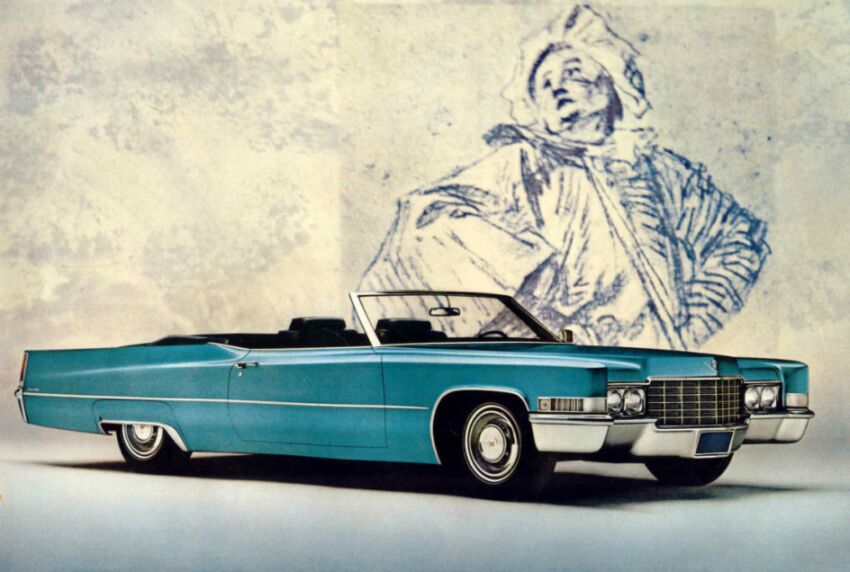
Next week will be a busy academic whirlwind tour of two Nordic capitals for me: Helsinki and Oslo. The two main American Studies events of the year are crammed together as consecutive conferences: The Renvall Institute's Helsinki do, The Maple Leaf and Eagle Conference, has reached instalment no. 12 in its fine run (it will be my third time around as a participant). The theme is always broad and this year is no exception: North America - Relations and relationships. My contribution is about the cultural importance of one specific, iconic brand of car: The Cadillac...

I approach this broad topic from a cultural text studies point of view, investigating how the cars are represented as markers of specific identity positions within specific difference hierarchies:

The Cadillac car has long featured in the American imagination as a signifier of cool masculinity, mastery of the road, financial surplus and a predilection for luxury and comfort (cf. the lyrics to ‘Cadillac Man’, quoted below). I propose to analyze a number of cultural texts that construct, establish and eventually subvert these connotations. I am particularly interested in constructions of race and sexual orientation utilizing the vehicle of the Cadillac. Texts to be analyzed include Jack Kerouac’s “fag Cadillac” in On the Road, rock singer and performer Mink DeVille, the persona of James ‘Thunder’ Early (played by Eddie Murphy) in the 2006 movie Dreamgirls, and various rock ‘n’ roll lyrics featuring comparisons of Fords and Caddies…

Well I’m the king of the road
Ain’t got no place to go, no place I call home
Seen the world from behind this old wheel
Driving away from those feelings I feel

- Cadillac Man
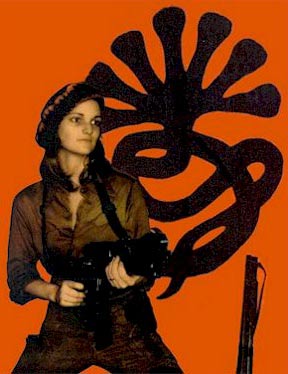
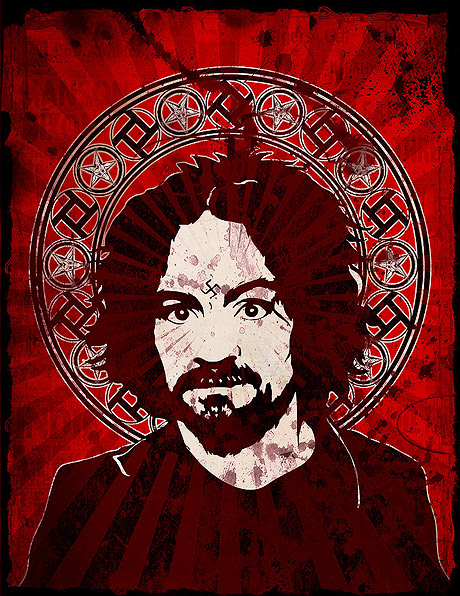
After a few days in Finland we'll relocate to Norway for the big European American Studies event under the auspices of the EAAS. Here my presentation is in connection with my on-going project on American Icons, more specifically some icons of transgression, associated with the 1960s. I'll give a paper on two celeb-criminals, two very different cultural texts, Patty Hearst and Charles Manson:

All iconic representations of actual persons (living or dead) are caught in a dichotomy between elements of normality/familiarity and elements of transgression. Manipulation of representations of celebrities or famous persons into hero- or other-images can either constitute adversarial or collaborative icon work. In adherence with the conference theme of “E Pluribus Unum or E Pluribus Plura” it would be interesting to examine iconic images that are meant to be particularly transgressive of normality and challenge stereotypical images of American wholesomeness. I propose to look at specific collaborative, yet provocative representations of two 1960s icons of transgression: Charles Manson and Patty Hearst, and to analyze how these particular images simultaneously stylize and sacralize these counterculture (anti)heroes, turning the viewer of the icons from passive consumers into ardent worshippers, consumers or cultural agnostics, all according to our ideas regarding the subjects and symbols in question. The images are reproduced below:


Monday, April 21, 2008

Everybody's Talkin'

I have a lasting fascination with American music from the 1960s. Many of the marquee songs of the era have become short scriptures for a generation of young folks who wanted change (hey Obama, you think you're so original?) and new values to believe in... Next semester I'll be teaching a short elective where I'll use a great book by Philip Beidler as the textbook - and he uses that phrase "Scriptures for a Generation" as his title, indicating that texts function ritualistically and communally in an orally transmitted culture...

Many such songs are 'auditory icons' in the sense that they are associated with specific filmic images through their use in film soundtracks. Think The Graduate, and hear Simon & Garfunkle's "Mrs. Robinson". Think Harold & Maude, and hear Cat Stevens' "If You Want to Sing Out". Think Midnight Cowboy, and hear Nilsson sing "Everybody's Talkin'"...

But wait a minute. Most Danes who hear "Everybody's Talkin'" these days will be thinking SAS, as in Scandinavian Airlines, because the corporate geeks in advertising have pinned their hopes on lifting the dwindling fortunes of the venerable inter-Scandinavian aviation conglomerate on the charms of this little ditty. The commercials give me vertigo (never a desired effect for an airline) and an acute sense of dislocation (not good either when destinations matter). The malady I am suffering from is space-time compression, a side effect of globalization: any text can nowadays be lifted from its original context and re-injected in a new sphere, worlds and decades from the origin. Mild disorientation usually ensues in individuals who know the history behind the original usage...

The lyrics of the song which make nice sense in the context of the film Midnight Cowboy, detailing the futile dreams of escape of two misfits trying to get out of New York City to soak up some rays in Florida, make somewhat less sense in the commercial, which follows a suited businessman as he wafts through check-in, security, arrival and apparently steps straight off the plane and into a sidewalk eatery in Southern climes... Listen:

Everybody's talking at me.
I don't hear a word they're saying,
Only the echoes of my mind.

People stopping staring,
I can't see their faces,
Only the shadows of their eyes.

I'm going where the sun keeps shining
Thru' the pouring rain,
Going where the weather suits my clothes,
Backing off of the North East wind,
Sailing on summer breeze
And skipping over the ocean like a stone.
Read into a contemporary airport/travel environment the first stanza describes a certain recipe for disaster for the business traveller: acute disorientation, borderline catatonia - you'll never make it to the gate on time... Second stanza: uh-oh, trouble at security, the sunglassed guards have obviously sussed that you feature on every no-flight list known to man... Bridge 1: not exactly the hassle free dream destination depicted in the film, where our business traveller hasn't even packed a cotton-coat, let alone any rain gear... Bridge 2: forgettaboutit - you'll never reach your destination at all - the plane is crash landing on water, Mayday, Mayday...

OK, so the advertising company didn't really pay attention to the lyrics they picked - what they wanted were the feel-good vocals and the sing-along tune. Never mind the queer undertones of the original film, never mind the frustrations and alienation captured in the song's mini-portrait of its dishevelled urban cowboy persona... In the SAS fantasy world we are all wealthy, male professionals jetting across our little uniform globe in safe, sanitized aeroplanes that never have their wheels falling off on landing...

Back to the 60s. Nilsson's versions of the song are in themselves a little strange. Here is the original opening sequence of the film, where soon to be male prostitute, Joe Buck (played by Jon Voight), prepares to get out of Hicksville:


Note the bizarre nasal drone and Roy Orbison falsetto imitation at ca. 2:00 till coda... Now compare with Nilsson's slightly longer hit single version, here recorded for a Beatsploitation Hit-Parade TV-show called Beat Club:


Note the distinctly queer moves Nilsson puts on, attempting a bit of snazzy finger-snapping and hip gyration at ca. 1:00. The foghorn-like moaning comes in the vocal effort already at 1:15 and is redoubled at the coda, where the circular wrist motion also gets a bit out of control... By this time Nilsson was enjoying a mega-hit with the single which had almost transcended the three-Oscar success of the film. Both these versions are cool mementos of an age where music and films like these could enjoy block-buster success.

Nevertheless, there is an even cooler person behind the song "Everybody's Talkin'": the original songwriter, Fred Neil... Compare the Talkin'-light tones with string arrangements of Nilsson's versions to Neil's own stark folk instrumentation, cool guitar solo and deep vocal delivery:


That is a scripture for a generation, folks... Neil was a songwriters' songwriter, having even a master in his own right, Tim Buckley, cover another classic signature song of his ("Dolphins"). For a while in the mid-60s Neil was a powerful presence in the East Coast folk scene, much admired by diverse figures such as David Crosby and John Sebastian of Lovin' Spoonful fame.

Sadly, Neil never made it big as a performer and, after a spell of living in Woodstock, eventually elected to make his own getaway to Florida, quit the music business and slip into obscurity. His life and times are meticulously chronicled at this website. As usual Richie Unterberger has done some of the best musico-cultural archeology on Fred Neil, which can be read in part in this excerpt...

Here is Richie's take on "Everybody's Talkin'":
Fred Neil [the album] is best remembered, however, for the original version of "Everybody's Talkin'." Much slower and more simply arranged than the famous cover by Nilsson, it clearly laid out his wishes to escape the madness of contemporary life -- the city, perhaps, or the music business? -- into a hermetic paradise. (That destination is most likely Southern Florida, where Neil would spend much of his post-1970 life, given the line about going to a place where the sun always shines through rain.)
In 2001 Fred Neil passed away at age 65, after a long battle with skin cancer...

Here is how "Everybody's Talkin'" ends, long after the SAS commercial is over:
I won't let you leave my love behind...

Sunday, April 6, 2008

White Bicycles

I recently finished reading Joe Boyd's memoirs of 'making music in the 1960s', White Bicycles. Boyd is famous in an underground sort of way for producing a large number of British and American folk, rock, pop and jazz acts in the 60s and 70s, and for occasionally taking on more contemporary projects during the folky/jangly guitar revival years of the early and mid-80s (he did the 3rd R.E.M. album Fables of the Reconstruction / Reconstruction of the Fables in 1985, as well as a 10.000 Maniacs album). Later years have seen him focus almost entirely on world music projects. My main interest in Boyd comes from my enjoyment of the music of Fairport Convention, Sandy Denny, Richard and Linda Thompson, and more than anything, Nick Drake. Boyd produced many of these artists' seminal records, and this must remain his main legacy in the music world.

Boyd's book is from 2006, and has in fact been complemented by a
CD of the same title featuring some (mostly rather obscure) titles by a bunch of Boyd's discoveries and inventions, including early Pink Floyd material, as well as rather dated 60s stuff such as The Incredible String Band and Vashti Bunyan. Purer folk material such as Shirley Collins, bluesy Eric Clapton material and psychedelia from Soft Machine is also available on the disc.

The book is pretty captivating, as one follows the roll call of artists Boyd intersected with at various stages in his burgeoning music business career. It begins with his interest in the blues, and his earliest attempts at promoting events with obscure and almost forgotten black, original practitioners of the form. The book then moves on to his involvement with the Boston folk scene where Boyd was friends with many of the best singer/songwriters of the pre-65 folk wave which featured a major rivalry between the Boston and Greenwich Village scenes. Boyd was at the Newport Folk Festival in 65 when Dylan single-handedly ended that stage of the folk revival by 'crossing over' to the electric, rock side of music. While Boyd was never close to Dylan, he recognised early on that Dylan was the Caravaggio (Poussin famously said of fellow artist Caravaggio that he 'had come to destroy painting') of the sixties folk scene: the figure who would transcend the narrow confines of any one scene or musical ghetto and in the process destroy many of the older, pure forms while creating a newness no one could have anticipated the violence and beauty of.

Boyd's most productive years were spent in London, during the so-called 'Swinging London' era, where he ran The UFO Club, a psychedelic dance club with live acts; recorded and produced a number of new artists crossing over from the English folk mould to a more Americanized singer/songwriter practice; and, interestingly enough, also worked as a road manager for a number of jazz r&b and blues acts criss-crossing Europe, where the audience for these older types of (primarily black) music was much larger than in America. Boyd also took under his wings a number of African musicians who had come to London as exiles from political troubles or apartheid, hoping to make a better living and a career in Britain and Europe.

Boyd describes in some detail his work with studio technician and producer/engineer
John Wood who worked with Nick Drake on all his recordings. We also get more biographical glimpses of what made great musicians and artists such as Sandy Denny and Drake tick, but overall there is little attempt to psychologize or sensationalize the lives and deaths of these people. Some reviewers have criticized Boyd for not revealing more about these controversial characters and their sad ends, but I appreciate his reticence and decorum in letting them rest as peacefully as possible. It does, however, leave one a little disappointed and wondering if there might not have been more Boyd could share with us without violating his friends' privacy, especially when other far less interesting indiscretions actually are revealed (usually involving affairs of the heart and flesh)...

I am a particular fan of Nick Drake, as discussed
in a previous post, so the rather superficial description of Drake Boyd leaves us with is quite irritating. Boyd seems to have been a person who sometimes absented himself at the exact point in time where musicians and friends needed him the most, and this may have been particularly true in the case of Nick Drake, causing Drake's anger and often recounted outburst against Boyd, and a never quite resolved remorse on Boyd's part. Boyd has been working on keeping Drake's legacy alive, though, and perhaps that is ultimately a way for him to atone for his relative neglect of Nick while he was still alive. Here is a snippet from one of Boyd's recent newsletters:

I flew to California for two evenings built around the release of new Nick Drake material and screenings of the film “A Skin Too Few”. Sometime in the late ‘90s, the BBC approached Gabrielle Drake and me about making a documentary on Nick. I was impressed with their young director and the production unit was one of the best in the BBC, so the project went ahead. While that was being shot (working around the fact that there is no footage of Nick performing), some Dutch guys started pestering me about a film they were making on the same subject for Dutch tv. In the cause of spreading the word about Nick’s music to the Continent, I took part in their film as well, despite the fact that I found their methods a bit off-putting. The BBC film was eventually aired and was very disappointing. A few months later, I attended a screening of the Dutch film with very low expectations. Naturally, it was brilliant. This is the film that was shown in San Francisco and Los Angeles at the beginning of October. In Los Angeles, Gabrielle Drake and I were upstaged by Robin Frederick, who did her brilliant de-construction of a couple of Nick’s songs. She plays and sings, not attempting to put across a performance, but in order to demonstrate what Nick is up to with his complex harmonies, melodies, rhythms and lyrics. After listening to Robin, you gain a new understanding of why Nick’s music has endured.

Other, more fun parts of Boyd's book include the account of his brush with Scientology which claimed a good deal of the original anarchistic creativity of the main members of The Incredible String Band, and almost got Boyd sucked in too. Also the anecdotes from the first Blues and Gospel Caravan tour of Britain are hilarious, including a description of how Rev. Gary Davis would eat his morning eggs... I am also happy now to have understood why South African sax player Dudu Pukwana appears on one track on Mike Heron's 1971 solo album Smiling Men with Bad Reputations. While wasting away my youth in the 70s pondering such things (ah, the days before the Internet!), I could never work out the connection between such disparate musical traditions as Heron's and Pukwana's... Now I realize that one of Boyd's supreme contributions to the music scene is his ability to bring talented musicians together across such boundaries.

Minor beefs of mine with Boyd's otherwise spot-on assessments of musical quality and the lack thereof include the, to me inexplicable, off-hand dismissal of Eric Andersen's song "Thirsty Boots" as "hack-work" - and it also gets a little tiresome to keep reading the ever-growing list of artists which Boyd either didn't sign or was robbed of by more powerful players, esp. the part that involves missing out on the distribution rights for ABBA-songs...


Boyd is obviously interesting from a historical point of view, and also continues to be a force in the music business, supporting 'real', live musicianship in an age of sampling and depleted talent. His work in world music is on-going and important, with especial excellence in his
Cubanismo! recordings and in recording the music of Mali's kora virtuoso Toumani Diabate. Perhaps he will at some point let himself become a freer and more interesting writer as well, rather than just the inhibited eminence grise he self-labels himself as - now that would be in the true sixties spirit!


Some resources:


NPR has a good feature on Boyd here.

Boyd's own home page is here.

Here and here are congenial reviews of the book.

Serpent's Tail Books promote White Bicycles here.

Richie Unterberger has a superb interview w. Boyd here.