I have just re-purposed my Tumblr blog with a focus on Danish writers and artists, and started translating little pieces of prose and poetry for that. This work pleases me a good deal, and who knows what collections it might lead to...
The work involves finding cool Danish, or - in a pinch - Scandinavian birthdays, and every now and then I stumble over a name that is vaguely familiar, but which I can't quite place. This happened yesterday when I was researching the March 15 birthdays. "Anna Castberg? Who was she, again?"
Well, as it turns out, Anna Castberg is mainly remembered in Denmark for a moment of infamy when she was caught lying on her resumé for the job as Museum Director at the recently built Arken museum - a lovely edifice on the coast just outside Copenhagen, which specializes in Contemporary art.
Ms Castberg was pre-eminently qualified for the job as Director with her PhD in Art History and extensive museum experience, and she was hired in 1993 to build up the collection and launch the new museum in 1996.
Soon, however, the Danish newspapers took a keen interest in the budgets for the new museum which seemed rather out of control, and a bit of digging soon revealed that Castberg didn't really have a degree of any sorts and didn't actually attend any of the universities she claimed to have gone to. She also hadn't really worked for the institutions she had listed on her resumé as prior experience. This was not a new pattern, in fact. When looking for work in Britain, she claimed to have a Danish degree, and vice versa...
She did manage to stick around to launch the museum, which soon became an attractive destination for culture tourism and started putting itself on the map in art circles. However, a few months after the opening she was let go, and promptly vanished from the public view... She seems to have moved back to Britain, and is currently listed as a practicing psychotherapist. I'm not sure she has any formal degree or training as such in that field, either - but hey, that has never stopped her before...
At least two Danish novels and one play have been inspired by the Anna
Castberg affair. I haven't read or seen any of them, but you can easily
find them if you can read Danish. Look for Leif Davidsen's Lime's Billede, or Ole Hyltoft's Mordet på Museet...
So, why am I blogging about Anna Castberg, you might ask... Well, apart from her bold behavior, which I can't help but admire, having worked myself in a business where fraud is rampant but rarely this flamboyant, she did have one true item on her CV that I am particularly interested in.
Cue Leslie-Ann Beldamme, the little-known English folk-singer who at the age of 17 got a contract with Decca and recorded a lovely 7" single with the songs "The One I Love" (R.E.M. were not that original...) as the B-side and "The Rose of Loneliness" as the A-side. Leslie-Ann was of course none other than Holbæk-born Anna Castberg.
At this point in time only the B-side - which according to the label was penned by Leslie-Ann herself, but who knows? - is available on YouTube. I have not heard the A-side which is credited to Mikis Theodorakis, and
titled in parenthesis "Sirtaki song", which would indicate it used the
melody from the film, Zorba the Greek that was a huge hit in 1964. The other
writing credit on that track is for "Jeffery" - maybe an English lyricist? This track also has an arranger credit to Reg Guest (known for his work with The Walker Brothers, Dusty Springfield, and others).
I advise you to listen to "The One I Love" - it is really lovely and very much of its time what with Judy Collins and Joni Mitchell beginning to make a mark for themselves. The vocals are pure, somewhat vibrato-laden, and the melody is simple but catchy in its arrangement for acoustic guitar, bass, a touch of vibraphone and tastefully wire-brushed drums...
I suppose Decca thought - with some justification - they might have
found a true English rose to rival the Americans in this fledgling
market for folky, female singer-songwriters...
However, the single flopped pretty badly, selling only 9.000 copies, and Leslie-Ann never seems to have recorded again - at least not under that name. There is something very endearing about the whole construction of this young girl - the obvious, but clumsy allegorical last name (riffing on the French "Belle Dame" - 'beautiful lady' and her step-father's real name, Beldam), and the both demure and sexy picture of the brunette on the sleeve.
Image engineering was not as blatant in the 1960s as it later became in the music industry and commercial realms - but it certainly did exist. Also, one cannot help but think what would have happened, had Leslie-Ann become the next singing sensation for Decca. Would she still have ended up a fraud, infamous in an entire nation? Or would she have ended up as revered as the late, great Sandy Denny, born one year before Ms Castberg??
The Decca single is available on Discogs and other re-sell sites for a pretty hefty price - 50 GBP on eBay, or €150 on Discogs.
In late 1954, Russian-Jewish-American composer Alex North was putting the finishing touches to his score for a prison drama - a distinct type of B-movie fodder - titled Unchained. If you’ve seen the film, it’s probably because you’re either an insomniac addicted to the TCM channel, or because you’re a die-hard Dexter Gordon fan who has to have heard every performance he ever laid down. Gordon was, purely by co-incidence, serving a sentence for drug possession when the movie was shot on location in the California Institution for Men, a correctional facility in Chino, and he makes an uncredited cameo appearance as a saxophone player in the prison band.
This 1955 movie is one of those weird instances where a Hollywood script is based on a non-fiction book that tries to offer a corrective to the way mainstream America perceives a social problem - in this case the issue of incarceration and re-socialization of criminal offenders. Hall Bartlett, who started out as a documentary film maker, wrote the screenplay (spending six months living with inmates in a prison while writing it), and was both director and producer as well. He was clearly a man with a conscience and a message. He went on to direct better-known films such as Jonathan Livingston Seagull.
Bartlett was happy enough with North’s score to the movie, but reminded him that there needed to be a song in there as well. After all he had cast African-American operatic baritone Todd Duncan (the original Porgy in Gershwin’s opera Porgy and Bess) in the flick, and he had to have a song to sing. North had a melody in mind, and called up his Tin Pan Alley lyricist Hy Zaret to get him to pen some lyrics. Zaret was pissed off, because he had made plans to paint his house that day and couldn’t be bothered to churn out another set of trifling lyrics. North cajoled him into it after all, and the result was a song without a title, that we all now know as “Unchained Melody”. Heard outside the context of the prison setting that it was performed in in the film, it in fact sounds like any other love song
from the dominant middle-class culture of the 1950s. The lyrics seem unconnected to the theme of the film, and the word “unchained” does not appear in the lyrics anywhere.
Bartlett was a bit miffed that Zaret’s lyrics didn’t spell out the social message, but the way Todd Duncan sang the song by turning it into a Lead Belly style blues/worksong manages to convey the right feeling of longing for freedom that brought the song in alignment with the sentiment of the film: “Long all you want, but don’t break out of jail before you’ve served your time!” In Duncan’s version we suddenly hear the word “time” in a different sense - that of doing hard time in prison, when he sings the lines “Time goes by so slowly, and time can do so much”… The effect is deepened by the blue, dropping glissando Duncan adds to the word “slowly”. In contrast he refrains from glissando on the word “love”, thus shifting the whole dynamics of the lyrics. Remarkably Duncan does not perform the song’s minor key bridge, which in all subsequent versions is a striking feature, enhancing the eerie mood of the song.
Duncan’s abbreviated version, accompanied only by acoustic guitar, lasts little more than a minute on screen, but still the song got an Academy Award nomination and almost won an Oscar. Harry Belafonte recorded a folky version of the song, retaining the simple guitar accompaniment, and also performed it live at the Awards show in 1956, but in the end it was pipped for the Oscar by Love Is a Many-Splendored Thing - incidentally another product created by a Jewish-American Tin Pan Alley song-writer. However, the vision of a black man longing for freedom from shackles and chains resonated in a much deeper way with black performers than even the Unchained film-maker had envisioned, and before the year of release of the film was over two very distinct black vocalists had hits with their versions of the song: Roy Hamilton and Al Hibbler. Both these performers have interesting trajectories in show business and in Hibbler’s case also in civil rights activism, as does a third performer who 5 years later recorded a version of Unchained Melody - Sam Cooke, whose posthumously released 1964 song “A Change Gonna Come” is one of the Civil Rights Era’s classic anthems and comprises the same theme of longing for escape and redemption.
Belafonte's folk version above; Sam Cooke's soul version below...
Each of these four black artists’ version of Unchained Melody added a particular subtext to the otherwise banal love song lyrics, but let's look more in depth at Hibbler's and Hamilton's. Al Hibbler’s version on Decca was officially recorded to tie in with the release of the film, and it owed quite a bit to Duncan’s version in spirit. Hibbler had had a long career as vocalist for Duke Ellington’s big band in the 1940s, and had been struggling to make the transition into solo success as a pop artist in the early 1950s. With Unchained Melody he struck gold. Hibbler was quite the character, often ridiculed for his over the top vocal quirks and idiosyncrasies. He was also a Civil Rights activist as early as the late 1950s which of course made him a problematic commodity as a pop star for record companies. It took the unlikely intervention of Frank Sinatra to ensure that Hibbler could keep recording via a contract with Reprise Records. Hibbler's later career highs include a spirited LP of primarily Ellington material recorded with free jazz horn player Rahsaan Roland Kirk in 1965, but not released till 1972. Perhaps these two, on the surface of things, unlikely collaborators were kindred spirits in more ways than one. Both artists were blind - Hibbler from birth, Kirk from the age of two…
Hibbler’s Unchained Melody is straight-forwardly delivered, with only slight quirks in his dwelling on the word “God” and adding a clear melisma on “to” in the fervently expressed wish in the lyrics “God speed your love to me”. The minor key bridge is rushed in nearly recitativo style, and there are bluesy inflections in phrases such as “Are you still mine?” and on the word “love” - and a vast vibrato effect on the final repetition of the word “me”.
Roy Hamilton recorded his version of Unchained Melody hot on the heels of Hibbler’s and it cashed in almost as well as Hibbler’s ‘official’ release did. Hamilton was a seasoned Gospel artist and he took Unchained Melody to church in ways that Sam Cooke may have listened to and emulated to an extent - not that Cooke hadn’t perfected the transition from gospel to secular music in his own career already. Hamilton recorded for Columbia Records' ‘pop label’, Epic, one of Decca’s main competitors in the multiple genres Unchained Melody participated in - easy listening, gospel, pop, r&b and country. Hamilton’s ace in the hole, vocally, was that he had a voice that could tackle the operatic scale of songs such as Unchained Melody, as well as the earthier qualities vocalists such as Duncan and Hibbler mastered really well. Hamilton’s golden period had started with his hit recording of You’ll Never Walk Alone, and in his eager search for follow-up material, he had stumbled over Unchained Melody. After a brief career in the spotlight, Hamilton ran into health issues (possibly TB) that led to retirement from performances. After several half-successful attempts at comebacks, he died in 1969 from a sudden aneurism in the brain and has lapsed into relative obscurity among music fans.
Hamilton’s nasalised baritone is fuller than Hibbler’s, and Hamilton’s lyrics inflections are on words such as “need” and “touch”, rather than “time”. His use of melisma on “slowly” and vibrato on “love” pull the version out of jail, as it were. This aspect of the song was later exploited more fully when The Righteous Brothers’ Bobby Hatfield recorded what most people consider the definitive version of Unchained Melody in 1965. Hamilton’s musical arrangement at first follows Hibbler’s closely in the use of bugles, but later deviates considerably by adding mysterious string effects to the arrangement of the bridge, where the strings emulate the pull of the waters mentioned in the lyrics. At the end a grand piano emerges from the arrangement and lends a clear gospel tinge to the closing.
The point of this small account of the under-documented early African-American history of “Unchained Melody” is to highlight the versatile Americanness of this song. It throws light on binaries that run through American cultural and identity history, but are often denied or directly debunked. Tin Pan Alley’s greatest song-writers were Jewish-Americans, their songs were often best interpreted by African-American performers who added their own meanings to songs about longings and hardships - and yet the relations between Jewish- and African-Americans were often fraught with racism and stereotypes on both sides. In this particular case, we have a song that was reclaimed by black performers as a text speaking to their shared experience of chains and confinement - despite the fact that the song was not written by an African-American its lyrics and melancholia spoke directly to that part of black identity. However, no sooner was the song reclaimed for black identity, than it was re-appropriated for the white teen market and thoroughly whitewashed by mainstream performers.
Most of the material of the “Great American Songbook” was created by first or second generation immigrants, who worked hard to fit in and realize their American Dream - a Dream that black Americans were debarred from for several decades longer than most other minority groups. Much of the musical material that was recorded and made popular by African-American performers was also quickly re-recorded by white artists, often with more commercial success than the originals. This is obviously also the case with Unchained Melody. Contemporary with Hibbler and Hamilton’s versions, several whitewashed version circulated with great success, including a largely instrumental one by Liberace, a full orchestral and choral arrangement by Les Baxter’s Orchestra, and a strange bolero-tempo version by June Valli which reverses the gender dynamics of the song.
No success with Unchained Melody, however, has been greater than the one scored by Bobby Hatfield in 1965. His arrangement of the song scrubs it completely of its origins as a black man’s prison lament. It’s a white-bread love song by then. The musical changes to the arrangement and the unusual original structure of the song made in The Righteous Brothers’ version contribute to mainstreaming the song into a jukebox hit about teenage love. Hatfield uses excessive melisma on almost every word from the first line of the song, and adds vocal contortions and vibrato to the chorus and to the minor key bridge. He even puts a glissando from the word “me” over into an added “yeah” at the end of the bridge. The pathos of the song is underscored by the march tempo used by the orchestra, and the swelling effect of adding more and more instruments and a choral accompaniment after the bridge.
For the nostalgia market, this version of the song was used in one of the ultimate 1990s love stories, the Patrick Swayze/Demi Moore movie about unattainable love after death, Ghost, sealing the Hatfield version’s evergreen status. The duo also re-recorded the song and for a few weeks bizarrely had two versions of the same song in the US charts. Coincidentally, another use of Unchained Melody in a movie soundtrack occurred the same year when the 1963 novelty/ white doo-wop version by Vito & the Salutations was featured in the gangster movie, Goodfellas… These recontextualizations of Unchained Melody removed the song from its original meaning, and made its cultural expression more universal, but also much less specific - and completed its whitewashing.
Elvis Presley, who had whitewashed a fair bit of black material in his younger days, was a late-comer to Unchained Melody, but managed to record it immediately before his death. His version paradoxically brought back some of the gospel elements Hatfield had taken out, which is especially audible in Elvis’ live TV-version of the song from Cleveland Auditorium in 1977. The footage is strangely ghostly, as an overweight and obviously ill Presley huffs and puffs his way to the piano, only to belt his soul out when the song starts. Once again Unchained Melody becomes associated with impending death in the listener’s mind. Presley brings in much the same orchestral arrangement as The Righteous Brothers’ used, but his use of grand piano takes us right back to Roy Hamilton’s gospel elements, and Elvis’ hiccup at the end of the word “God” (on two separate occasions, so clearly by design) is very reminiscent of Hibbler’s vocal tic at the same point in the lyrics. By odd coincidence, Elvis had met Hamilton shortly before Hamilton’s death in 1969, while they were both recording in the same Memphis studio, both being produced by Chips Moman. Elvis was a long-time fan of Hamilton, particularly his gospel recordings. When Elvis finally tackled Unchained Melody 8 years later he, in a manner of speaking, synthesized the versions that had come before and fused black and white vocal influences together in an all-American version of the song.
However, Unchained Melody never could become reclaimed as black again, despite Elvis, and despite the 100s of versions recorded later. This story is in no way atypical of how music was disseminated and consumed in the US in the 1950s, 60s and 70s where radio play, sales distribution and audiences were still to a large extent racially divided. It’s still remarkable that the early black recordings of Unchained Melody all had cross-over appeal and were enjoyed also by white audiences, and still the song ended up so whitewashed that few now know the African-American portion of its history.
A few months ago I started keeping a Tumblr log where I post pictures and texts that I find interesting - no particular agenda, no particularly explicit aesthetics. It is a strangely addictive activity - much more so than regular blogging, in fact... I am long since past 600 posts on the Tumblr.
Among the many pictures I have posted is one taken by Eve Arnold, a highly respected Magnum photographer, showing Marilyn Monroe reading a bound edition of James Joyce's Ulysses. The photo is more than 50 years old and there is a respectable amount of scholarship on the image, both from within Joyce-studies (the best is probably Richard Brown's essay in Joyce and Popular Culture, "Marilyn Reading Ulysses: Goddess or Post-Cultural Cyborg?" ) and from the wider field of cultural studies (see Thomas Rasmussen's design studies essay, or Kim Q. Hall's disability studies essay from 2002 in NWSA Journal, which comments on an art-work inspired by the photo, Barbara Bloom's piece Playboy in Braille). My own interest stems from my work on Monroe as an American icon, and let's face it, it is interesting to see an icon read a canonical work of literature! Not least when an (over)eroticized icon reads a notoriously 'dirty' book... All this, however, has been well covered by scholarship as well as more popular accounts (such as the recent book Women Seeing Women: A Pictorial History of Women's Photography from Julia Margaret Cameron to Annie Leibovitz; or the latest issue of Poets & Writers Magazine - blogged about here) over the last 15 years.
The connection that made me post the image was that in 2006 the English newspaper, The Guardian, had asked authors to choose their favourite image of a woman reading, and Jeanette Winterson had picked the Arnold photo. Winterson writes:
This is so sexy, precisely because it’s Marilyn reading James Joyce’s Ulysses. She doesn’t have to pose, we don’t even need to see her face, what comes off the photo is absolute concentration, and nothing is sexier than absolute concentration. There she is, the goddess, not needing to please her audience or her man, just living inside the book. The vulnerability is there, but also something we don’t often see in the blonde bombshell; a sense of belonging to herself. It’s not some playboy combination of brains and boobs that is so perfect about this picture; it is that reading is always a private act, is intimate, is lover’s talk, is a place of whispers and sighs, unregulated and usually unobserved. We are the voyeurs, it’s true, but what we’re spying on is not a moment of body, but a moment of mind. For once, we’re not being asked to look at Marilyn, we’re being given a chance to look inside her.
Arnold in fact was quite friendly with Marilyn and took many pictures of her over a number of years, including several rather private images from the home on Long Island Monroe shared with her then husband, playwright Arthur Miller. Arnold also tells all sorts of candid anecdotes about Marilyn and her balancing a vulnerable personality with a larger than life public persona (see this lovely review of Arnold's book Film Journal in New Statesman, and another in The Guardian).
A few weeks ago I added a site meter to my Tumblr, just out of curiosity as to whether anyone at all was reading my stuff. I advise against doing this - stats are also horribly addictive and you begin to wonder who these people are that keep returning to your site from Mountain View, California or Portugal, Armenia or Malaysia... Shortly after adding my site meter I had a red letter day in my stats, featuring almost 400 unique visitors on one day. This was pretty flabbergasting, and I tried to figure out why and what these people were looking for or at. I soon discovered that my Marilyn post had been 'found' by one of the main users of StumbleUpon, the well-known web bookmarks-sharing site. Her write-up seemed to generate 85-90 % of the traffic on my Tumblr as referrals almost all came from there...
So far, so good - however the StumbleUpon thing was already a couple of weeks old when I got the peak traffic, and over the next two weeks I have had other peaks of 300+ visits, sometimes even on a Tuesday. I can only conclude that people are dying to see Marilyn, and that when they have seen this sexy picture of her they all tell their friends in Kansas, Wisconsin, Malaysia, Armenia and other outposts of civilization to go see it too. There haven't been any new reviews of the Marilyn post on StumbleUpon for a couple of weeks, so I don't know exactly what drives them - not novelty, anyway...
I am, of course, happy that people want to visit my Tumblr, but I realize that this bubble will never last. And I am less happy that out of 600+ posts, the Marilyn one gets all the attention. But that's life...
Never having been one to shy away from whoring for attention, I have tried to post other good Marilyn pictures on the Tumblr - to no avail since they have not been picked up - sorry, 'stumbled upon' - by one of the star endorsers on the top 24 of full-time nerds who do nothing but stumble around the web. I actually rather think I would like to become one such myself, time allowing...
Anyhoo, knowing that almost no-one reads this blog I have decided to go for more attention by publishing no less than 3 Eve Arnold photos of Marilyn in one post. One never knows how many lonely college boys from Missoula, Montana that might attract...
All day I have been preoccupied with translation, and I have very much had Nick Drake's Pink Moon album on my mind. As many will undoubtedly know, the public fame of that album and its title song grew exponentially when VW decided to use it in one of their commercials, targeted specifically at an anti-commercial-watching segment of potential VW-buyers...
A long chapter of the 33 1/3-series volume on Pink Moon by Amanda Petrusich is given over to a very full description of the creative and commercial process behind the making of this particular ad, so one can go there for additonal info.
This, not very successful book carries a very pretentious blurb, part of which goes like this:
Like nearly all prematurely buried cult figures, Nick Drake is reinvented each time he is rediscovered. In 2000, the sheepish, astral musings of "Pink Moon" became synonymous with backing a Volkswagen Cabrio convertible away from a raucous house party, as VW boldly sold American drivers on the notion of eschewing red plastic cups and bro-hugs for moonbeams and tree trunks (and a cute German car - sort of). The Cabrio ad inadvertently sparked an unlikely boost in record sales, propelling the album towards platinum status nearly 28 years after its release. But with each well-intentioned revival of interest, Nick Drake slips further and further out of reach, martyred and codified, superceded and consumed by his own tragic context. Since his controversial death in 1974, Nick Drake has become: the 26-year-old prophet, the diffident enigma, the tortured precursor to Kurt Cobain, the fallen hero, the folksinger-as-folksymbol, the self-sacrificing patron saint of lonely, disaffected teenagers - the One who died for our sins.
For now, just watch:
Note how the commercial contrasts nature and a quiet communion with it (river, darkness, fireflies - and, of course - moon) with youth culture of the noisy, imbecilic kind (loutish, drunken and disorderly behaviour). This is a tricky sell: one community has to be valorized (we are not interested in lonely drivers here); the other must be connoted negatively. A strategy that helps accomplish this is to associate the essential features of the car with the desired community and its harmony with nature. The car's stream-lined design details and its almost noiseless swoosh as it glides through the land all become natural features: the tail lights are at one with other light sources: fireflies, moon glow; the in-car stereo produces harmonious sounds that only enhance nature's singing (crickets), and do not drown them out. The price for this is that the commercial has to conjure up a fantasy world: after all one cannot really listen to acoustic folk music in most cars, least of all with the top down!
The actual lyrics to Drake's song are, of course, not really very suited for the purpose of selling a cabriolet car - or any product for that matter, with the possible exception of Prozac. They are in fact quite scary and haunting, promising us that forces of nature will catch up with 'you', the addressee of the song, i.e. us all, and do away with us:
I saw it written and I saw it say
Pink moon is on its way
And none of you stand so tall
Pink moon gonna get you all
It's a pink moon
It's a pink, pink, pink, pink, pink moon.
The threat, revenge fantasy or prophesy spoken by these lyrics makes a lot of sense in connection with Nick Drake's own life, but clashes violently with the easy life and quest for peace and quiet of the young people riding the VW. The only way this can work is if our four friends in the cabrio can somehow be associated with the pink moon and its revenge on an other, unidentified party. This is accomplished through the film's timing of image and music, with the most aggressive part of the lyrics being sung just as the car pulls up in front of the house where the obnoxious party guests are already at it with their offensive, loutish behaviour. The VW drivers thus become allies with the pink moon in the future eradication of the louts... but for now they'll just drive on through the night, swooshing along to Nick Drake's whispered lyrics.
This use or abuse of a song that is basically a cry for help in order to sell cars has indeed offended many who were already fans of Nick Drake's music. On the flip side of that concern is the unquestionable fact that thousands of people who had never heard this music before began seeking it out because of the commercial. One testimony on YouTube captures the sentiment of several young people encountering Drake's music through the commercial:
I listened to all of Nick's songs, especially this one, when I drove from Atlanta to LA alone in my Alfa spider, the top down much of the way, most beautifully in New Mexico. For me, the commercial makes me yearn for those perfect youthful summers I never quite had, fresh aired freedom with lovely groovy girls and true blue friends and all of life's delicious possibilities rolled out before them. And who cares if it's a commercial. Copywriters and directors can be as soulful as anyone.
In a cultural studies vocabulary, this is the typical process of commodification and incorporation into the mainstream of a hitherto underground, or subcultural artefact or cultural phenomenon. The incorporation always comes at a price, but also opens up a potential space for usage of the product in new narratives, which themselves can still be subversive or un-incorporated...
Every year the International Literature and Psychology Conference offers scholars an opportunity to discuss literature and the other arts, using insights from psychoanalysis and other psychological approaches. We have psychoanalysts, psychotherapists, Freudians, Lacanians, a few Jungians and myth theorists, Zizek'ers, post-Zizek'ers, plus an assortment of literature and culture scholars who like to dabble in the psychology of narratives and objects. The 25th annual conference took place in Lisbon at Instituto Superior de Psicologia Aplicada, ISPA, and just finished a few days ago.
My paper there had a certain American Studies relevance, as I spoke about recent American post-9/11 fiction as trauma narratives. Here are a few excerpts from that paper:
The post-traumatic aftermath of 9/11 is currently playing itself out in every conceivable arena, generating cultural texts in many different modes and genres: memoirs, documentaries, political analyses, therapeutic discourse, poetry, drama and film, to name but a few. Not surprisingly, given such a plethora of discourses, several novels have also recently appeared which thematize directly the effect of the 9/11 events on individuals, in or outside America. In my paper I propose to analyze these novels as trauma narratives, as well as aesthetic products. I shall focus mainly on Extremely Loud and Incredibly Closeby Jonathan Safran Foer, but I also draw in Don DeLillo’s Falling Man, and, to a lesser extent, Ken Kalfus’ A Disorder Peculiar to the Country.
The 20th century has often been dubbed the century of trauma – hardly surprising given the list of horrendous events occurring as the technology of destruction seemed to outpace the ethical development of the human race. WWI; WWII, featuring genocide in too many forms to number, including the Holocaust and the advent and use of nuclear weapons; Communist mass internments, dislocations and extermination; colonial and post-colonial wars world-wide, but particularly violent in Africa and south-east Asia; assorted minor wars and conflicts, often with a component of ethnic or religious cleansing at their core – the list could go on and does go on as we speak. The truth of the matter seems that the 21st century promises to outdo the previous century in terms of traumatic quantity.
If this had not been painfully obvious to that proportion of the world’s population living in the USA, the events of September 2001 certainly constituted a rude awakening. While the number of lives lost in the attacks on the WTC and the Pentagon was not very high by comparison to war-time events, the exposure of the events by the media and their secondary effects once disseminated and re-disseminated gave us a hitherto unprecedented example of what I would term ‘trauma by proxy’. I personally lived through the aftermath of 9/11 at close proximity in New York City and felt the effects of post-traumatic stress to a nearly career-ending extent, so I do not speak lightly or frivolously of these events – yet one cannot but wonder why such a relatively small-scale occurrence should generate a massive discourse body, large enough to rival that generated by the holocaust or the nuclear and other civil terror warfare strategies of the entire WWII…
I have in fact addressed the specifics of this phenomenon in another piece, so suffice it here to say that an innocent, even naive people’s state of mental unpreparedness, combined with a ruthless exploitation of the initial trauma by the media and a war-hungry political and military establishment has led to an unusual and disproportionately protracted post-traumatic phase in the American public unconscious. Novelists have latterly turned to this rich story for material for tales of trauma and survival, and as is always the case with trauma narratives thereby run the risk of further perpetuating the post-traumatic phase. On the other hand, literature may just have a role to play in healing the trauma, or at least to lend voice to the victims, and therefore we should perhaps turn to an examination of a few post-9/11 novels.
Jonathan Safran Foer was born in 1977 and represents the third generation of postmodern American writers (first wavers include Thomas Pynchon, John Barth and Kurt Vonnegut; second wavers Don DeLillo, Paul Auster and E.L. Doctorow). Foer’s debut novel Everything Is Illuminated tackled contemporary teenage consumer culture and the Eastern European Holocaust/survivor legacy all at once. The result was a funny, infuriating and haunting novel which redefined the trauma narrative genre in its own right. In his 2005 follow-up Extremely Loud and Incredibly Close Foer continues to mix historical narratives in the best tradition of historiographic metafiction as developed by first and second generation postmodern authors such as Pynchon (known for his two-tier novels which construct a nexus between WWII and contemporary America of the 1960s), Vonnegut (same dual strategy in Slaughterhouse 5, with some futuristic sci-fi mixed in), and Auster (whose 1980s novels, such as Leviathan, frequently examined the historical roots of politically motivated terrorism, although they did not feature the explicit two-tier structure Pynchon, Vonnegut and Foer all employ). Foer’s novel constitutes an obvious intertext with the works of all three older writers and with several other practitioners of postmodern narrative (such as Don DeLillo).
The most obvious intertext is Vonnegut’s oeuvre, particularly Slaughterhouse 5, with which Extremely Loud shares the theme of the fire bombings of Dresden, as well as Vonnegut’s later, extensive use of graphic tricks, illustrations and samples of handwritten texts, all of which features are also employed to excess by Foer. Auster haunts Foer’s text in several ways, not least in the implicit (as in never stated) Jewishness of several of the protagonists, but also in the multiple references to walks and rambles in New York, which is strongly reminiscent of scenes in Auster’s New York Trilogy where apparently random rambles literally produce texts and messages (but little meaning). In Extremely Loud the young protagonist Oskar Schell spends a good deal of the novel searching for a lock to match a key he has found among his dead father’s belongings. In the process of this quest he visits every single person in New York named Black (another allusion to Auster whose protagonists are frequently colour-coded). The outcome of the search is however as disappointing as any postmodern quest for epistemological insight (cf. Oedipa Maas in Pynchon’s The Crying of Lot 49) as the lock turns out to have no relation to Oskar’s father’s life at all.
The trauma narrative in Extremely Loud consists in two story tiers each representing a different historical period and its traumatic events. Oskar is traumatised by proxy by the 9/11 terrorist attack, during which his father dies in the WTC collapse. Oskar is the only family member who knows that his father left several phone messages from the WTC tower on the day of his death, and Oskar is plagued by survivor’s guilt, not least because he did not pick up the phone the last time his father called, immediately before the collapse. All Oskar has left are memories of his father and the recordings from the answering machine. He desperately tries to make sense of these texts and clues that remain, but much of the time he is in fugue from the trauma content provided by these memories and texts. He zips up “the sleeping bag of his self” (dissociation), wears “heavy boots” (depression), compulsively counts the seconds until he falls asleep, and is generally incapacitated by his trauma and grief. The search for the lock that the key he finds may open is his last resort at finding a solution to the conundrum of why his father had to die.
Another narrative strand is interspersed, accounting in Oskar’s grandparents’ alternating voices for some of the events in Dresden, before, during and after the British and American fire bombings in February 1945. Oskar’s grandmother (who was not present at that time in Dresden) further listens to a survivor’s account of the atom bomb’s effect on Hiroshima, which lends another layer of historical depth to her and Oskar’s experiences (and allows increased reader horror and empathy). Her husband, Oskar’s grandfather, experiences the bombings first-hand and loses his first love, Anna (the sister of Oskar’s grandmother) who is newly pregnant with his child. As a result he gradually loses the ability to speak, his artistic gift as a sculptor, which it has been his life’s dream to pursue, and in his bitterness and powerlessness he swears never again to have children. He immigrates to America to put as much distance as possible between himself and the scene of his loss.
The two narrative strands meet in the present of post-9/11 New York, but prior to that there is a mediation phase where Oskar’s family history is recounted. Oskar’s grandparents have re-met shortly after WWII and decided to marry, despite their handicaps and the lack of mutual love between them. He is trying to survive despite his oral aphasia and an artist’s block; she is trying to come to terms with the loss of her entire family, and through a complicated system of text production they try to cope with these losses. In both cases, however, the trauma effect erases all possible narratives of itself. He writes thousands of daybooks, filling them with phrases that he needs in everyday communication, but which make little sense outside their specific pragmatic use; she tries to cope with her gradual loss of sight by writing her life story on an old typewriter he provides her with. The story she fills thousands of pages with turns out to be written without a ribbon in the typewriter and therefore no legible traces are left on these many pages. He tries to hide this fact from her by pretending to read and discuss the narrative with her.
This lie on which their relationship rests is mirrored in another deception, as she quickly realises that he still loves her sister and is only using her as a sexual and emotional stand-in for that, to him, all-important person. In effect, he is reliving the traumatic experience of Anna’s loss every day by being married to her sister instead. She decides to be her own person and to follow her destiny instead of performing a tragic repetition of her sister’s life and breaks their agreement to never have children by becoming pregnant. He leaves her the very day she tells him this. After that his writing changes, as he begins a new string of thousands of letters addressed to his son, in which he tries to justify his actions. In the only one of these letters his son ever receives he succeeds in narrating the horror of his Dresden experience. That letter is reproduced in the novel’s diegetic world, complete with the son’s copy editing of the discourse, marked in red as a literal form of trauma redaction.
At the point in time where the two tiers of history and narrative are brought together (post 9/11) Oskar’s grandfather and grandmother have begun living together again. He has brought all of the unsent letters to his son back from Europe and now has no living person to send or read them to. Their son has died a death as meaningless as Anna’s, and he has a hard time finding a way to be present in his grandson’s life. It is only by gradually involving himself in Oskar’s project of visiting the Blacks that he finds a way back in a newly constituted family. The better solution to the trauma of both these generations turns out to lie in another act of textual transmission, and Oskar and his grandfather decide to exhume Oskar’s father’s empty coffin and instead fill it with the letters grandfather never sent. Through this exchange the grandfather purges himself of a burden of guilt, an act of outpouring or kenosis, which then fills the cenotaph or empty grave and by proxy fills some new non-trauma tainted content into Oskar’s life. The trauma is thus worked through to some extent, or at least partially cathected by the confrontation with the void/gap which has led Oskar to a pattern of avoidance behaviour (he invents impossible gadgets that will keep everyone safe, he avoids “obvious targets” of terrorism such as trains and ferries, he collects evidence of “stuff that happened to me” (pictures he downloads from the internet containing victims, crimes, porn etc.)), leaving Oskar and his family with the possibility of forming new attachments in a more anger-free, de-affected, non-addictive manner.
Don DeLillo’s post-9/11 novel, Falling Man, by contrast contains the story of a literal survivor of the WTC collapse, but more importantly also demonstrates the effect by proxy of such a traumatic event on a small family. The strains on the married couple in the narrative are quite similar to the ones described as tearing Oskar’s grandparents apart in Foer’s novel. DeLillo’s protagonist feel equally dissociated from the routines of his actual family who desires nothing more than a continuation of life as it was before the disruption, and eventually he seeks the company of a fellow survivor whom he hopes has the capacity to understand his emotions of anger, depression and suicidal numbness. De Lillo’s novel also draws narrative lines to Germany, but not the Germany of WWII. Instead the protagonist’s mother-in-law has an affair with a former Rote Armé Fraktion terrorist, and another German strand consists of us occasionally sharing the viewpoint of one of the 9/11 terrorists who has been trained partially in a German university and there has been converted to the cause by Mohammad Atta. Falling Man is a collective novel, as almost all its characters are allowed representation and narrative point of view. This causes the novel to be diffuse and uneven, especially as the terrorists (former and present) come across as little more than stunted human beings, stereotyped beyond sympathy. As the main protagonists all suffer from PTSD, one also encounters in their diction the deadening of affect so typical of trauma sufferers (recreated in a virtuoso performance by DeLillo) and this means that the novel is flat and uneventful on a surface level. The book ends with a tour de force scene where for the first time in the novel we enter into the burning tower with the protagonist and witness the traumatic event directly through his eyes. The scene begins onboard the hijacked plane and is narrated from the terrorist’s point of view. The second the plane hits the tower and he dies, the point of view is propelled out of his body and into the protagonist’s physical experience of the explosion. This transition is probably meant to suggest the communality of destiny between victim and terrorist, but somehow leaves the reader dissatisfied. DeLillo is in my opinion more culpable of 9/11 exploitation than Foer, despite not providing any cathexis of trauma content for his characters.
DeLillo and Foer of course share the trope of falling as central to the dynamics of their novels. Foer’s protagonist Oscar wishes to know how his father died and imagines that he can see him in the grainy news footage of people jumping from the burning tower. In the end he invents a mechanism that can play back the events in his head in reverse, and the novel closes with a series of images of a man falling up toward safety which can be activated by flicking the pages of the book in the manner of a primitive animation (an oblique reference to E.L. Doctorow’s Ragtime). DeLillo’s falling man is a body artist who enacts a body falling towards the ground in a number of public settings in New York, much in the manner of what Yves Klein, the French situationist performer, painter and photographer did in real life.
In the novel the New Yorkers are angry with this artist who reminds them of an event many would rather repress the memory of thoroughly. However, the protagonist’s wife comprehends the necessity of the artist acting out the trauma content and mourns him when he dies as a result perhaps of a re-enactment going wrong. Thus DeLillo illustrates well the function of art as a solution to the ill effects of trauma-by-proxy which might otherwise be contributing to the trauma content being perpetuated unnecessarily. Nonetheless, ultimately one does not need DeLillo’s novel to the extent that one needs Foer’s. Both authors have renounced their frequently employed satirical repertoire and in the case of DeLillo this leaves him with little else to offer.
I still haven't gotten back in a proper routine after the Nordic Americanist events over the last two weeks, but every mill needs its grist, not least the publication one. Therefore it is gratifying to have two new book chapters out as a result of 2006's conference going!
Space Haunting Discourseis a volume out from Cambridge Scholars Press, edited by Maria Holmgreen Troy and Elizabeth Wennö from Karlstad U. Maria and Elizabeth put on two excellent interdisciplinary conferences in 2004 and '06 and I participated in both of them. The chapter I have in the fresh volume is on novels about Big Sur, California by Henry Miller, Jack Kerouac and Richard Brautigan. Maria and Elizabeth have written a comprehensive and generous introduction to the volume which is available as a PDF from the publishers' web site. They give the following description of my piece:
Presence and absence are also features of Bent Sørensen’s “Representations of Big Sur in Late Modernist and Early Postmodernist American Writing.” The textual referent is the actual geographical Californian Big Sur, inscribed with meanings by three writers in such a way that it is rendered absent and instead emphasises loss and disillusion. In effect, his analysis supports David Harvey’s argument that the genius loci, the place of special significance to the individual and the community, “is open to contestation, both theoretically (as to its meaning) and concretely (as to how to understand a place)” (309). Henry Miller, Jack Kerouac and Richard Brautigan all wrote prose about Big Sur, and Sørensen demonstrates how this locus haunts these texts in three significantly diverging ways: Miller’s locus amoenus, Kerouac’s tremens, and Brautigan’s topos.
Within the short span of seven years, the potential of Big Sur as a locus representing ideas and emotions has been transformed into a fully textualised topos, which can only serve as a vehicle for pastiche and postmodern parody of Brautigan’s modernist precursors’ anxieties. His text is haunted by the intertextual ghosts of Kerouac’s and Miller’s gender and racial values, which are parodied by Brautigan’s incongruous collection of beatnik womanisers and exploiters of both land and Native American (and Confederate) heritages. At the end of the essay Sørensen quotes J. Gerald Kennedy’s remarks on the distinction between a subjective concept of place and a “textual, writerly image”: the difference between the two is not a structural one of “real and fictive” but “between textual scenes and the symbolic experiences of place which they inscribe.” Taking it one step further we could say that Sørensen’s analysis of modernist and postmodernist inscriptions also reflect the epistemological shift in theory as well as the shift in literature from the crypto-religious impulse of modernism to the playful linguistic preoccupation of much postmodernism.
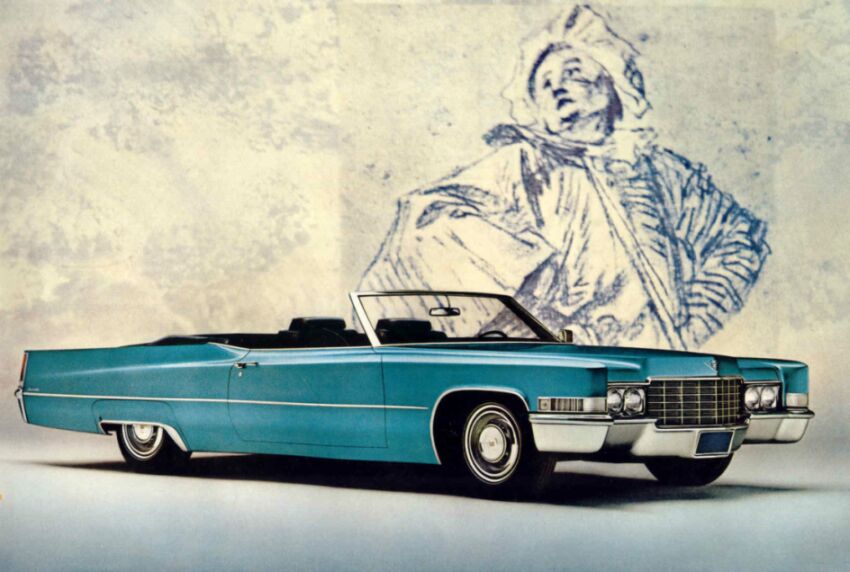
Next week will be a busy academic whirlwind tour of two Nordic capitals for me: Helsinki and Oslo. The two main American Studies events of the year are crammed together as consecutive conferences: The Renvall Institute's Helsinki do, The Maple Leaf and Eagle Conference, has reached instalment no. 12 in its fine run (it will be my third time around as a participant). The theme is always broad and this year is no exception: North America - Relations and relationships. My contribution is about the cultural importance of one specific, iconic brand of car: The Cadillac...
I approach this broad topic from a cultural text studies point of view, investigating how the cars are represented as markers of specific identity positions within specific difference hierarchies:
The Cadillac car has long featured in the American imagination as a signifier of cool masculinity, mastery of the road, financial surplus and a predilection for luxury and comfort (cf. the lyrics to ‘Cadillac Man’, quoted below). I propose to analyze a number of cultural texts that construct, establish and eventually subvert these connotations. I am particularly interested in constructions of race and sexual orientation utilizing the vehicle of the Cadillac. Texts to be analyzed include Jack Kerouac’s “fag Cadillac” in On the Road, rock singer and performer Mink DeVille, the persona of James ‘Thunder’ Early (played by Eddie Murphy) in the 2006 movie Dreamgirls, and various rock ‘n’ roll lyrics featuring comparisons of Fords and Caddies…
Well I’m the king of the road Ain’t got no place to go, no place I call home Seen the world from behind this old wheel Driving away from those feelings I feel
- Cadillac Man
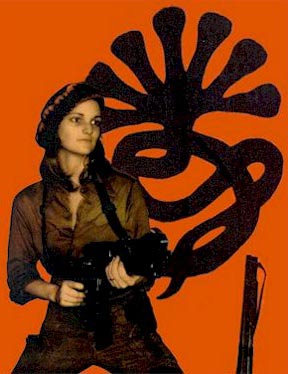
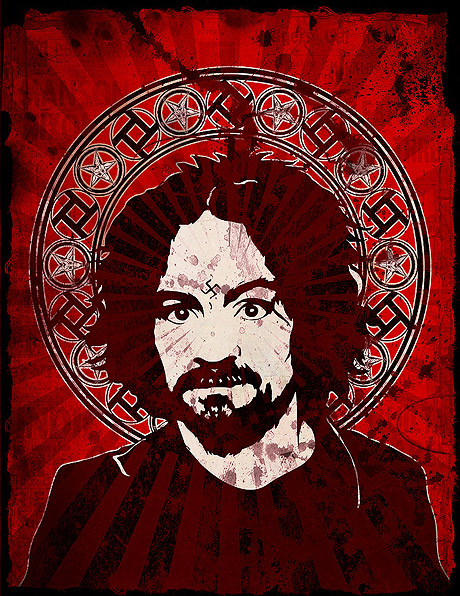
After a few days in Finland we'll relocate to Norway for the big European American Studies event under the auspices of the EAAS. Here my presentation is in connection with my on-going project on American Icons, more specifically some icons of transgression, associated with the 1960s. I'll give a paper on two celeb-criminals, two very different cultural texts, Patty Hearst and Charles Manson:
All iconic representations of actual persons (living or dead) are caught in a dichotomy between elements of normality/familiarity and elements of transgression. Manipulation of representations of celebrities or famous persons into hero- or other-images can either constitute adversarial or collaborative icon work. In adherence with the conference theme of “E Pluribus Unum or E Pluribus Plura” it would be interesting to examine iconic images that are meant to be particularly transgressive of normality and challenge stereotypical images of American wholesomeness. I propose to look at specific collaborative, yet provocative representations of two 1960s icons of transgression: Charles Manson and Patty Hearst, and to analyze how these particular images simultaneously stylize and sacralize these counterculture (anti)heroes, turning the viewer of the icons from passive consumers into ardent worshippers, consumers or cultural agnostics, all according to our ideas regarding the subjects and symbols in question. The images are reproduced below:
I have a lasting fascination with American music from the 1960s. Many of the marquee songs of the era have become short scriptures for a generation of young folks who wanted change (hey Obama, you think you're so original?) and new values to believe in... Next semester I'll be teaching a short elective where I'll use a great book by Philip Beidler as the textbook - and he uses that phrase "Scriptures for a Generation" as his title, indicating that texts function ritualistically and communally in an orally transmitted culture...
Many such songs are 'auditory icons' in the sense that they are associated with specific filmic images through their use in film soundtracks. Think The Graduate, and hear Simon & Garfunkle's "Mrs. Robinson". Think Harold & Maude, and hear Cat Stevens' "If You Want to Sing Out". Think Midnight Cowboy, and hear Nilsson sing "Everybody's Talkin'"...
But wait a minute. Most Danes who hear "Everybody's Talkin'" these days will be thinking SAS, as in Scandinavian Airlines, because the corporate geeks in advertising have pinned their hopes on lifting the dwindling fortunes of the venerable inter-Scandinavian aviation conglomerate on the charms of this little ditty. The commercials give me vertigo (never a desired effect for an airline) and an acute sense of dislocation (not good either when destinations matter). The malady I am suffering from is space-time compression, a side effect of globalization: any text can nowadays be lifted from its original context and re-injected in a new sphere, worlds and decades from the origin. Mild disorientation usually ensues in individuals who know the history behind the original usage...
The lyrics of the song which make nice sense in the context of the film Midnight Cowboy, detailing the futile dreams of escape of two misfits trying to get out of New York City to soak up some rays in Florida, make somewhat less sense in the commercial, which follows a suited businessman as he wafts through check-in, security, arrival and apparently steps straight off the plane and into a sidewalk eatery in Southern climes... Listen:
Everybody's talking at me. I don't hear a word they're saying, Only the echoes of my mind.
People stopping staring, I can't see their faces, Only the shadows of their eyes.
I'm going where the sun keeps shining Thru' the pouring rain, Going where the weather suits my clothes, Backing off of the North East wind, Sailing on summer breeze And skipping over the ocean like a stone.
Read into a contemporary airport/travel environment the first stanza describes a certain recipe for disaster for the business traveller: acute disorientation, borderline catatonia - you'll never make it to the gate on time... Second stanza: uh-oh, trouble at security, the sunglassed guards have obviously sussed that you feature on every no-flight list known to man... Bridge 1: not exactly the hassle free dream destination depicted in the film, where our business traveller hasn't even packed a cotton-coat, let alone any rain gear... Bridge 2: forgettaboutit - you'll never reach your destination at all - the plane is crash landing on water, Mayday, Mayday...
OK, so the advertising company didn't really pay attention to the lyrics they picked - what they wanted were the feel-good vocals and the sing-along tune. Never mind the queer undertones of the original film, never mind the frustrations and alienation captured in the song's mini-portrait of its dishevelled urban cowboy persona... In the SAS fantasy world we are all wealthy, male professionals jetting across our little uniform globe in safe, sanitized aeroplanes that never have their wheels falling off on landing...
Back to the 60s. Nilsson's versions of the song are in themselves a little strange. Here is the original opening sequence of the film, where soon to be male prostitute, Joe Buck (played by Jon Voight), prepares to get out of Hicksville:
Note the bizarre nasal drone and Roy Orbison falsetto imitation at ca. 2:00 till coda... Now compare with Nilsson's slightly longer hit single version, here recorded for a Beatsploitation Hit-Parade TV-show called Beat Club:
Note the distinctly queer moves Nilsson puts on, attempting a bit of snazzy finger-snapping and hip gyration at ca. 1:00. The foghorn-like moaning comes in the vocal effort already at 1:15 and is redoubled at the coda, where the circular wrist motion also gets a bit out of control... By this time Nilsson was enjoying a mega-hit with the single which had almost transcended the three-Oscar success of the film. Both these versions are cool mementos of an age where music and films like these could enjoy block-buster success.
Nevertheless, there is an even cooler person behind the song "Everybody's Talkin'": the original songwriter, Fred Neil... Compare the Talkin'-light tones with string arrangements of Nilsson's versions to Neil's own stark folk instrumentation, cool guitar solo and deep vocal delivery:
That is a scripture for a generation, folks... Neil was a songwriters' songwriter, having even a master in his own right, Tim Buckley, cover another classic signature song of his ("Dolphins"). For a while in the mid-60s Neil was a powerful presence in the East Coast folk scene, much admired by diverse figures such as David Crosby and John Sebastian of Lovin' Spoonful fame.
Sadly, Neil never made it big as a performer and, after a spell of living in Woodstock, eventually elected to make his own getaway to Florida, quit the music business and slip into obscurity. His life and times are meticulously chronicled at this website. As usual Richie Unterberger has done some of the best musico-cultural archeology on Fred Neil, which can be read in part in this excerpt...
Here is Richie's take on "Everybody's Talkin'":
Fred Neil [the album] is best remembered, however, for the original version of "Everybody's Talkin'." Much slower and more simply arranged than the famous cover by Nilsson, it clearly laid out his wishes to escape the madness of contemporary life -- the city, perhaps, or the music business? -- into a hermetic paradise. (That destination is most likely Southern Florida, where Neil would spend much of his post-1970 life, given the line about going to a place where the sun always shines through rain.)
In 2001 Fred Neil passed away at age 65, after a long battle with skin cancer...
Here is how "Everybody's Talkin'" ends, long after the SAS commercial is over:
For years I listened to at least one Van Morrison track every day, often playing one of his songs to energize myself before going in to teach a class or give a lecture. We're talking major obsession, here... so bear with me and this long post.
These days my Van-time comes in waves, on and off. Lately it's been on to an unusual extent, due not only to the release of his latest album Keep It Simple, but also to a belated discovery of his 2002 disc Down the Road which I had not paid particular attention to when it was released (being in a Van slump a the time), but which I now realize contains some really good material. To add to this rather muddled frenzy I have also recently acquired the 3CD version of Still on Top, the better of the several greatest hits packages available on a crammed Van-release market... The advantage of such an eclectic bunch of Van sounds is that one gets hip to connections one might not otherwise have noticed between periods, themes, melodic strands and influences in Morrison's output.
I had in fact written briefly about portions of Down the Road in a piece I published a couple of years ago on the theme of exile and homecoming in Van's songs. Down the Road contains a song that I think is pretty unique in Van's output as far as lyrics go. "Choppin' Wood" (which musically is not very interesting) tells the story of Van's father as an Irish emigrant to the US who eventually came home to Ireland disillusioned and lived out his days in Belfast ("a life of quiet desperation", as Van puts it borrowing a phrase from Thoreau), working the shipyards to feed his family ('choppin' wood' is Van's Walden-inspired metaphor for that grind and routine) yet never giving up his inner life and fascination with America. Van's many heroes have always been literary greats and musical mentors, but this one time we hear about his personal history and the person who moulded him the most. Van often talks about his father in interviews, but usually just about his record collection and interest in blues and jazz music. Recently, though, Van told an interviewer (Barry McIlheney, in the Members only portion of Van's official web-site) a more personal anecdote:
My father used to get this magazine called Jazz Journal and I read a review of a Ray Charles record in that. And my dad used to tune in to AFN, the American Forces Network in Germany, and one night lying in bed after midnight I was listening to AFN and I heard "What’d I Say", and I just knew it was Ray Charles. And I shouted down the stairs, “Is that Ray Charles?”, and my dad shouted back, “Yeah, it’s Ray Charles”. I don’t know how I knew as I’d never actually heard anything by him ever before that night, but somehow I just knew it was him.
I really enjoy how Van's father gets to OK that Van gets a new, musical 'father' in Ray Charles by just 'knowing' him over the airwaves...
My little academic piece on Van was mainly about how a stream of references to exile and homecoming and all the questing that lies between runs through Van songs covering 5 decades and also shades and shapes his album covers, the names he gives to his production companies, touring bands, and every aspect of his public appearance. The latest albums have done nothing to change that impression - quite the contrary, I see Van's post-millennium work as largely a revisiting and reworking/refining of the same themes. Here is a quote from my article, "The Celtic Ray - Representations of Diaspora Identities in Van Morrison Lyrics":
In numerous songs spread out over his whole recording career, Morrison references his origins, childhood and youth in Belfast, where he was born in 1945. He grew up on Hyndford Street in a lower middle class neighbourhood in Protestant dominated East Belfast. However, his parents were not typical Ulster Protestants: Morrison’s father, George, came from a family with Scottish, Presbyterian roots, and was an electrician by trade, but really more interested in his passionate hobby of collecting American blues, bluegrass, country and jazz records. Morrison’s mother, Violet, unexpectedly developed an intensely religious zeal at the time when Morrison was around 10, but contrary to the norm she channelled her beliefs into Jehovah’s Witnesses activities (hence Morrison’s tribute “Kingdom Hall” on his 1978 album Wavelength). This combination of a worldly father, whom Morrison has repeatedly described as an atheist, and a spiritual mother, would immediately seem to have set Morrison on his subsequent path of vacillation between belief and doubt. The parents seem to have embodied the same polarity of personality facets that Morrison himself exhibits: The father an introverted uncommunicative non-believer, ultimately disappointed with his life in Belfast; the mother an extrovert, performative personality, eager to communicate her views to people even to the extent of trying to convert them religiously.
Other than the rare glimpse of family history found in "Choppin' Wood", Down the Road also contains such nostalgic songs as "The Beauty of Days Gone By", which on later albums such as Magic Time and Keep It Simple has found companion pieces in "Celtic New Year" and "Song of Home," respectively. The title track from Down the Road and the closing track on that album, "Fast Train," are songs of leaving home but never escaping completely, and on Keep It Simple they are echoed in the song "End of the Land". So, the weaving of this strand of longing for belonging is clear even in Van's latest songs, as indeed they have been since the 60s (but you'd have to read my article to get that analysis. You can find it in the book Re-Mapping Exile, available here as an E-book)...
The other strand that runs pretty consistently through Van's songs is his fascination with the spiritual and his ceaseless quest for finding ways of touching the sublime and ineffable. This quest had led him along some strange by-ways, including Scientology and the bizarre esoteric work of Alice Bailey and the reincarnated "Tibetan" sage she channels in her work. Van has also been into Celtic mysticism, gnostic Christianity, Buddhism and other Oriental brands of religion and spiritual techniques. It is perhaps not surprising that he continues to write about such matters, also on Keep It Simple... After all, many such belief systems are exactly attempts at simplifying and clarifying a person's life on Earth (sometimes in preparation for a better afterlife or return, depending on what one expects in terms of karmic rewards).
I said a bit about this in my article too, so you get one more quote for free:
Morrison’s notions of Celtic brotherhood can be seen as a hybrid between American New Age philosophies and Irish identity positions (both identity constructs oscillate between collectivist messages and individualist realisations of them). Morrison’s quest for enlightenment became more and more explicit throughout the eighties as witnessed by album titles such as Beautiful Vision from 1982 and Inarticulate Speech of the Heart from 1983, as well as Sense of Wonder (1985), Avalon Sunset(1989), and finally Enlightenment (1990). Only on a surface level did an intervening album title from 1986, No Guru, No Method, No Teacher, appear to contradict the singer-songwriter’s quest for esoteric knowledge, since that album title is in fact a quote from Krishnamurti, the mystic messiah trained by the Theosophical Society (founded by Madame Blavatsky) to enlighten the world. Morrison songs from the 1980s are glosses of teachings from a number of esoteric, New Age or occult beliefs, including Scientology, whose founder L. Ron Hubbard, is explicitly thanked in the liner notes to Inarticulate Speech of the Heart. The richest vein mined by Morrison in those years is, however, the writings of Alice A. Bailey, whose theories concerning illusion, glamour, maya, and the strange entity known as “The Dweller on the Threshold” – all obstacles to true enlightenment – can be traced on several Morrison albums.
The postulate here is that this hybrid of esoteric knowledge, Irish identity longings, and a cross-cultural musical style and performance, creates the only viable recipe for life for Morrison whose character reflects a contradiction between an extremely shy and private persona, and an extroverted performer persona whose only existence is in the public gaze. Morrison is thus seen to be “Hiding in the Light”, to gloss Dick Hebdige’s 1980 book of the same title, which details the narcissistic paradox of hiding and exposure inherent in subcultural deviance, which seems apt to characterise Morrison’s desires as well. This duality is further mirrored in Morrison’s own internal and external exile positions, and partly explains his continuing quest for identity, figured as a battle between revelation in the form of enlightenment and concealment in clouds of mysticism.
People have not yet made the connection between Eastern mysticism and the lyrics on Keep It Simple, but I'll gladly be the first one to point them out. Most reviewers have commented on the track "That's Entrainment" (which is one of the really sublime songs on the new disc, captivating you with its simple chords, repetitive chorus, Van's vocal riffing and the accompaniment effortlessly laid down in what sounds like a first take) - often wondering what the strange word 'entrainment' might mean. Some reviews offer dictionary definitions (Physics: 'the process whereby two interacting oscillating systems assume the same period'); others like the one in Rolling Stone gloss it as being in a 'trancelike realm'... Dave Heaton in PopMatters makes a full paragraph out of a valiant effort to describe the song and understand the title:
Partly because of the singing, “That’s Entrainment” immediately stands out, one to add to the lengthy list of classic Van Morrison songs. The third track, it’s the first riveting moment of the album, possibly the first from Morrison in a while, where he holds time still like he used to. He starts singing right at the song’s opening seconds, painting a picture of a countryside, then of himself standing in rapt fascination, struck by the pure beauty of an unspecified “you”, seemingly the spiritual force of nature, but sung to like a lover. Handclaps and other hand percussion provide the song’s backbone, as Morrison sings up and down the hills of that countryside, eventually expressing his awe in the terms of classic R&B—when “you” come around, it makes him holler, makes him want everyone to shake their collective moneymaker, shake it on down. At first the chorus of “That’s entrainment” is jarring amidst all this ecstasy and calm, if only because it begs the question, “What the hell is entrainment?” As far as I can tell, it’s all about being drawn in and transformed, the way air forms into a cloud.
Well and good, all - but no cigar, as Freud said to his mother. Entrainment is indeed both "the synchronization of organisms to an external rhythm" and the practice of "the practice of tuning one's brainwaves to a desired frequency", but while I wouldn't put it past Van to have read books about biomusicology and neuroscience, I find it a million times more likely that he once again dipped into his extensive library of Eastern religious esoterica and New Age philosophy. Let's do the same: 'Entrainment', in the esoteric sense of the word, is a concept directly related to music and poetry and the performance thereof. Read this (lengthy, sorry!) excerpt from a home page on Indian music and its function in worship and meditation:
The musical forms, kirtan and bhajan, are essential components of virtually all Hindu worship, as well as of related traditions, such as Sikhism, where they play an indispensable role. More similar than different, both are related to jaapa, or repetition of the Sacred Name, and group participation is usually emphasized. An interesting distinction is that while bhajans are commonly performed as such for listening audiences, kirtan - usually a group devotional practice - requires participation, rather than taking the form of a performance. Kirtan typically employs fewer and much repeated phrases, while a bhajan may contain elaborate verses and melodic improvisations, sometimes with sung mono-syllables (generally, the names of the notes, themselves). Both employ melodic structures based on the Indian classical raaga form, where the emphasis is on rhythm and melody, rather than harmony. And, while kirtans generally take only the names and qualities (guna) of the Divine, bhajans often employ ornately poetical lyrics from the greatest of Indian poets, including Rabindranath Tagore, Tulsidas, the Sufi Kabir, and the great woman saint, Meerabai.
A delightful aspect of kirtan participation is the opportunity for entrainment. Entrainment happens when one object or person comes into rhythmic synchrony with another. Experiments have demonstrated that two clocks placed side by side may begin to tick together after some period of time. Similarly, the strings of one lute may resonate sympathetically in relation to a nearby lute, identically tuned. According to this principle, the members of a kirtan sangha may come into synch with one another during the process of chanting melodically and rhythmically. Further, as the root forms of kirtan typically derive from classical raagas, the melodies may help to synchronize us with Nature or the Cosmos, itself. Also, when we sing or chant, the breath necessarily becomes rhythmic, and this may encourage balance and equanimity. This factor, along with the sounds or meanings of the sacred and ancient words, may have multifarious beneficial effects on the mind, body, and spirit. Also, it is said that one need not even participate in kirtan to derive its many benefits; merely listening attentively to the devotional music may uplift, inspire, and even heal the listener at some level. Stress, negativity, and "self-grasping" may all be let go during participation or listening to kirtan.
"...merely listening attentively to the devotional music may uplift, inspire, and even heal the listener at some level." Did ye get healed? - as Van asked us back in '87 on Poetic Champions Compose (thanks for the correction, Eoin), one of many albums drawing heavily on a mix of literary influences (Yeats) and religious inspiration (Alan Watts' notions of Zen). The above quote gives us the necessary understanding of Van's idea of entrainment: phrases such as 'repetition of the Sacred Name', 'elaborate verses and melodic improvisations, sometimes with sung mono-syllables' are often applied almost verbatim to describe Van's performances. Van also frequently borrows ornate lyrics from great poets, and I am positive that he is familiar with Rabindranath Tagore, the anglophone Indian Nobel Laureate (1913 - the period Van often evokes through Yeats, T.S. Eliot and other modernist poets). So, Van's entrainment is his kirtan (what we get when we sing along) and bhajan (what Van attains when he goes into the zone of private performance)...
Not yet convinced? OK, did you read carefully enough to catch the reference to 'the Sufi, Kabir'? Kabir could easily be one of several inspirations behind Van's "No Guru, No Method, No Teacher", as the paradoxes of some of his poems reveal:
O SERVANT, where dost thou seek Me? Lo! I am beside thee. I am neither in temple nor in mosque: I am neither in Kaaba nor in Kailash: Neither am I in rites and ceremonies, nor in Yoga and renunciation. If thou art a true seeker, thou shalt at once see Me: thou shalt meet Me in a moment of time. Kabir says, "O Sadhu! God is the breath of all breath."
Are you looking for me? I am in the next seat. My shoulder is against yours. You will not find me in the stupas, not in Indian shrine rooms, nor in synagogues, nor in cathedrals: not in masses, nor kirtans, not in legs winding around your own neck, nor in eating nothing but vegetables. When you really look for me, you will see me instantly — you will find me in the tiniest house of time. Kabir says: Student, tell me, what is God? He is the breath inside the breath.
Seeking, meeting, breathing - all vintage Van obsessions... And who translated Kabir's poetry into English? Rabindranath Tagore, of course...
The reference to Sufism on Keep It Simple comes in the most bhajan-like song on the album, the 7 minute long closer, "Behind the Ritual" ('Behind the ritual, you find the spiritual'). Van wails about days in the alley (a familiar locality from many Van songs, usually associated with 'jelly roll'), spent "drinking that wine, making time, and talking all out of my mind" (rituals involving drinking wine and speaking in tongues, anyone? How about the Eucharist and the descent of the Holy Ghost...?) At one point Van refers to himself "turning and spinning in the alley, like a Whirling Dervish in the alley" - and that is your reference to Sufi mysticism - the ritual that a specific Sufi sect devised to achieve entrainment, spinning around your own axis until you attain enlightenment and oneness with God:
In the symbolism of the Sema ritual, the semazen's camel's hair hat (sikke) represents the tombstone of the ego; his wide, white skirt represents the ego's shroud. By removing his black cloak, he is spiritually reborn to the truth. At the beginning of the Sema, by holding his arms crosswise, the semazen appears to represent the number one, thus testifying to God's unity. While whirling, his arms are open: his right arm is directed to the sky, ready to receive God's beneficence; his left hand, upon which his eyes are fastened, is turned toward the earth. The semazen conveys God's spiritual gift to those who are witnessing the Sema. Revolving from right to left around the heart, the semazen embraces all humanity with love. The human being has been created with love in order to love. Mevlâna Jalâluddîn Rumi says, "All loves are a bridge to Divine love. Yet, those who have not had a taste of it do not know!"
Van's pan-esoteric religion has often led him to "pray to the One", go "across the bridge to the other side" (sometimes it's just a stairway leading to Vanlose railway station, but it is all one bridge leading to enlightenment) and "dump" his ego "on the burning ground"... Sufism is just the latest facet this Irish Dervish (a Persian word for the 'ascetic mendicant' - a propos of "Don't Go to Nightclubs Anymore" - whose function is to be a "source of wisdom, medicine, poetry, enlightenment, and witticisms"). Examples of punny wit abound on Keep It Simple - here are two:
"That's Entrainment" puns on the old Musical (retrospective) film That's Entertainment! and not least its punny title song. ("The chase for the man with the face: That's entertainment!")
The mantra, "Behind the ritual, you find the spiritual" reveals and hides at the same time that the word 'spiritual' is a portmanteau of the two words that are key to understanding the album: 'spirit' and 'ritual'...
Keep It Simple is a delightful album that turns a trick or two on you: it ain't as simple as you might think. More to follow...
A month ago I posted about my plans to present a paper on the prose poetry of Robert Gibbons, seen as a form of life writing. Due to some shuffling of workshops and some wheeling and dealing behind the scenes I have instead been sold down the river to a workshop with a more overt cultural history and politics perspective, so that my paper now will have the title indicated in the heading for this post. That is fine by me - I intended all along to write a longer piece (and who knows, maybe a proper book) on Gibbons' fascinating practice and poetics - including a focused look at how his poetry is both political and personal.
On my university homepage I keep a log of my lectures and other speaking engagements. I now feature a page on ESSE-9 in Aarhus where I am going to first present my Gibbons-paper...
Here is the abstract:
The Survival of a Dissident Poet: Life in the Little Magazines before and after the Web – the Case of The Evergreen Review and Robert Gibbons
Robert Gibbons’ new volume of poetry Beyond Time – New and Selected Work 1977 - 2007 forms a rare vantage point from which to open a discussion of the themes proposed for this seminar on innovative voices on language and self. Over four decades Gibbons has remained an unincorporated, strongly political, and consistently dissident voice in the American landscape of little magazines and independent publication. Unaffiliated with any formal movement or coterie Gibbons has instead focused on developing his personal poetics of nonconformity, specializing in the hybrid form of the prose poem.
While being forced early on to depend on the acceptance of journal editors to find publication outlets, Gibbons has latterly begun utilizing internet and web-based publication options to a much larger extent. His spontaneous composition ideals make his output, which at times mimics forms such as the journal, the almanac and the blog, ideally suited for a quick turn-around in terms of publication. His confessions and reportage from a place-bound life on the streets of his favorite cities and among clean, well-lighted book-stacks balance carefully between the personal and the political, detailing the vagaries of having a compulsion to write for dear life while simultaneously being compelled to work for a living.
Parallel with his increasing utilization of ‘fast’ media, Gibbons has continued to work within more traditional little magazine outlets, such as The Evergreen Review, where recent poems have just appeared. The multiplication of publication outlets provided by the Web means that publication and gate-keeping in the arts have changed completely, and that whole new rules for peer, coterie and/or self-publication are now in place. Gibbons has navigated this new multifaceted field in a manner that could well be characterized as a celebration of 'indefatigable privateness', i.e. the visions of the individual – yet equally so as an indefatigable political commitment to a community, both local and global.
Some of my previous work on Gibbons can be found here:
Here is how he presents his view on work, language and self at his relatively new web site:
Language having more to do with blood than dictionary, physical as much as cerebral. Spontaneous more than calculated. Rife with sensuousness. As internal as dream, eternal as memory. The insistence of pulse, breath, & bodily fluid. Blood of Love, I wrote once, dripping it repeatedly down the page, Blood of Love, Blood of Love, which could have culminated in a yell, “Stella!” If that were her name. Always the feet tracing streets from Paris to Barcelona; a dialogue of the citizenry of self with city & history. Skin & bone & wound. Letter by letter back home documenting experience. The second life of writing, as intense, or more so, than living. Aesthetic based on the tactile. The chew of the word. A certain taste, not always familiar. I’d film words like Godard, if I could, chant like Coltrane, if need be, paint a sign like Kline, however one has to get it down, send it out, make a note. Thrust & parry, the battle & pleasure.
Check out the rich vein of poetry flowing to his readers from his daily Log... A recent poem:
The Pleasure of the Text Thursday, March 27, 2008
She arrived via the elevator of the dream announcing that my sources were in order, which meant the latest stack of books included the Goya amidst the foundation of black notebooks, Black Sun, again by Kristeva, the newly added Basic Writings of Nietzsche, & topped off by a little yellow paperback version of The Pleasure of the Text by Barthes, intimating that this latter held the greatest interest for her. Just the night before we’d already spoken of the transparency of the Soul, whenever it appeared in dreams, whether the rose enclosed in double panes of glass floating down the aisle of a public bus, or the vitrine that appeared after I told her I also loved the back side of her Soul. Now, for Barthes, the pleasure of the text culminates in the unveiling of the sex, but such an exposure that cannot come too quickly, & must be justified by the rhythm of the language leading up to its revelation, whether it be the rhythm of the dance, the musical counterpoint of Debussy humbly seeking to give pleasure, voyeuristic clothesline strung taut in a long novel, or the slow emergence of ideas from the body, which he says differ from those of his own.