Showing posts with label Esoterica. Show all posts

Tuesday, March 19, 2013

The Rumsfeld Equation

the schrödinger equation
the rumsfeld equation

known knowns – what we know that we know – memory
unknown knowns – what we don’t know that we know – forgetfulness
known unknowns – what we know that we don’t know – foresight
unknown unknowns – what we don’t know that we know nothing of – bliss

Tuesday, April 29, 2008

Upcoming conferences: Icons and Caddies

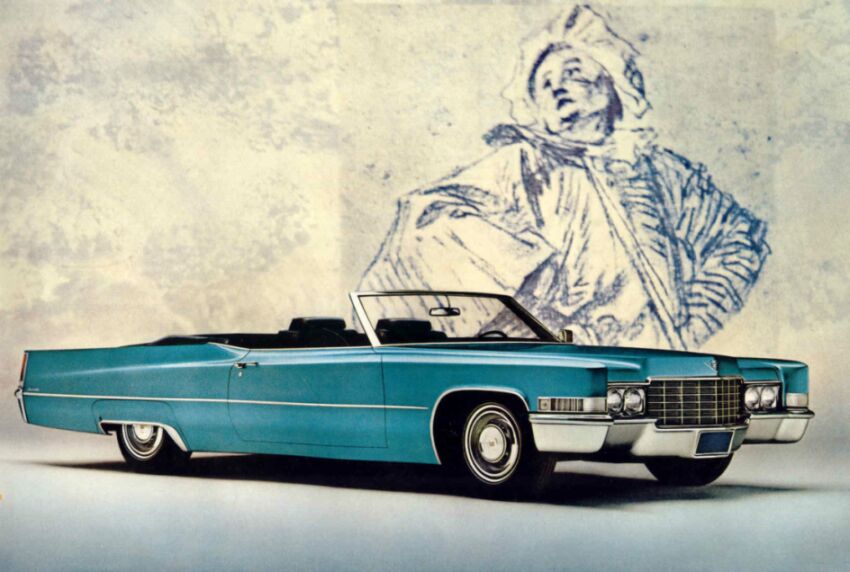
Next week will be a busy academic whirlwind tour of two Nordic capitals for me: Helsinki and Oslo. The two main American Studies events of the year are crammed together as consecutive conferences: The Renvall Institute's Helsinki do, The Maple Leaf and Eagle Conference, has reached instalment no. 12 in its fine run (it will be my third time around as a participant). The theme is always broad and this year is no exception: North America - Relations and relationships. My contribution is about the cultural importance of one specific, iconic brand of car: The Cadillac...

I approach this broad topic from a cultural text studies point of view, investigating how the cars are represented as markers of specific identity positions within specific difference hierarchies:

The Cadillac car has long featured in the American imagination as a signifier of cool masculinity, mastery of the road, financial surplus and a predilection for luxury and comfort (cf. the lyrics to ‘Cadillac Man’, quoted below). I propose to analyze a number of cultural texts that construct, establish and eventually subvert these connotations. I am particularly interested in constructions of race and sexual orientation utilizing the vehicle of the Cadillac. Texts to be analyzed include Jack Kerouac’s “fag Cadillac” in On the Road, rock singer and performer Mink DeVille, the persona of James ‘Thunder’ Early (played by Eddie Murphy) in the 2006 movie Dreamgirls, and various rock ‘n’ roll lyrics featuring comparisons of Fords and Caddies…

Well I’m the king of the road
Ain’t got no place to go, no place I call home
Seen the world from behind this old wheel
Driving away from those feelings I feel

- Cadillac Man
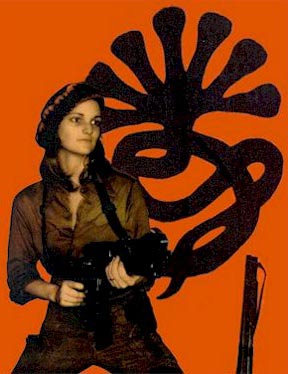
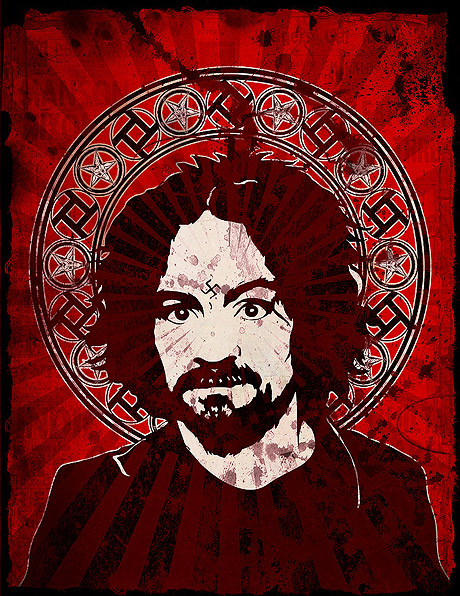
After a few days in Finland we'll relocate to Norway for the big European American Studies event under the auspices of the EAAS. Here my presentation is in connection with my on-going project on American Icons, more specifically some icons of transgression, associated with the 1960s. I'll give a paper on two celeb-criminals, two very different cultural texts, Patty Hearst and Charles Manson:

All iconic representations of actual persons (living or dead) are caught in a dichotomy between elements of normality/familiarity and elements of transgression. Manipulation of representations of celebrities or famous persons into hero- or other-images can either constitute adversarial or collaborative icon work. In adherence with the conference theme of “E Pluribus Unum or E Pluribus Plura” it would be interesting to examine iconic images that are meant to be particularly transgressive of normality and challenge stereotypical images of American wholesomeness. I propose to look at specific collaborative, yet provocative representations of two 1960s icons of transgression: Charles Manson and Patty Hearst, and to analyze how these particular images simultaneously stylize and sacralize these counterculture (anti)heroes, turning the viewer of the icons from passive consumers into ardent worshippers, consumers or cultural agnostics, all according to our ideas regarding the subjects and symbols in question. The images are reproduced below:


Tuesday, April 22, 2008

The Will to Submission

On the off chance that someone would get the strange idea from my previous post that I have something against male singers with high pitched voices and a penchant for odd hand movements, I offer this counter-evidence:

Here is the sublime androgyny of Antony Hegarty interpreting Leonard Cohen's "If It Be Your Will". Leonard's song is a celebration and embodiment of the total submission to the will of the Other which a man may have to embrace once in a life time. Antony is in some ways that embodiment of the Other which we rarely have a chance to encounter in real life. We are all enriched by the art of both these individuals who give new meaning to the postmodern sublime in their rags of light...


If it be your will
That I speak no more
And my voice be still
As it was before
I will speak no more
I shall abide until I am spoken for
If it be your will

Friday, April 18, 2008

Nirvana No

Sparked off by some of my recent posts on spirituality and quests for insight in relation to the work of Van Morrison and of the Beats, I have started thinking about some of the conundrums Western artists find themselves in when they become fascinated with Eastern belief systems.

Both Jack Kerouac and Van Morrison have frequently referenced Buddhism in their works (novels, poems, songs) In fact, Kerouac read widely in Buddhist texts over a period of several years, and eventually started composing his own sutras, or contemporary versions of sacred texts. Morrison has, of course, dropped references to both Kerouac's novels and to well-known Western popularizers of Buddhism in several of his songs... One key figure in this gamut is Alan Watts, who was English but lived the better part of his active life as a Buddhist popularizer in the USA (he died in 1973). The author of more than 25 books and avid lecturer and broadcaster, Watts' ideas are still being disseminated in today's media, via posthumous book publications, on discs, DVDs and on the Web... At some point Kerouac met and became friends with Watts, and he appears as a character in two of Kerouac's novel, Desolation Angels (as Alex Aums) and Big Sur (as Arthur Wayne). Morrison primarily glosses Watts' work in a song aptly named "Alan Watts Blues" (on Poetic Champions Compose) where the chorus is a rendition of the title of a Watts book: Cloud-hidden Whereabouts Unknown. The bridge lyrics go like this:

Sittin' up on the mountain-top in my solitude
Where the morning fog comes rollin' in
Just might do me some good.

Such sentiments echo very well with a Beat writer such as Gary Snyder, whose translations of Han Shan's Cold Mountain poems, for instance, sound very similar:

I settled at Cold Mountain long ago,
Already it seems like years and years.
Freely drifting, I prowl the woods and streams
And linger watching things themselves.
Men don't get this far into the mountains,
White clouds gather and billow.
Thin grass does for a mattress,
The blue sky makes a good quilt.
Happy with a stone under head
Let heaven and earth go about their changes.

Clambering up the Cold Mountain path,
The Cold Mountain trail goes on and on:
The long gorge choked with scree and boulders,
The wide creek, the mist blurred grass.
The moss is slippery, though there's been no rain
The pine sings, but there's no wind.
Who can leap the word's ties
And sit with me among the white clouds?

As a result of Watts' acquaintance with the Beats (he first knew Snyder, who was a serious Zen acolyte and also known to D.T. Suzuki, the first scholar to disseminate a knowledge of Buddhism in English) he wrote a fairly well-known essay titled "Beat Zen, Square Zen, and Zen", originally published as a pamphlet by City Lights Books in 1959, then collected and re-published in the Random House essay collection This Is It in 1962. Here are his definitions of the different mind sets to approaching Zen:

Square Zen is a quest for the right spiritual experience, for a satori which will receive the stamp (inka) of approval and established authority. There will even be certificates to hang on the wall. [Whereas f]or beat Zen there must be no effort, no discipline, no artificial striving to attain satori or to be anything but what one is. [He describes its self-defensive underside] But for square Zen there can be no true satori without years of meditation-practice under the stern supervision of a qualified master.

Not only did Watts identify the typical Western approaches to Zen as Beat or Square, respectively - pinpointing these approaches' short-comings (one is not serious enough and seeks instant gratification, the other is more philosophical than spiritual and caters to the intellect rather than the soul...), but in The Joyous Cosmology (1957) he had already offered a more history of ideas founded account of the difficulties of reception of Eastern religion for a Western mind-set:

The practical difficulty is that Taoism and Zen are so involved with the forms of Far Eastern culture that it is a major problem to adapt them to Western needs. For example, Eastern teachers work on the esoteric and aristocratic principle that the student must learn the hard way and find out almost everything for himself. Aside from occasional hints, the teacher merely accepts or rejects the student's attainments. But Western teachers work on the exoteric and democratic principle that everything possible must be done to inform and assist the student so as to make his mastery of the subject as easy as possible. Does the latter approach, as purists insist, merely vulgarize the discipline? The answer is that it depends upon the type of discipline. If everyone learns enough mathematics to master quadratic equations, the attainment will seem small in comparison with the much rarer comprehension of the theory of numbers. But the transformation of consciousness undertaken in Taoism and Zen is more like the correction of faulty perception or the curing of a disease. It is not an acquisitive process of learning more and more facts or greater and greater skills, but rather an unlearning of wrong habits and opinions. As Lao-tzu said, "The scholar gains every day, but the Taoist loses every day."

The practice of Taoism or Zen in the Far East is therefore an undertaking in which the Westerner will find himself confronted with many barriers erected quite deliberately to discourage idle curiosity or to nullify wrong views by inciting the student to proceed systematically and consistently upon false assumptions to the reductio ad absurdum. My own main interest in the study of comparative mysticism has been to cut through these tangles and to identify the essential psychological processes underlying those alterations of perception which enable us to see ourselves and the world in their basic unity. I have perhaps had some small measure of success in trying, Western fashion, to make this type of experience more accessible.

To illustrate this difficulty I propose to briefly return to the work of first Kerouac, and then Morrison. A poem sequence such as the spontaneously composed Mexico City Blues by Kerouac illustrates the limitations. In this book Kerouac on several occasions riffs on key notions in Buddhist faith, such as Maya (the notion that all, including human suffering, is an illusion - a veil, hiding the true nature of things - namely that no thing exists). He also plays with the idea of Nirvana, a state of grace where the believer has understood that nothing is real, and that Nirvana is the cessation of existence in the world of illusion. In a previous paper I made reference to how a specific sequence of poems approaches Nirvana:

The most discussed and anthologised thematic chorus sequence in Mexico City Blues is the one eulogising Charlie Parker, which rolls from poem 239 through 242 of the collection, and thus forms the coda to the whole book. There are, however, numerous other such chains of choruses with identifiable thematic connections creating coherence across individual pages. A good example of such a chain are choruses 196 through 201, which arise out of a longer, more vaguely interconnected thematic meditation on Buddhist tenets to riff specifically on the notion of Nirvana, and the application of Nirvana as a shade of lipstick, called “Nirvana No”, to barroom girls disturbing or tempting the Buddhist sage in his meditations. Most of the Blues poems are self-contained units, ending as a page gets filled up with text. Poems can however run on, onto the next sheet(s) as illustrated by the identification of chains of choruses discussed above. On the other hand there are many examples of apparently prepared run-on lines ending one chorus, but not being picked up in the next. One good example is the last line in the Nirvana sequence which reads “And they claim”, but we never learn what it is they claim, as the next chorus seems a self-contained meta-poem starting: “A white poem, a white pure/spotless poem” (202). On the whole Mexico City Blues can be said to thematise the quest for purity of mind and belief in a world full of temptations of the flesh, a world where the speaking and writing subject suffers but seeks help and illumination from selected culture heroes, (Buddhist sages as well as Charlie Parker) and as such the collection takes its place naturally among Kerouac’s other confessional works.

One could of course argue that writing the ''white poem" is a means of getting to Nirvana, and that would be a Zen stance. However, the follow-up notion that such a poem has to be "spotless" contradicts the move towards Nirvana, by the poet's getting hung up on achieving perfection within Maya. I think the operation in Kerouac's mind is typical of the Western way of thinking within the box of attainment, quality, perfection. Nirvana is not perfection, but the cessation of the striving for perfection.

Van Morrison's tribute to Watts seems to imagine the trip to the mountain top as a small stay at the spa, a detox of the mind, after which the poet returns to the grind of everyday life and its temptations:

I'm waiting in the clearing with my motor on
it's time to get back to the town again
Where the air is sweet and fresh in the countryside
Well, it won't be long before I get back here again.

This again is similar to the way Kerouac ends his Desolation novels, Dharma Bums and Desolation Angels. The poet returns purified, but with the knowledge that this state will not last. In Kerouac's case the root to the flaw is already laid during the meditations on the mountain top where he has realized that all is illusion, but fails to take the final step of realizing that the suffering caused by this realization is also illusion. In Morrison's case one almost gets the feeling that the cleansing procedure is an established routine, not a one off extraordinary event that might lead to satori...

I end with a video of Watts' Conversation with Myself. There are 2 more parts easily available on YouTube...


Tuesday, April 8, 2008

That's Entrainment

For years I listened to at least one Van Morrison track every day, often playing one of his songs to energize myself before going in to teach a class or give a lecture. We're talking major obsession, here... so bear with me and this long post.

These days my Van-time comes in waves, on and off. Lately it's been on to an unusual extent, due not only to the release of his latest album Keep It Simple, but also to a belated discovery of his 2002 disc Down the Road which I had not paid particular attention to when it was released (being in a Van slump a the time), but which I now realize contains some really good material. To add to this rather muddled frenzy I have also recently acquired the 3CD version of Still on Top, the better of the several greatest hits packages available on a crammed Van-release market... The advantage of such an eclectic bunch of Van sounds is that one gets hip to connections one might not otherwise have noticed between periods, themes, melodic strands and influences in Morrison's output.

I had in fact written briefly about portions of Down the Road in a piece I published a couple of years ago on the theme of exile and homecoming in Van's songs. Down the Road contains a song that I think is pretty unique in Van's output as far as lyrics go. "Choppin' Wood" (which musically is not very interesting) tells the story of Van's father as an Irish emigrant to the US who eventually came home to Ireland disillusioned and lived out his days in Belfast ("a life of quiet desperation", as Van puts it borrowing a phrase from Thoreau), working the shipyards to feed his family ('choppin' wood' is Van's Walden-inspired metaphor for that grind and routine) yet never giving up his inner life and fascination with America. Van's many heroes have always been literary greats and musical mentors, but this one time we hear about his personal history and the person who moulded him the most. Van often talks about his father in interviews, but usually just about his record collection and interest in blues and jazz music. Recently, though, Van told an interviewer (Barry McIlheney, in the Members only portion of Van's official web-site) a more personal anecdote:

My father used to get this magazine called Jazz Journal and I read a review of a Ray Charles record in that. And my dad used to tune in to AFN, the American Forces Network in Germany, and one night lying in bed after midnight I was listening to AFN and I heard "What’d I Say", and I just knew it was Ray Charles. And I shouted down the stairs, “Is that Ray Charles?”, and my dad shouted back, “Yeah, it’s Ray Charles”. I don’t know how I knew as I’d never actually heard anything by him ever before that night, but somehow I just knew it was him.
I really enjoy how Van's father gets to OK that Van gets a new, musical 'father' in Ray Charles by just 'knowing' him over the airwaves...

My little academic piece on Van was mainly about how a stream of references to exile and homecoming and all the questing that lies between runs through Van songs covering 5 decades and also shades and shapes his album covers, the names he gives to his production companies, touring bands, and every aspect of his public appearance. The latest albums have done nothing to change that impression - quite the contrary, I see Van's post-millennium work as largely a revisiting and reworking/refining of the same themes. Here is a quote from my article, "The Celtic Ray - Representations of Diaspora Identities in Van Morrison Lyrics":
In numerous songs spread out over his whole recording career, Morrison references his origins, childhood and youth in Belfast, where he was born in 1945. He grew up on Hyndford Street in a lower middle class neighbourhood in Protestant dominated East Belfast. However, his parents were not typical Ulster Protestants: Morrison’s father, George, came from a family with Scottish, Presbyterian roots, and was an electrician by trade, but really more interested in his passionate hobby of collecting American blues, bluegrass, country and jazz records. Morrison’s mother, Violet, unexpectedly developed an intensely religious zeal at the time when Morrison was around 10, but contrary to the norm she channelled her beliefs into Jehovah’s Witnesses activities (hence Morrison’s tribute “Kingdom Hall” on his 1978 album Wavelength). This combination of a worldly father, whom Morrison has repeatedly described as an atheist, and a spiritual mother, would immediately seem to have set Morrison on his subsequent path of vacillation between belief and doubt. The parents seem to have embodied the same polarity of personality facets that Morrison himself exhibits: The father an introverted uncommunicative non-believer, ultimately disappointed with his life in Belfast; the mother an extrovert, performative personality, eager to communicate her views to people even to the extent of trying to convert them religiously.
Other than the rare glimpse of family history found in "Choppin' Wood", Down the Road also contains such nostalgic songs as "The Beauty of Days Gone By", which on later albums such as Magic Time and Keep It Simple has found companion pieces in "Celtic New Year" and "Song of Home," respectively. The title track from Down the Road and the closing track on that album, "Fast Train," are songs of leaving home but never escaping completely, and on Keep It Simple they are echoed in the song "End of the Land". So, the weaving of this strand of longing for belonging is clear even in Van's latest songs, as indeed they have been since the 60s (but you'd have to read my article to get that analysis. You can find it in the book Re-Mapping Exile, available here as an E-book)...

The other strand that runs pretty consistently through Van's songs is his fascination with the spiritual and his ceaseless quest for finding ways of touching the sublime and ineffable. This quest had led him along some strange by-ways, including Scientology and the bizarre esoteric work of Alice Bailey and the reincarnated "Tibetan" sage she channels in her work. Van has also been into Celtic mysticism, gnostic Christianity, Buddhism and other Oriental brands of religion and spiritual techniques. It is perhaps not surprising that he continues to write about such matters, also on Keep It Simple... After all, many such belief systems are exactly attempts at simplifying and clarifying a person's life on Earth (sometimes in preparation for a better afterlife or return, depending on what one expects in terms of karmic rewards).

I said a bit about this in my article too, so you get one more quote for free:
Morrison’s notions of Celtic brotherhood can be seen as a hybrid between American New Age philosophies and Irish identity positions (both identity constructs oscillate between collectivist messages and individualist realisations of them). Morrison’s quest for enlightenment became more and more explicit throughout the eighties as witnessed by album titles such as Beautiful Vision from 1982 and Inarticulate Speech of the Heart from 1983, as well as Sense of Wonder (1985), Avalon Sunset(1989), and finally Enlightenment (1990). Only on a surface level did an intervening album title from 1986, No Guru, No Method, No Teacher, appear to contradict the singer-songwriter’s quest for esoteric knowledge, since that album title is in fact a quote from Krishnamurti, the mystic messiah trained by the Theosophical Society (founded by Madame Blavatsky) to enlighten the world. Morrison songs from the 1980s are glosses of teachings from a number of esoteric, New Age or occult beliefs, including Scientology, whose founder L. Ron Hubbard, is explicitly thanked in the liner notes to Inarticulate Speech of the Heart. The richest vein mined by Morrison in those years is, however, the writings of Alice A. Bailey, whose theories concerning illusion, glamour, maya, and the strange entity known as “The Dweller on the Threshold” – all obstacles to true enlightenment – can be traced on several Morrison albums.

The postulate here is that this hybrid of esoteric knowledge, Irish identity longings, and a cross-cultural musical style and performance, creates the only viable recipe for life for Morrison whose character reflects a contradiction between an extremely shy and private persona, and an extroverted performer persona whose only existence is in the public gaze. Morrison is thus seen to be “Hiding in the Light”, to gloss Dick Hebdige’s 1980 book of the same title, which details the narcissistic paradox of hiding and exposure inherent in subcultural deviance, which seems apt to characterise Morrison’s desires as well. This duality is further mirrored in Morrison’s own internal and external exile positions, and partly explains his continuing quest for identity, figured as a battle between revelation in the form of enlightenment and concealment in clouds of mysticism.
People have not yet made the connection between Eastern mysticism and the lyrics on Keep It Simple, but I'll gladly be the first one to point them out. Most reviewers have commented on the track "That's Entrainment" (which is one of the really sublime songs on the new disc, captivating you with its simple chords, repetitive chorus, Van's vocal riffing and the accompaniment effortlessly laid down in what sounds like a first take) - often wondering what the strange word 'entrainment' might mean. Some reviews offer dictionary definitions (Physics: 'the process whereby two interacting oscillating systems assume the same period'); others like the one in Rolling Stone gloss it as being in a 'trancelike realm'... Dave Heaton in PopMatters makes a full paragraph out of a valiant effort to describe the song and understand the title:
Partly because of the singing, “That’s Entrainment” immediately stands out, one to add to the lengthy list of classic Van Morrison songs. The third track, it’s the first riveting moment of the album, possibly the first from Morrison in a while, where he holds time still like he used to. He starts singing right at the song’s opening seconds, painting a picture of a countryside, then of himself standing in rapt fascination, struck by the pure beauty of an unspecified “you”, seemingly the spiritual force of nature, but sung to like a lover. Handclaps and other hand percussion provide the song’s backbone, as Morrison sings up and down the hills of that countryside, eventually expressing his awe in the terms of classic R&B—when “you” come around, it makes him holler, makes him want everyone to shake their collective moneymaker, shake it on down. At first the chorus of “That’s entrainment” is jarring amidst all this ecstasy and calm, if only because it begs the question, “What the hell is entrainment?” As far as I can tell, it’s all about being drawn in and transformed, the way air forms into a cloud.
Well and good, all - but no cigar, as Freud said to his mother. Entrainment is indeed both "the synchronization of organisms to an external rhythm" and the practice of "the practice of tuning one's brainwaves to a desired frequency", but while I wouldn't put it past Van to have read books about biomusicology and neuroscience, I find it a million times more likely that he once again dipped into his extensive library of Eastern religious esoterica and New Age philosophy. Let's do the same: 'Entrainment', in the esoteric sense of the word, is a concept directly related to music and poetry and the performance thereof. Read this (lengthy, sorry!) excerpt from a home page on Indian music and its function in worship and meditation:

The musical forms, kirtan and bhajan, are essential components of virtually all Hindu worship, as well as of related traditions, such as Sikhism, where they play an indispensable role. More similar than different, both are related to jaapa, or repetition of the Sacred Name, and group participation is usually emphasized. An interesting distinction is that while bhajans are commonly performed as such for listening audiences, kirtan - usually a group devotional practice - requires participation, rather than taking the form of a performance. Kirtan typically employs fewer and much repeated phrases, while a bhajan may contain elaborate verses and melodic improvisations, sometimes with sung mono-syllables (generally, the names of the notes, themselves). Both employ melodic structures based on the Indian classical raaga form, where the emphasis is on rhythm and melody, rather than harmony. And, while kirtans generally take only the names and qualities (guna) of the Divine, bhajans often employ ornately poetical lyrics from the greatest of Indian poets, including Rabindranath Tagore, Tulsidas, the Sufi Kabir, and the great woman saint, Meerabai.

A delightful aspect of kirtan participation is the opportunity for entrainment. Entrainment happens when one object or person comes into rhythmic synchrony with another. Experiments have demonstrated that two clocks placed side by side may begin to tick together after some period of time. Similarly, the strings of one lute may resonate sympathetically in relation to a nearby lute, identically tuned. According to this principle, the members of a kirtan sangha may come into synch with one another during the process of chanting melodically and rhythmically. Further, as the root forms of kirtan typically derive from classical raagas, the melodies may help to synchronize us with Nature or the Cosmos, itself. Also, when we sing or chant, the breath necessarily becomes rhythmic, and this may encourage balance and equanimity. This factor, along with the sounds or meanings of the sacred and ancient words, may have multifarious beneficial effects on the mind, body, and spirit. Also, it is said that one need not even participate in kirtan to derive its many benefits; merely listening attentively to the devotional music may uplift, inspire, and even heal the listener at some level. Stress, negativity, and "self-grasping" may all be let go during participation or listening to kirtan.
"...merely listening attentively to the devotional music may uplift, inspire, and even heal the listener at some level." Did ye get healed? - as Van asked us back in '87 on Poetic Champions Compose (thanks for the correction, Eoin), one of many albums drawing heavily on a mix of literary influences (Yeats) and religious inspiration (Alan Watts' notions of Zen). The above quote gives us the necessary understanding of Van's idea of entrainment: phrases such as 'repetition of the Sacred Name', 'elaborate verses and melodic improvisations, sometimes with sung mono-syllables' are often applied almost verbatim to describe Van's performances. Van also frequently borrows ornate lyrics from great poets, and I am positive that he is familiar with Rabindranath Tagore, the anglophone Indian Nobel Laureate (1913 - the period Van often evokes through Yeats, T.S. Eliot and other modernist poets). So, Van's entrainment is his kirtan (what we get when we sing along) and bhajan (what Van attains when he goes into the zone of private performance)...

Not yet convinced? OK, did you read carefully enough to catch the reference to 'the Sufi, Kabir'? Kabir could easily be one of several inspirations behind Van's "No Guru, No Method, No Teacher", as the paradoxes of some of his poems reveal:
O SERVANT, where dost thou seek Me? Lo! I am beside thee.
I am neither in temple nor in mosque: I am neither in Kaaba nor in Kailash:
Neither am I in rites and ceremonies, nor in Yoga and renunciation.
If thou art a true seeker, thou shalt at once see Me:
thou shalt meet Me in a moment of time.

Kabir says, "O Sadhu! God is the breath of all breath."

Are you looking for me? I am in the next seat.
My shoulder is against yours.
You will not find me in the stupas, not in Indian shrine
rooms, nor in synagogues, nor in cathedrals:
not in masses, nor kirtans, not in legs winding
around your own neck, nor in eating nothing but vegetables.
When you really look for me, you will see me instantly —
you will find me in the tiniest house of time.
Kabir says: Student, tell me, what is God? He is the breath inside the breath.
Seeking, meeting, breathing - all vintage Van obsessions... And who translated Kabir's poetry into English? Rabindranath Tagore, of course...

The reference to Sufism on Keep It Simple comes in the most bhajan-like song on the album, the 7 minute long closer, "Behind the Ritual" ('Behind the ritual, you find the spiritual'). Van wails about days in the alley (a familiar locality from many Van songs, usually associated with 'jelly roll'), spent "drinking that wine, making time, and talking all out of my mind" (rituals involving drinking wine and speaking in tongues, anyone? How about the Eucharist and the descent of the Holy Ghost...?) At one point Van refers to himself "turning and spinning in the alley, like a Whirling Dervish in the alley" - and that is your reference to Sufi mysticism - the ritual that a specific Sufi sect devised to achieve entrainment, spinning around your own axis until you attain enlightenment and oneness with God:
In the symbolism of the Sema ritual, the semazen's camel's hair hat (sikke) represents the tombstone of the ego; his wide, white skirt represents the ego's shroud. By removing his black cloak, he is spiritually reborn to the truth. At the beginning of the Sema, by holding his arms crosswise, the semazen appears to represent the number one, thus testifying to God's unity. While whirling, his arms are open: his right arm is directed to the sky, ready to receive God's beneficence; his left hand, upon which his eyes are fastened, is turned toward the earth. The semazen conveys God's spiritual gift to those who are witnessing the Sema. Revolving from right to left around the heart, the semazen embraces all humanity with love. The human being has been created with love in order to love. Mevlâna Jalâluddîn Rumi says, "All loves are a bridge to Divine love. Yet, those who have not had a taste of it do not know!"
Van's pan-esoteric religion has often led him to "pray to the One", go "across the bridge to the other side" (sometimes it's just a stairway leading to Vanlose railway station, but it is all one bridge leading to enlightenment) and "dump" his ego "on the burning ground"... Sufism is just the latest facet this Irish Dervish (a Persian word for the 'ascetic mendicant' - a propos of "Don't Go to Nightclubs Anymore" - whose function is to be a "source of wisdom, medicine, poetry, enlightenment, and witticisms"). Examples of punny wit abound on Keep It Simple - here are two:

"That's Entrainment" puns on the old Musical (retrospective) film That's Entertainment! and not least its punny title song. ("The chase for the man with the face: That's entertainment!")

The mantra, "Behind the ritual, you find the spiritual" reveals and hides at the same time that the word 'spiritual' is a portmanteau of the two words that are key to understanding the album: 'spirit' and 'ritual'...

Keep It Simple is a delightful album that turns a trick or two on you: it ain't as simple as you might think. More to follow...


Tuesday, April 1, 2008

The Rebbe Sues

It seems ethnicity and commercials is a hot topic these days. Waves are still high over LeBron James allegedly being cast as 'King Kong' in Annie Leibovitz' April 2008 Vogue cover (see my recent post on this), and now the wires report that Woody Allen has decided to sue American Apparel over their allegedly unauthorized use of his likeness on commercial billboards in New York and L.A. in May 2007. What is particularly interesting about this, not in itself very unusual instance of an American celebrity engaging in the US national pastime of litigation, is that the billboards in question show Allen in costume from a scene in Annie Hall, his celebrated 1977 film, playing a Hasidic rabbi, complete with hat, full beard and ringlet tresses.

This scene from the movie is set at an Easter dinner which Woody's character is sharing with the Hall family (Here is the complete dialogue). Granny Hall's penetrating gaze 'others' Allen's character and the Hasidic stereotype is his character as seen by her "classic Jew hater"-eyes. Woody does all he can to adapt, even complementing Granny's cooking: "It's dynamite ham." Annie Hall is often considered Allen's best and wittiest film, full as it is of his trade-mark self-deprecating humour which often plays on the audience's stereotypical expectations of expressions of Jewishness.

What, then, might have possessed American Apparel, and their CEO, Dov Charney (a self-professed "Jewish hustler" - incisively profiled in this NYT piece) to use the stereotypically disguised Allen character on their billboards, complete with Yiddish writing in Hebrew letters: "Der Heilicker Rebbe" (The Holy Rabbi/Teacher)? Bloggers were intrigued already last year when the billboards made their first appearance - first in N.Y (on Allen St. of all places, indicating perhaps the jokey quality of the image!), then in a Latino quarter of L.A. - esp. when the commercials then rapidly disappeared again.

Dakota speculated on Curbed LA:
Also, founder Dov Charney is Jewish. Is it some Jewish-only hipster call? What a mystery. But better than pimply-faced teens, oops, legal-age models. Nice job, American Apparel. We hope Woody-as-a-rabbi helps you sell a lot of tube socks.
American Apparel founder Dov Charney is notorious for ads featuring scantily clad young women modeling his company’s clothes while striking provocative poses. Now, it appears, he’s found religion — or at least he’s found the appropriate rebbe: Woody Allen. Responding to an inquiry from the Forward, Alex Spunt of American Apparel explained, “Woody Allen is our spiritual leader.” But the feeling may not have been mutual. Within a week, both billboards were gone. American Apparel did not respond to a second request for comment, but the speculation in the blogosphere is that the clothing company didn’t secure permission to use the Woody Allen image. How it must sting when a rebbe spurns his Hasidim!
On BeliefNet Esther had a nifty analysis of the image on the billboard and its cultural narrative:
AA's target customers are probably too young to really know Woody Allen. But in New York, where everyone's a film expert and a vaguely Jewish neurosis seems to permeate daily life, Woody Allen may in fact be a spiritual leader of sorts. He elevates New York City as some sort of cinematic heaven, illuminating the life in different neighborhoods (most notably the Upper East Side). He shocks us with comedic human truths in his films and with scandalous behavior in his personal life. And even if we're appalled, we accept it because that's his particular genius. He's our Woody, and we laugh even if we wince, because we love him even if we hate him. By invoking the Woodman, AA's message may be that it doesn't matter how other people see you. Just be who you are.
Gawker responds to the news of the suit with horrible Woody images photoshopped into American Apparel underwear products.
The New York Post has this report on the suit in inimitable tabloid style, its headline reading: "Oh, No Jew Don't" - which goes to show that there are both kosher puns and distinctly hammy ones out there...

From my perspective the commercial is interesting as it constitutes a borderline case between collaborative and adversarial icon-work. Its indeterminable layers of irony become entangled in the interpretation the viewer reads into the image. Esther, for instance, sees it as cool and a clear homage to Allen who indeed to her is an intellectual leader in his capacity as an often imitated jester figure, constantly reminding the gentile-dominated, liberal intelligentsia of their 'others'.

Since the film where the still is taken from shows the power of the gentile gaze to 'other' even a liberal ham-eating Jew into an old-school stereotype, the billboard in a way forces us to see Allen-as-Rebbe as the Jew-haters do. This could be read as a sophisticated manipulation of the viewer into a dangerous situation where we are also prone to be Jew-haters by proxy (esp. if we do not immediately recognize Woody behind the beard)... Yet, this undercover subversion is still collaborative icon-work offering homage to Woody's powers.

Why then was Allen so upset that he sued? It is amusing to note that Allen has filed what is known as a 'trademark suit' - this at least seems to indicate that Woody has no doubts that viewers will recognize his brand (i.e. face) beneath the beard and hat. Woody has a history of suing, so maybe he is just in it for the money, as some newspapers have suggested (again treading perilously close to another cultural stereotype about Jews). Apparently AA had 'forgotten' to clear the property rights to Allen's image before posting the billboards...

Reached for comment, American Apparel spokeswoman Alexandra Spunt stated “Woody Allen is our spiritual leader and that’s the only statement the company will make on that issue.” I definitely heard snickering in the background. The same billboard also appears on the corner of Sunset and Alvarado in Los Angeles (right next to Burrito King). There’s no telling what the mostly Latino residents of the neighborhood are expected to make of the ad.
A Canadian site, Urbanphoto, has an outsider's cooler view, analysing the ad accurately as kitsch, in effect transcending the adversarial/collaborative dichotomy:
On American Apparel’s website, the company declares its devotion to “people, places and things that surround us” with photos of everyday streetlife in Hong Kong, signs in Montreal and mid-century architecture like Habitat ‘67. (Sound familiar?) This is a company with a heightened awareness of kitsch, and a passion for kitsch is what is driving a large part of our current urban culture. That might explain why, even though many people seem repulsed by American Apparel, even more are attracted to it.
This view implicitly points to kitsch, or camp as Susan Sontag labelled this transgressive cultural strategy, being a postmodern strategy using the post-ironic, flat form of pastiche, or blank parody, as pointed social commentary.

It's a twofer: it sells underwear - and the customer laughs at the in-joke while swiping his credit card.