

Slipping the surly bonds
2 weeks ago
 Every now and then I do a web search to see if any new images of Jack Kerouac have popped up. Mostly what you get are the usual suspects, well-known images that get re-posted over and over again, but every so often new sources go public with stuff they have been sitting on for decades. This post is an opportunity to gather some of these new photo resources together...
The most exciting new series I have found consists of four portrait shots, done by Tom Palumbo, who for many years did fashion photography for Vogue and Harper's Bazaar as well as celebrity work. He later became a theatre director and was affiliated with Actor's Studio. He is now 86 or 87 and has apparently decided to have someone create a Flickr photostream for him, and to have a nice website showing much of his best work....
Some time in 1955 Palumbo did a session in New York City in a painter's studio on E. 13th Street. Kerouac looks quite aggressive and macho in the resulting shots, perhaps because he was hungry, as Palumbo notes in a caption that the painter cooked up some spaghetti for them to eat after the shoot was wrapped up... Some of the images came up on the web in connection with a Vanity Fair article by Joyce Johnson, posted last August in connection with the 50th anniversary of the US publication of On the Road. The three images below come from Palumbo's photostream:


 A few months ago I started keeping a Tumblr log where I post pictures and texts that I find interesting - no particular agenda, no particularly explicit aesthetics. It is a strangely addictive activity - much more so than regular blogging, in fact... I am long since past 600 posts on the Tumblr.
Among the many pictures I have posted is one taken by Eve Arnold, a highly respected Magnum photographer, showing Marilyn Monroe reading a bound edition of James Joyce's Ulysses. The photo is more than 50 years old and there is a respectable amount of scholarship on the image, both from within Joyce-studies (the best is probably Richard Brown's essay in Joyce and Popular Culture, "Marilyn Reading Ulysses: Goddess or Post-Cultural Cyborg?" ) and from the wider field of cultural studies (see Thomas Rasmussen's design studies essay, or Kim Q. Hall's disability studies essay from 2002 in NWSA Journal, which comments on an art-work inspired by the photo, Barbara Bloom's piece Playboy in Braille). My own interest stems from my work on Monroe as an American icon, and let's face it, it is interesting to see an icon read a canonical work of literature! Not least when an (over)eroticized icon reads a notoriously 'dirty' book... All this, however, has been well covered by scholarship as well as more popular accounts (such as the recent book Women Seeing Women: A Pictorial History of Women's Photography from Julia Margaret Cameron to Annie Leibovitz; or the latest issue of Poets & Writers Magazine - blogged about here) over the last 15 years.
The connection that made me post the image was that in 2006 the English newspaper, The Guardian, had asked authors to choose their favourite image of a woman reading, and Jeanette Winterson had picked the Arnold photo. Winterson writes:
This is so sexy, precisely because it’s Marilyn reading James Joyce’s Ulysses. She doesn’t have to pose, we don’t even need to see her face, what comes off the photo is absolute concentration, and nothing is sexier than absolute concentration. There she is, the goddess, not needing to please her audience or her man, just living inside the book. The vulnerability is there, but also something we don’t often see in the blonde bombshell; a sense of belonging to herself. It’s not some playboy combination of brains and boobs that is so perfect about this picture; it is that reading is always a private act, is intimate, is lover’s talk, is a place of whispers and sighs, unregulated and usually unobserved. We are the voyeurs, it’s true, but what we’re spying on is not a moment of body, but a moment of mind. For once, we’re not being asked to look at Marilyn, we’re being given a chance to look inside her.Arnold in fact was quite friendly with Marilyn and took many pictures of her over a number of years, including several rather private images from the home on Long Island Monroe shared with her then husband, playwright Arthur Miller. Arnold also tells all sorts of candid anecdotes about Marilyn and her balancing a vulnerable personality with a larger than life public persona (see this lovely review of Arnold's book Film Journal in New Statesman, and another in The Guardian).


A few informal images from the recent Lisbon event:
The 25th International Literature and Psychology Conference
The Gordons (Jan & David) and myself enjoying a post-conference glass of Port.
Sherry Zivley and myself at one of Lisbon's many miradores (Roslyn Ko w. her back turned)
Me on a bench, as usual (random Lisbon gossip girls next to me).


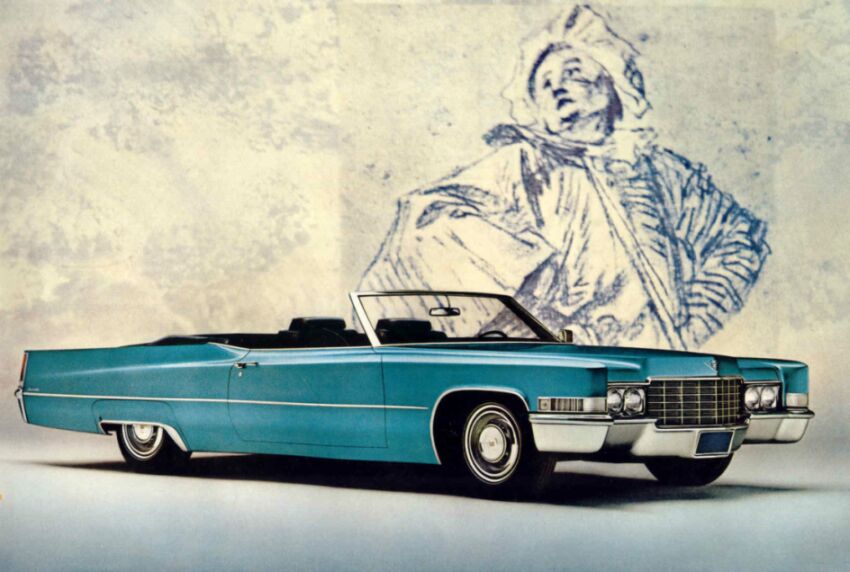
Next week will be a busy academic whirlwind tour of two Nordic capitals for me: Helsinki and Oslo. The two main American Studies events of the year are crammed together as consecutive conferences: The Renvall Institute's Helsinki do, The Maple Leaf and Eagle Conference, has reached instalment no. 12 in its fine run (it will be my third time around as a participant). The theme is always broad and this year is no exception: North America - Relations and relationships. My contribution is about the cultural importance of one specific, iconic brand of car: The Cadillac...
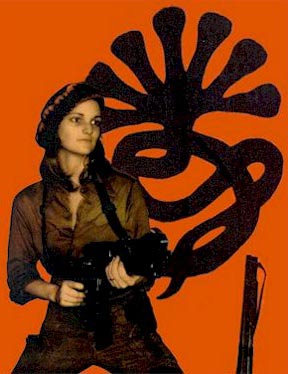
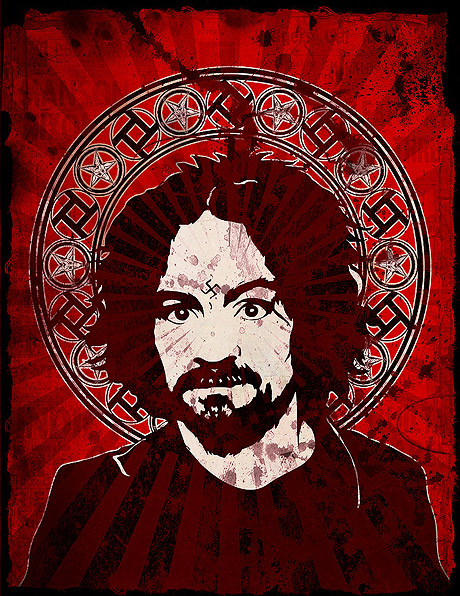
After a few days in Finland we'll relocate to Norway for the big European American Studies event under the auspices of the EAAS. Here my presentation is in connection with my on-going project on American Icons, more specifically some icons of transgression, associated with the 1960s. I'll give a paper on two celeb-criminals, two very different cultural texts, Patty Hearst and Charles Manson:The Cadillac car has long featured in the American imagination as a signifier of cool masculinity, mastery of the road, financial surplus and a predilection for luxury and comfort (cf. the lyrics to ‘Cadillac Man’, quoted below). I propose to analyze a number of cultural texts that construct, establish and eventually subvert these connotations. I am particularly interested in constructions of race and sexual orientation utilizing the vehicle of the Cadillac. Texts to be analyzed include Jack Kerouac’s “fag Cadillac” in On the Road, rock singer and performer Mink DeVille, the persona of James ‘Thunder’ Early (played by Eddie Murphy) in the 2006 movie Dreamgirls, and various rock ‘n’ roll lyrics featuring comparisons of Fords and Caddies…
Well I’m the king of the road
Ain’t got no place to go, no place I call home
Seen the world from behind this old wheel
Driving away from those feelings I feel- Cadillac Man
All iconic representations of actual persons (living or dead) are caught in a dichotomy between elements of normality/familiarity and elements of transgression. Manipulation of representations of celebrities or famous persons into hero- or other-images can either constitute adversarial or collaborative icon work. In adherence with the conference theme of “E Pluribus Unum or E Pluribus Plura” it would be interesting to examine iconic images that are meant to be particularly transgressive of normality and challenge stereotypical images of American wholesomeness. I propose to look at specific collaborative, yet provocative representations of two 1960s icons of transgression: Charles Manson and Patty Hearst, and to analyze how these particular images simultaneously stylize and sacralize these counterculture (anti)heroes, turning the viewer of the icons from passive consumers into ardent worshippers, consumers or cultural agnostics, all according to our ideas regarding the subjects and symbols in question. The images are reproduced below:


Also, founder Dov Charney is Jewish. Is it some Jewish-only hipster call? What a mystery. But better than pimply-faced teens, oops, legal-age models. Nice job, American Apparel. We hope Woody-as-a-rabbi helps you sell a lot of tube socks.
American Apparel founder Dov Charney is notorious for ads featuring scantily clad young women modeling his company’s clothes while striking provocative poses. Now, it appears, he’s found religion — or at least he’s found the appropriate rebbe: Woody Allen. Responding to an inquiry from the Forward, Alex Spunt of American Apparel explained, “Woody Allen is our spiritual leader.” But the feeling may not have been mutual. Within a week, both billboards were gone. American Apparel did not respond to a second request for comment, but the speculation in the blogosphere is that the clothing company didn’t secure permission to use the Woody Allen image. How it must sting when a rebbe spurns his Hasidim!
AA's target customers are probably too young to really know Woody Allen. But in New York, where everyone's a film expert and a vaguely Jewish neurosis seems to permeate daily life, Woody Allen may in fact be a spiritual leader of sorts. He elevates New York City as some sort of cinematic heaven, illuminating the life in different neighborhoods (most notably the Upper East Side). He shocks us with comedic human truths in his films and with scandalous behavior in his personal life. And even if we're appalled, we accept it because that's his particular genius. He's our Woody, and we laugh even if we wince, because we love him even if we hate him. By invoking the Woodman, AA's message may be that it doesn't matter how other people see you. Just be who you are.
Reached for comment, American Apparel spokeswoman Alexandra Spunt stated “Woody Allen is our spiritual leader and that’s the only statement the company will make on that issue.” I definitely heard snickering in the background. The same billboard also appears on the corner of Sunset and Alvarado in Los Angeles (right next to Burrito King). There’s no telling what the mostly Latino residents of the neighborhood are expected to make of the ad.
On American Apparel’s website, the company declares its devotion to “people, places and things that surround us” with photos of everyday streetlife in Hong Kong, signs in Montreal and mid-century architecture like Habitat ‘67. (Sound familiar?) This is a company with a heightened awareness of kitsch, and a passion for kitsch is what is driving a large part of our current urban culture. That might explain why, even though many people seem repulsed by American Apparel, even more are attracted to it.

This snippet from FOX Sports is representative of the criticism:
But the image is stirring up controversy, with some commentators decrying the photo as perpetuating racial stereotypes. James strikes what some see as a gorilla-like pose, baring his teeth, with one hand dribbling a ball and the other around Bundchen's tiny waist. It's an image some have likened to "King Kong" and Fay Wray. "It conjures up this idea of a dangerous black man," said Tamara Walker, 29, of Philadelphia.Walker and Husni to me seem to be typical of ethnic minority representatives who are prone to read specific ethnic narratives into mainstream material. One sees similar tendencies in other academic disciplines where queer academics often live to read queer narratives into canonical literature such as Henry James' "The Turn of the Screw". Such interventions are often extremely enlightening, but one should always be alert to the difference discourse hierarchies that are produced by such interventions.
Magazine analyst Samir Husni believes the photo was deliberately provocative, adding that it "screams King Kong." Considering Vogue's influential history, he said, covers are not something that the magazine does in a rush. "So when you have a cover that reminds people of King Kong and brings those stereotypes to the front, black man wanting white woman, it's not innocent," he said.
If nothing else, Walker said the cover underscores the need for a more diverse workplace. "If more people of color worked for Vogue in positions of editorial authority, perhaps someone in the room might have been able to read the image the way so many of us are reading it now, and had the power to do something about it," she said.

The program follows her to a number of spectacular photo-shoots on location, on tour with rock stars and in the studios of ballet and dance greats such as Mark Morris - but it also traces her family history, and her involvement with Rolling Stone magazine, Vanity Fair, and Vogue (all her editors are interviewed, but the footage of RS founder Jann Wenner is the most interesting). Many cult figures and celebrities appear in the film's historic clips, or are interviewed - including Hunter S. Thompson, Tom Wolfe, Yoko Ono, Mick Jagger, Mikhail Baryshnikov etc.
The site PBS has set up for the movie is superb. Here is the beginning of the feature essay:
Born in 1949 in Waterbury, Connecticut, Annie Leibovitz enrolled in the San Francisco Art Institute intent on studying painting. It was not until she traveled to Japan with her mother the summer after her sophomore year that she discovered her interest in taking photographs. When she returned to San Francisco that fall, she began taking night classes in photography. Time spent on a kibbutz in Israel allowed her to hone her skills further.A particularly moving segment is dedicated to her relationship with Susan Sontag, but we also get the view point of her mother, her sisters (one of whom, Barbara Leibovitz directed the doc.), and her daughters...
Be sure to also click on the Gallery link to see samples of Leibovitz' best shots. I particularly dig her portrait work (Sontag, fx.), but Sting as a mud-man and Whoopie Goldberg immersed in milk are also cool!Leibovitz met Susan Sontag in 1989 while photographing the writer for her book AIDS AND ITS METAPHORS. "I remember going out to dinner with her and just sweating through my clothes because I thought I couldn't talk to her," Leibovitz said in an interview with THE NEW YORK TIMES late last year. Sontag told her, "You're good, but you could be better." Though the two kept separate apartments, their relationship lasted until Sontag's death in late 2004.