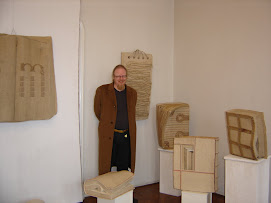
I just received a pre-notification on a cfp for an event celebrating the 50th anniversary of the publication of William Burroughs' Naked Lunch.
The organisers are Burroughs and Beat Gen. scholar Oliver Harris, in partnership with fellow-Burroughsian - see for instance Reality Studio - Ian MacFadyen (they are also co-editing the book, Naked Lunch@50), and with Andrew Hussey, Dean of the University of London Institute in Paris.
The organizers promise that the event website will be developed shortly, but you can already take a sneak peek here.
The following four streams will organize the discussions:
We welcome proposals that range from short papers (15 minutes) to longer talks (30 minutes), from multi-media presentations to panel discussions and open mic debates. In English and in French, we are looking for original and innovative contributions from scholars and Burroughsians under the headings: The Untold Naked Lunch / A Post-Colonial Lunch / Naked Paris / Naked Lunch Now.I hope a lot of scholars will gather in Paris next July to discuss and celebrate this extraordinary novel.
A few informal images from the recent Lisbon event:
The 25th International Literature and Psychology Conference
The Gordons (Jan & David) and myself enjoying a post-conference glass of Port.
Sherry Zivley and myself at one of Lisbon's many miradores (Roslyn Ko w. her back turned)
Me on a bench, as usual (random Lisbon gossip girls next to me).


 Every year the International Literature and Psychology Conference offers scholars an opportunity to discuss literature and the other arts, using insights from psychoanalysis and other psychological approaches. We have psychoanalysts, psychotherapists, Freudians, Lacanians, a few Jungians and myth theorists, Zizek'ers, post-Zizek'ers, plus an assortment of literature and culture scholars who like to dabble in the psychology of narratives and objects. The 25th annual conference took place in Lisbon at Instituto Superior de Psicologia Aplicada, ISPA, and just finished a few days ago.
My paper there had a certain American Studies relevance, as I spoke about recent American post-9/11 fiction as trauma narratives. Here are a few excerpts from that paper:
The post-traumatic aftermath of 9/11 is currently playing itself out in every conceivable arena, generating cultural texts in many different modes and genres: memoirs, documentaries, political analyses, therapeutic discourse, poetry, drama and film, to name but a few. Not surprisingly, given such a plethora of discourses, several novels have also recently appeared which thematize directly the effect of the 9/11 events on individuals, in or outside America. In my paper I propose to analyze these novels as trauma narratives, as well as aesthetic products. I shall focus mainly on Extremely Loud and Incredibly Close by Jonathan Safran Foer, but I also draw in Don DeLillo’s Falling Man, and, to a lesser extent, Ken Kalfus’ A Disorder Peculiar to the Country.
The 20th century has often been dubbed the century of trauma – hardly surprising given the list of horrendous events occurring as the technology of destruction seemed to outpace the ethical development of the human race. WWI; WWII, featuring genocide in too many forms to number, including the Holocaust and the advent and use of nuclear weapons; Communist mass internments, dislocations and extermination; colonial and post-colonial wars world-wide, but particularly violent in Africa and south-east Asia; assorted minor wars and conflicts, often with a component of ethnic or religious cleansing at their core – the list could go on and does go on as we speak. The truth of the matter seems that the 21st century promises to outdo the previous century in terms of traumatic quantity.
If this had not been painfully obvious to that proportion of the world’s population living in the USA, the events of September 2001 certainly constituted a rude awakening. While the number of lives lost in the attacks on the WTC and the Pentagon was not very high by comparison to war-time events, the exposure of the events by the media and their secondary effects once disseminated and re-disseminated gave us a hitherto unprecedented example of what I would term ‘trauma by proxy’. I personally lived through the aftermath of 9/11 at close proximity in New York City and felt the effects of post-traumatic stress to a nearly career-ending extent, so I do not speak lightly or frivolously of these events – yet one cannot but wonder why such a relatively small-scale occurrence should generate a massive discourse body, large enough to rival that generated by the holocaust or the nuclear and other civil terror warfare strategies of the entire WWII…
I have in fact addressed the specifics of this phenomenon in another piece, so suffice it here to say that an innocent, even naive people’s state of mental unpreparedness, combined with a ruthless exploitation of the initial trauma by the media and a war-hungry political and military establishment has led to an unusual and disproportionately protracted post-traumatic phase in the American public unconscious. Novelists have latterly turned to this rich story for material for tales of trauma and survival, and as is always the case with trauma narratives thereby run the risk of further perpetuating the post-traumatic phase. On the other hand, literature may just have a role to play in healing the trauma, or at least to lend voice to the victims, and therefore we should perhaps turn to an examination of a few post-9/11 novels.
Jonathan Safran Foer was born in 1977 and represents the third generation of postmodern American writers (first wavers include Thomas Pynchon, John Barth and Kurt Vonnegut; second wavers Don DeLillo, Paul Auster and E.L. Doctorow). Foer’s debut novel Everything Is Illuminated tackled contemporary teenage consumer culture and the Eastern European Holocaust/survivor legacy all at once. The result was a funny, infuriating and haunting novel which redefined the trauma narrative genre in its own right. In his 2005 follow-up Extremely Loud and Incredibly Close Foer continues to mix historical narratives in the best tradition of historiographic metafiction as developed by first and second generation postmodern authors such as Pynchon (known for his two-tier novels which construct a nexus between WWII and contemporary America of the 1960s), Vonnegut (same dual strategy in Slaughterhouse 5, with some futuristic sci-fi mixed in), and Auster (whose 1980s novels, such as Leviathan, frequently examined the historical roots of politically motivated terrorism, although they did not feature the explicit two-tier structure Pynchon, Vonnegut and Foer all employ). Foer’s novel constitutes an obvious intertext with the works of all three older writers and with several other practitioners of postmodern narrative (such as Don DeLillo).The most obvious intertext is Vonnegut’s oeuvre, particularly Slaughterhouse 5, with which Extremely Loud shares the theme of the fire bombings of Dresden, as well as Vonnegut’s later, extensive use of graphic tricks, illustrations and samples of handwritten texts, all of which features are also employed to excess by Foer. Auster haunts Foer’s text in several ways, not least in the implicit (as in never stated) Jewishness of several of the protagonists, but also in the multiple references to walks and rambles in New York, which is strongly reminiscent of scenes in Auster’s New York Trilogy where apparently random rambles literally produce texts and messages (but little meaning). In Extremely Loud the young protagonist Oskar Schell spends a good deal of the novel searching for a lock to match a key he has found among his dead father’s belongings. In the process of this quest he visits every single person in New York named Black (another allusion to Auster whose protagonists are frequently colour-coded). The outcome of the search is however as disappointing as any postmodern quest for epistemological insight (cf. Oedipa Maas in Pynchon’s The Crying of Lot 49) as the lock turns out to have no relation to Oskar’s father’s life at all.
The trauma narrative in Extremely Loud consists in two story tiers each representing a different historical period and its traumatic events. Oskar is traumatised by proxy by the 9/11 terrorist attack, during which his father dies in the WTC collapse. Oskar is the only family member who knows that his father left several phone messages from the WTC tower on the day of his death, and Oskar is plagued by survivor’s guilt, not least because he did not pick up the phone the last time his father called, immediately before the collapse. All Oskar has left are memories of his father and the recordings from the answering machine. He desperately tries to make sense of these texts and clues that remain, but much of the time he is in fugue from the trauma content provided by these memories and texts. He zips up “the sleeping bag of his self” (dissociation), wears “heavy boots” (depression), compulsively counts the seconds until he falls asleep, and is generally incapacitated by his trauma and grief. The search for the lock that the key he finds may open is his last resort at finding a solution to the conundrum of why his father had to die.
Another narrative strand is interspersed, accounting in Oskar’s grandparents’ alternating voices for some of the events in Dresden, before, during and after the British and American fire bombings in February 1945. Oskar’s grandmother (who was not present at that time in Dresden) further listens to a survivor’s account of the atom bomb’s effect on Hiroshima, which lends another layer of historical depth to her and Oskar’s experiences (and allows increased reader horror and empathy). Her husband, Oskar’s grandfather, experiences the bombings first-hand and loses his first love, Anna (the sister of Oskar’s grandmother) who is newly pregnant with his child. As a result he gradually loses the ability to speak, his artistic gift as a sculptor, which it has been his life’s dream to pursue, and in his bitterness and powerlessness he swears never again to have children. He immigrates to America to put as much distance as possible between himself and the scene of his loss.
The two narrative strands meet in the present of post-9/11 New York, but prior to that there is a mediation phase where Oskar’s family history is recounted. Oskar’s grandparents have re-met shortly after WWII and decided to marry, despite their handicaps and the lack of mutual love between them. He is trying to survive despite his oral aphasia and an artist’s block; she is trying to come to terms with the loss of her entire family, and through a complicated system of text production they try to cope with these losses. In both cases, however, the trauma effect erases all possible narratives of itself. He writes thousands of daybooks, filling them with phrases that he needs in everyday communication, but which make little sense outside their specific pragmatic use; she tries to cope with her gradual loss of sight by writing her life story on an old typewriter he provides her with. The story she fills thousands of pages with turns out to be written without a ribbon in the typewriter and therefore no legible traces are left on these many pages. He tries to hide this fact from her by pretending to read and discuss the narrative with her.
This lie on which their relationship rests is mirrored in another deception, as she quickly realises that he still loves her sister and is only using her as a sexual and emotional stand-in for that, to him, all-important person. In effect, he is reliving the traumatic experience of Anna’s loss every day by being married to her sister instead. She decides to be her own person and to follow her destiny instead of performing a tragic repetition of her sister’s life and breaks their agreement to never have children by becoming pregnant. He leaves her the very day she tells him this. After that his writing changes, as he begins a new string of thousands of letters addressed to his son, in which he tries to justify his actions. In the only one of these letters his son ever receives he succeeds in narrating the horror of his Dresden experience. That letter is reproduced in the novel’s diegetic world, complete with the son’s copy editing of the discourse, marked in red as a literal form of trauma redaction.

At the point in time where the two tiers of history and narrative are brought together (post 9/11) Oskar’s grandfather and grandmother have begun living together again. He has brought all of the unsent letters to his son back from Europe and now has no living person to send or read them to. Their son has died a death as meaningless as Anna’s, and he has a hard time finding a way to be present in his grandson’s life. It is only by gradually involving himself in Oskar’s project of visiting the Blacks that he finds a way back in a newly constituted family. The better solution to the trauma of both these generations turns out to lie in another act of textual transmission, and Oskar and his grandfather decide to exhume Oskar’s father’s empty coffin and instead fill it with the letters grandfather never sent. Through this exchange the grandfather purges himself of a burden of guilt, an act of outpouring or kenosis, which then fills the cenotaph or empty grave and by proxy fills some new non-trauma tainted content into Oskar’s life. The trauma is thus worked through to some extent, or at least partially cathected by the confrontation with the void/gap which has led Oskar to a pattern of avoidance behaviour (he invents impossible gadgets that will keep everyone safe, he avoids “obvious targets” of terrorism such as trains and ferries, he collects evidence of “stuff that happened to me” (pictures he downloads from the internet containing victims, crimes, porn etc.)), leaving Oskar and his family with the possibility of forming new attachments in a more anger-free, de-affected, non-addictive manner.
Don DeLillo’s post-9/11 novel, Falling Man, by contrast contains the story of a literal survivor of the WTC collapse, but more importantly also demonstrates the effect by proxy of such a traumatic event on a small family. The strains on the married couple in the narrative are quite similar to the ones described as tearing Oskar’s grandparents apart in Foer’s novel. DeLillo’s protagonist feel equally dissociated from the routines of his actual family who desires nothing more than a continuation of life as it was before the disruption, and eventually he seeks the company of a fellow survivor whom he hopes has the capacity to understand his emotions of anger, depression and suicidal numbness. De Lillo’s novel also draws narrative lines to Germany, but not the Germany of WWII. Instead the protagonist’s mother-in-law has an affair with a former Rote Armé Fraktion terrorist, and another German strand consists of us occasionally sharing the viewpoint of one of the 9/11 terrorists who has been trained partially in a German university and there has been converted to the cause by Mohammad Atta. Falling Man is a collective novel, as almost all its characters are allowed representation and narrative point of view. This causes the novel to be diffuse and uneven, especially as the terrorists (former and present) come across as little more than stunted human beings, stereotyped beyond sympathy. As the main protagonists all suffer from PTSD, one also encounters in their diction the deadening of affect so typical of trauma sufferers (recreated in a virtuoso performance by DeLillo) and this means that the novel is flat and uneventful on a surface level. The book ends with a tour de force scene where for the first time in the novel we enter into the burning tower with the protagonist and witness the traumatic event directly through his eyes. The scene begins onboard the hijacked plane and is narrated from the terrorist’s point of view. The second the plane hits the tower and he dies, the point of view is propelled out of his body and into the protagonist’s physical experience of the explosion. This transition is probably meant to suggest the communality of destiny between victim and terrorist, but somehow leaves the reader dissatisfied. DeLillo is in my opinion more culpable of 9/11 exploitation than Foer, despite not providing any cathexis of trauma content for his characters.DeLillo and Foer of course share the trope of falling as central to the dynamics of their novels. Foer’s protagonist Oscar wishes to know how his father died and imagines that he can see him in the grainy news footage of people jumping from the burning tower. In the end he invents a mechanism that can play back the events in his head in reverse, and the novel closes with a series of images of a man falling up toward safety which can be activated by flicking the pages of the book in the manner of a primitive animation (an oblique reference to E.L. Doctorow’s Ragtime). DeLillo’s falling man is a body artist who enacts a body falling towards the ground in a number of public settings in New York, much in the manner of what Yves Klein, the French situationist performer, painter and photographer did in real life.

In the novel the New Yorkers are angry with this artist who reminds them of an event many would rather repress the memory of thoroughly. However, the protagonist’s wife comprehends the necessity of the artist acting out the trauma content and mourns him when he dies as a result perhaps of a re-enactment going wrong. Thus DeLillo illustrates well the function of art as a solution to the ill effects of trauma-by-proxy which might otherwise be contributing to the trauma content being perpetuated unnecessarily. Nonetheless, ultimately one does not need DeLillo’s novel to the extent that one needs Foer’s. Both authors have renounced their frequently employed satirical repertoire and in the case of DeLillo this leaves him with little else to offer.
 I still haven't gotten back in a proper routine after the Nordic Americanist events over the last two weeks, but every mill needs its grist, not least the publication one. Therefore it is gratifying to have two new book chapters out as a result of 2006's conference going!
Space Haunting Discourse is a volume out from Cambridge Scholars Press, edited by Maria Holmgreen Troy and Elizabeth Wennö from Karlstad U. Maria and Elizabeth put on two excellent interdisciplinary conferences in 2004 and '06 and I participated in both of them. The chapter I have in the fresh volume is on novels about Big Sur, California by Henry Miller, Jack Kerouac and Richard Brautigan. Maria and Elizabeth have written a comprehensive and generous introduction to the volume which is available as a PDF from the publishers' web site. They give the following description of my piece:
Presence and absence are also features of Bent Sørensen’s “Representations of Big Sur in Late Modernist and Early Postmodernist American Writing.” The textual referent is the actual geographical Californian Big Sur, inscribed with meanings by three writers in such a way that it is rendered absent and instead emphasises loss and disillusion. In effect, his analysis supports David Harvey’s argument that the genius loci, the place of special significance to the individual and the community, “is open to contestation, both theoretically (as to its meaning) and concretely (as to how to understand a place)” (309). Henry Miller, Jack Kerouac and Richard Brautigan all wrote prose about Big Sur, and Sørensen demonstrates how this locus haunts these texts in three significantly diverging ways: Miller’s locus amoenus, Kerouac’s tremens, and Brautigan’s topos.My other new book chapter is an analysis of Uncle Sam as an American icon. It is published in a volume edited by Ari Helo of the Helsinki Renvall Institute, titled Communities and Connections: Writings in North American Studies. That chapter will be integrated in my forthcoming book American Icons: Transgression and Commodification.
Within the short span of seven years, the potential of Big Sur as a locus representing ideas and emotions has been transformed into a fully textualised topos, which can only serve as a vehicle for pastiche and postmodern parody of Brautigan’s modernist precursors’ anxieties. His text is haunted by the intertextual ghosts of Kerouac’s and Miller’s gender and racial values, which are parodied by Brautigan’s incongruous collection of beatnik womanisers and exploiters of both land and Native American (and Confederate) heritages. At the end of the essay Sørensen quotes J. Gerald Kennedy’s remarks on the distinction between a subjective concept of place and a “textual, writerly image”: the difference between the two is not a structural one of “real and fictive” but “between textual scenes and the symbolic experiences of place which they inscribe.” Taking it one step further we could say that Sørensen’s analysis of modernist and postmodernist inscriptions also reflect the epistemological shift in theory as well as the shift in literature from the crypto-religious impulse of modernism to the playful linguistic preoccupation of much postmodernism.

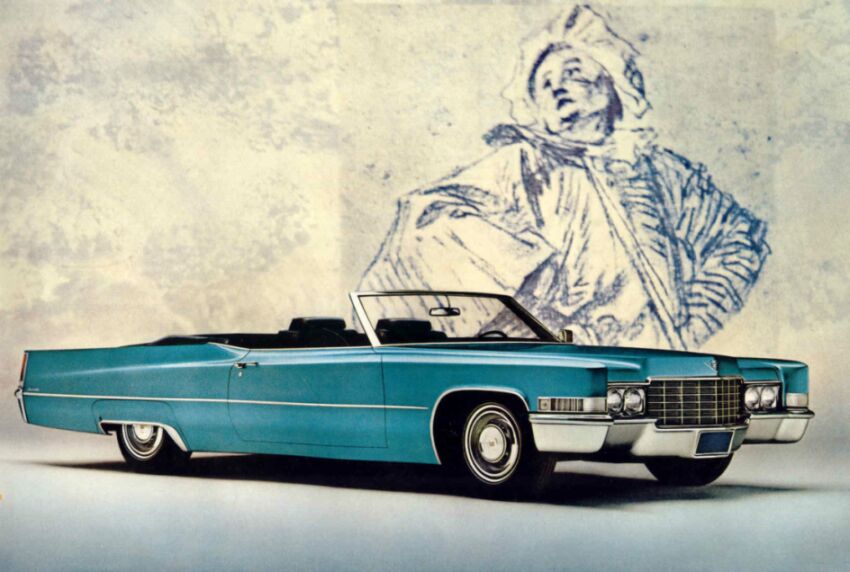
Next week will be a busy academic whirlwind tour of two Nordic capitals for me: Helsinki and Oslo. The two main American Studies events of the year are crammed together as consecutive conferences: The Renvall Institute's Helsinki do, The Maple Leaf and Eagle Conference, has reached instalment no. 12 in its fine run (it will be my third time around as a participant). The theme is always broad and this year is no exception: North America - Relations and relationships. My contribution is about the cultural importance of one specific, iconic brand of car: The Cadillac...
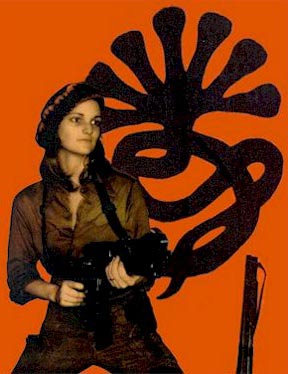
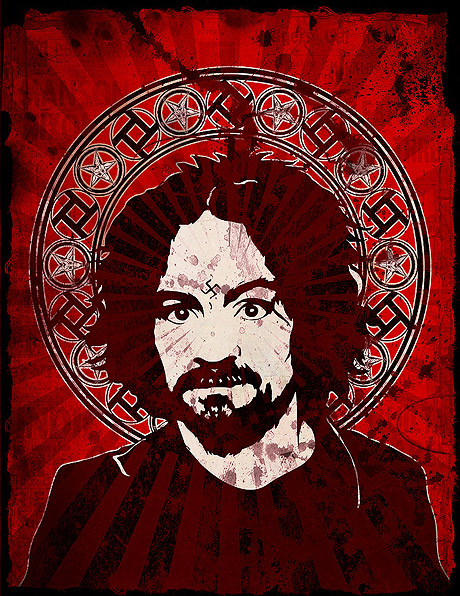
After a few days in Finland we'll relocate to Norway for the big European American Studies event under the auspices of the EAAS. Here my presentation is in connection with my on-going project on American Icons, more specifically some icons of transgression, associated with the 1960s. I'll give a paper on two celeb-criminals, two very different cultural texts, Patty Hearst and Charles Manson:The Cadillac car has long featured in the American imagination as a signifier of cool masculinity, mastery of the road, financial surplus and a predilection for luxury and comfort (cf. the lyrics to ‘Cadillac Man’, quoted below). I propose to analyze a number of cultural texts that construct, establish and eventually subvert these connotations. I am particularly interested in constructions of race and sexual orientation utilizing the vehicle of the Cadillac. Texts to be analyzed include Jack Kerouac’s “fag Cadillac” in On the Road, rock singer and performer Mink DeVille, the persona of James ‘Thunder’ Early (played by Eddie Murphy) in the 2006 movie Dreamgirls, and various rock ‘n’ roll lyrics featuring comparisons of Fords and Caddies…
Well I’m the king of the road
Ain’t got no place to go, no place I call home
Seen the world from behind this old wheel
Driving away from those feelings I feel- Cadillac Man
All iconic representations of actual persons (living or dead) are caught in a dichotomy between elements of normality/familiarity and elements of transgression. Manipulation of representations of celebrities or famous persons into hero- or other-images can either constitute adversarial or collaborative icon work. In adherence with the conference theme of “E Pluribus Unum or E Pluribus Plura” it would be interesting to examine iconic images that are meant to be particularly transgressive of normality and challenge stereotypical images of American wholesomeness. I propose to look at specific collaborative, yet provocative representations of two 1960s icons of transgression: Charles Manson and Patty Hearst, and to analyze how these particular images simultaneously stylize and sacralize these counterculture (anti)heroes, turning the viewer of the icons from passive consumers into ardent worshippers, consumers or cultural agnostics, all according to our ideas regarding the subjects and symbols in question. The images are reproduced below:


On my university homepage I keep a log of my lectures and other speaking engagements. I now feature a page on ESSE-9 in Aarhus where I am going to first present my Gibbons-paper...
Here is the abstract:
The Survival of a Dissident Poet: Life in the Little Magazines before and after the Web – the Case of The Evergreen Review and Robert GibbonsSome of my previous work on Gibbons can be found here:
Robert Gibbons’ new volume of poetry Beyond Time – New and Selected Work 1977 - 2007 forms a rare vantage point from which to open a discussion of the themes proposed for this seminar on innovative voices on language and self. Over four decades Gibbons has remained an unincorporated, strongly political, and consistently dissident voice in the American landscape of little magazines and independent publication. Unaffiliated with any formal movement or coterie Gibbons has instead focused on developing his personal poetics of nonconformity, specializing in the hybrid form of the prose poem.
While being forced early on to depend on the acceptance of journal editors to find publication outlets, Gibbons has latterly begun utilizing internet and web-based publication options to a much larger extent. His spontaneous composition ideals make his output, which at times mimics forms such as the journal, the almanac and the blog, ideally suited for a quick turn-around in terms of publication. His confessions and reportage from a place-bound life on the streets of his favorite cities and among clean, well-lighted book-stacks balance carefully between the personal and the political, detailing the vagaries of having a compulsion to write for dear life while simultaneously being compelled to work for a living.
Parallel with his increasing utilization of ‘fast’ media, Gibbons has continued to work within more traditional little magazine outlets, such as The Evergreen Review, where recent poems have just appeared. The multiplication of publication outlets provided by the Web means that publication and gate-keeping in the arts have changed completely, and that whole new rules for peer, coterie and/or self-publication are now in place. Gibbons has navigated this new multifaceted field in a manner that could well be characterized as a celebration of 'indefatigable privateness', i.e. the visions of the individual – yet equally so as an indefatigable political commitment to a community, both local and global.
Language having more to do with blood than dictionary, physical as much as cerebral. Spontaneous more than calculated. Rife with sensuousness. As internal as dream, eternal as memory. The insistence of pulse, breath, & bodily fluid. Blood of Love, I wrote once, dripping it repeatedly down the page, Blood of Love, Blood of Love, which could have culminated in a yell, “Stella!” If that were her name. Always the feet tracing streets from Paris to Barcelona; a dialogue of the citizenry of self with city & history. Skin & bone & wound. Letter by letter back home documenting experience. The second life of writing, as intense, or more so, than living. Aesthetic based on the tactile. The chew of the word. A certain taste, not always familiar. I’d film words like Godard, if I could, chant like Coltrane, if need be, paint a sign like Kline, however one has to get it down, send it out, make a note. Thrust & parry, the battle & pleasure.Check out the rich vein of poetry flowing to his readers from his daily Log... A recent poem:
The Pleasure of the Text
Thursday, March 27,
2008
She arrived via the elevator of the dream announcing that my sources were in order, which meant the latest stack of books included the Goya amidst the foundation of black notebooks, Black Sun, again by Kristeva, the newly added Basic Writings of Nietzsche, & topped off by a little yellow paperback version of The Pleasure of the Text by Barthes, intimating that this latter held the greatest interest for her. Just the night before we’d already spoken of the transparency of the Soul, whenever it appeared in dreams, whether the rose enclosed in double panes of glass floating down the aisle of a public bus, or the vitrine that appeared after I told her I also loved the back side of her Soul. Now, for Barthes, the pleasure of the text culminates in the unveiling of the sex, but such an exposure that cannot come too quickly, & must be justified by the rhythm of the language leading up to its revelation, whether it be the rhythm of the dance, the musical counterpoint of Debussy humbly seeking to give pleasure, voyeuristic clothesline strung taut in a long novel, or the slow emergence of ideas from the body, which he says differ from those of his own.

The year before last I put together a research paper on these 3 writers for a conference in Sweden on place and haunting, and I have just received the proofs to read through for the publication of the book of proceedings...
Here is a teaser:
Henry Miller, Jack Kerouac and Richard Brautigan all wrote prose about Big Sur, California. This locus haunts these writings in three different ways: To Miller in Big Sur and the Oranges of Hieronymus Bosch (1957) the potential of Big Sur as a true artists’ commune was lost to progress and materialism. He is haunted by the unrealized potential of a Romantic locus amoenus. To Kerouac in Big Sur (1962) the California coast he had loved to explore with Gary Snyder as his Buddhist mountain goat guru in the 1950s––the subject of Dharma Bums (1958)––was becoming a site of horror and delirium (tremens) by the early 1960s when he revisited Big Sur and Rainbow Canyon in search of peace of mind and inspiration for a ‘sea-poem.’ He is haunted by the loss of self and connection to a genius loci in the potentially sublime coastal vistas. To Brautigan in A Confederate General from Big Sur (1964) the locus of Big Sur has already become a fully textualized topos which can only serve as a vehicle for pastiche and postmodern parody of his modernist precursors’ anxieties. His text is haunted by intertextual ghosts of Kerouac and Miller’s gender and racial values, which are spoofed and sent up by Brautigan’s unlikely crew of beatnik womanizers and exploiters of both land and Native American (and Confederate!) heritages. The Californias represented in these three works thus serve to re-actualize the questions with which Walt Whitman ends his poem, “Facing West from California’s Shores”: “But where is what I started for so long ago?/And why is it yet unfound?”I look forward to receiving the printed volume from Cambridge Scholars Press later this year...

The purpose of this seminar is to define and exemplify the increasingly popular genre 'life writing' in academic terms. In order to move beyond the stereotype of mass-market biographies we need critical discussion of different forms and definitions of life writing. We welcome papers seeking to identify and explain the contours and interfaces between producers, subjects and consumers of life writing; between memory and writing; between emotion and narration; fact, fiction and documentary styles; between personal and cultural history and between new textual technologies, e.g. on the Web, and the life of a text.
The Survival of a Dissident Poet: Life Writing before and after the Web – the Case of Robert Gibbons
Robert Gibbons’ volume of poetry Beyond Time – New and Selected Work 1977 - 2007 forms a rare vantage point for discussion of the themes proposed for this seminar on life writing. Over four decades Gibbons has remained an unincorporated, strongly political, and consistently dissident voice in the American landscape of little magazines and independent publication. Unaffiliated with any formal movement or coterie Gibbons has instead focused on developing his personal poetics of nonconformity, specializing in the hybrid form of the prose poem.
While being forced early on to depend on the acceptance of journal editors to find publication outlets, Gibbons has latterly begun utilizing Internet and web-based publication options to a much larger extent. His spontaneous composition ideals make his output, not least in the form of a web log, ideally suited for a quick turn-around in terms of publication.His confessions and reportage from a place-bound life on the streets of his favorite cities and among clean, well-lighted book-stacks balance carefully between the personal and the political, detailing the vagaries of having a compulsion to write for dear life while simultaneously being compelled to work for a living.
I aim to situate Gibbons’ dual practice of web as well as journal and book publications in the ever expanding spectrum of forms of mediated life writing.
I hope to do the multifaceted work Robert Gibbons is producing right now justice. His current daily log of poems is developing into a fine body of texts - hopefully ready to become a book in their second incarnation in a few months' time... A snippet from today's poem (with Robert's permission, I hope):
I don’t know where compassion stands among the grand list of Buddhist virtues, but the cold this morning placed me right there among the lowliest of the low, where poets belong. Spare change, madam, trickle down unemployment compensation, mister?
Right now I await acceptance of the paper proposal - hopefully within 3 weeks...